Personal Dog Website on Demand
Social media feeds compress photos and bury pet memories under algorithms. A personal dog website gives your pet an independent home: instant collar QR rescue pages, high-resolution media vaults, and private care guides for pet sitters.

Current as of October 2026. A personal dog website gives dog owners an independent digital home for their pet: a lightning-fast collar QR rescue tag that works without third-party app downloads, an uncompressed lifetime photo and video journal, and a secure health vault for dog sitters and veterinarians. While social media accounts on Instagram or TikTok subject your pet's audience to algorithm shifts, account bans, and aggressive compression, a dedicated web application provides permanent data ownership and tailored utility. Hiring an independent senior developer on an hourly arrangement to build a personal dog website costs between $45 and $95 per hour (typically requiring 25 to 55 engineering hours, or $1,125 to $5,225 in total scope).
Whether you want a lively digital tribute, an interactive milestone blog for a working dog or agility champion, or a mission-critical rescue beacon engraved on a collar tag, working with an experienced web engineer ensures the site loads in under half a second on mobile networks and stays online indefinitely. If you want to hire a vetted specialist to build your pet's site, browse our vetted web developers or explore our one-time project developers to get started quickly.
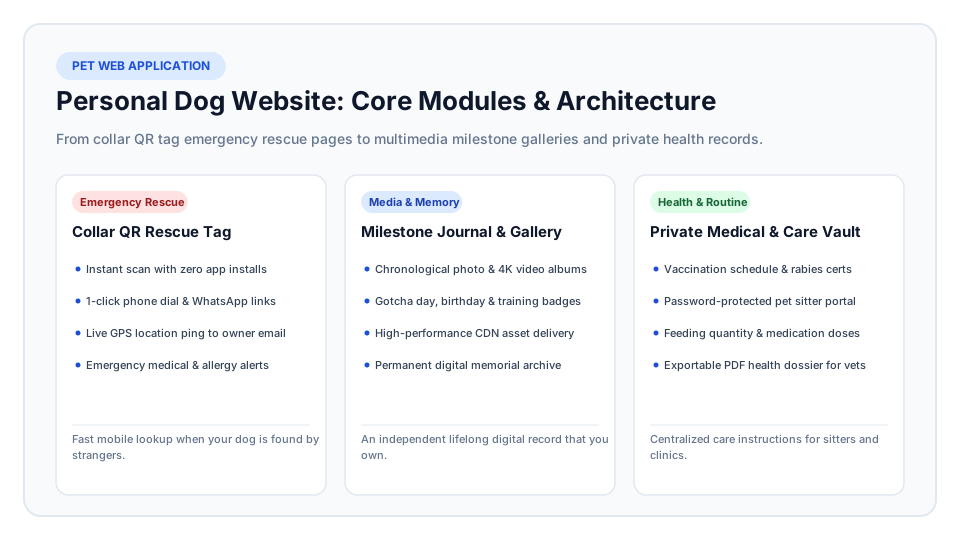
Figure 1: The three foundational modules of a personal dog website: emergency rescue beacons, multimedia memory archives, and private daily care instructions.
Why Build a Personal Dog Website Instead of Relying on Social Platforms?
Most dog owners start by creating an Instagram profile or a shared photo album. While social platforms offer convenience, pet owners frequently run into three structural frustrations as their pet grows:
- No Direct Utility in Emergencies: If your dog slips their harness and runs off, an Instagram handle stamped on a collar tag does very little. A stranger who finds your dog must have an active Instagram account, must search the username, and must hope you check direct messages from unapproved contacts. A dedicated web URL connected to a QR code opens directly in any mobile browser with 1-click calling and urgent medical warnings.
- Aggressive Media Compression & Deplatforming: Social platforms heavily compress 4K videos and high-resolution photography. Furthermore, platforms change their terms, ban accounts erroneously, or bury older memories beneath algorithmic feed updates. A personal website backed by cloud object storage preserves raw, uncompressed memories permanently.
- Fragmented Care Information: When you leave your dog with a pet sitter, boarding facility, or friend, you inevitably send fragmented text messages containing feeding portions, medication schedules, emergency veterinarian numbers, and behavioral quirks. A personal dog website provides a private, mobile-optimized dashboard containing all care instructions in one bookmarkable link.
Core Modules of a Personal Dog Website
When briefing a web developer, dividing your dog's website into distinct functional modules helps prevent scope creep and keeps development hours focused on high-value features:
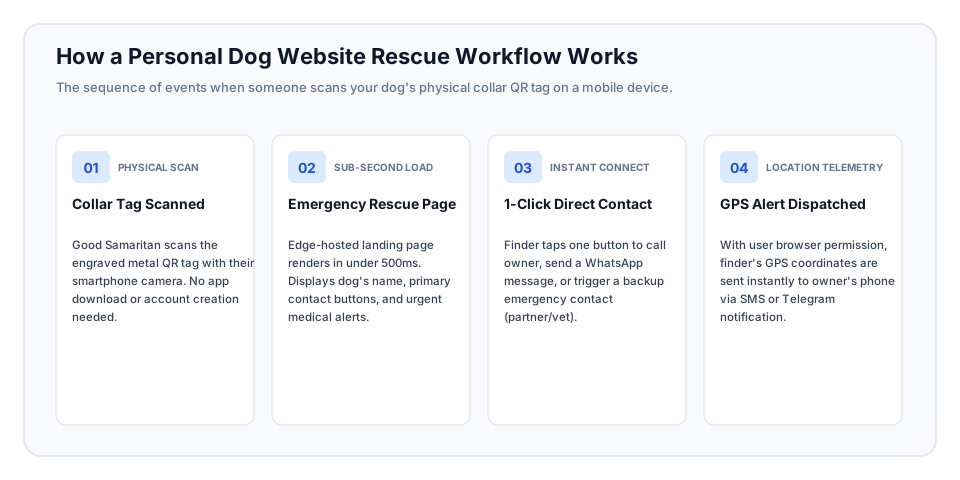
Figure 2: The step-by-step sequence executed when a finder scans your dog's physical collar QR tag on a mobile browser.
1. The Instant Collar QR Rescue Tag (Emergency Mode)
The rescue page is the most time-sensitive component of the website. It is linked directly to a QR code etched onto your dog's physical collar or harness tag. When scanned by a finder on a smartphone, the page must load in under 500 milliseconds without requiring logins or app downloads:
- Prominent Contact Triggers: Large, high-contrast buttons for "Call Owner Immediately", "Send WhatsApp Location", and "Call Backup Emergency Contact".
- Vital Medical & Dietary Flags: Immediate warnings if the dog is diabetic, epileptic, allergic to specific treats, or skittish around strangers.
- Automated Location Telemetry: When the page loads, the browser prompts the finder: "Allow location to help owner locate this pet?". Upon approval, the coordinates are dispatched via webhook directly to your phone via SMS or Telegram alert.
2. The Milestone Journal & High-Resolution Media Vault
Unlike a static gallery, a personal dog website can track your pet's life chronologically through interactive milestone badges: "Gotcha Day", puppy graduation, first beach visit, titles won in dock diving or flyball, and yearly birthday commemorations. Because you control the backend, your developer can connect storage buckets (such as AWS S3 or Cloudflare R2) with a content delivery network (CDN) to ensure lightning-fast video streaming and full-resolution photo downloads for family members.
3. Private Pet Sitter & Health Dashboard
Keep sensitive information secure behind a lightweight passcode or private link. This section acts as a digital operating manual for your dog:
- Daily Routine & Feeding Calculator: Exact food brand, scoop measurements, feeding times, and approved treats.
- Medication & Allergy Protocol: Dosages, administration times, and location of first-aid supplies.
- Veterinary Records & Rabies Proof: PDF downloads of official vaccination certificates and microchip ID numbers, accessible on mobile when checking into hotels or boarding kennels.
- Behavioral Notes: Specific guidance on leash reactivity, favorite sleeping spots, and triggers such as fireworks or thunderstorms.
4. Interactive Memorial & Digital Tribute Vault
For aging pets or dogs that have crossed the rainbow bridge, a personal website transforms into an enduring digital monument. It allows family, friends, and followers to leave condolence notes, view favorite stories, and celebrate a lifetime of companionship without platform ads, sponsored clutter, or algorithmic noise.
Feature Scope, Time Estimates and Development Costs
Building a personal dog website does not require an enterprise budget. Working with an independent senior software engineer allows you to commission a high-performance, tailored build at transparent hourly rates ($45–$95/hr). The table below outlines realistic engineering hours across different project tiers:
| Project Tier & Functional Scope | Estimated Developer Hours | Independent Senior Developer ($45–$95/hr) | Traditional Digital Agency ($150–$250/hr) |
|---|---|---|---|
| Tier 1: Minimal Collar Rescue Landing Page Mobile-first emergency beacon, prominent tap-to-call buttons, medical/allergy badges, static photo banner, and printable vector QR code generation. |
12 – 18 hrs | $540 – $1,710 | $1,800 – $4,500 |
| Tier 2: Personal Dog Website & Story Blog Tier 1 rescue beacon + custom domain, chronological milestone timeline, high-res photo gallery, interactive "About My Dog" story, and contact form. |
25 – 40 hrs | $1,125 – $3,800 | $3,750 – $10,000 |
| Tier 3: Full Pet Platform & Health Vault Tier 2 + password-protected pet sitter care portal, automated GPS scan notifications (Telegram/SMS), CDN video vault, and printable PDF medical dossier export. |
45 – 65 hrs | $2,025 – $6,175 | $6,750 – $16,250 |
Because there is no heavy database overhead or multi-tenant complexity, ongoing monthly hosting for a static or serverless dog website deployed on modern platforms like Vercel or Cloudflare Pages typically costs $0 to $10 per month (covering only custom domain renewal and media CDN traffic).
How to Order a Personal Dog Website: Step-by-Step Checklist
To ensure your development engagement runs smoothly from the first conversation to live domain deployment, follow this structured commissioning workflow:
- Gather Your Pet's Asset Package: Before reaching out to a developer, assemble high-resolution photos, microchip numbers, primary and backup phone numbers, emergency veterinary clinic addresses, and dietary restrictions in a shared folder.
- Purchase a Memorable Custom Domain: Register a personalized domain name representing your dog's name (for example, yourdogname.dog, yourdogname.pet, or yourdogname.com). Own the domain under your personal registrar account (Namecheap, Cloudflare, or Google Domains) so you maintain 100% ownership.
- Define Privacy & Public Visibility Boundaries: Decide what information should be completely public (dog's name, photo, emergency phone number) versus protected behind a sitter passcode (home street address, full veterinary invoices, owner travel schedules).
- Hire a Vetted Developer with Delivery Ownership: Select an independent full-stack developer who understands mobile responsiveness, performance optimization, and reliable hosting deployment. Explore our matchmaking service to get paired with an engineer ready to deliver a fast, responsive build.
- Produce the Physical Collar Tag: Once the developer deploys the site to your custom domain, take the vector QR code provided by the engineer and order an engraved metal tag or laser-etched collar plate from an online pet supplier. Test the physical scan with multiple smartphone models under outdoor lighting before relying on it in public.
Questions to Ask Your Developer Before Hiring
When interviewing freelance engineers for your pet website project, use these targeted questions to evaluate their technical practicality:
- Mobile Performance: "How will you optimize the emergency collar page so it loads in under one second on a weak 3G/4G cellular connection when scanned in a park?" (Look for answers emphasizing static site generation, compressed WebP/AVIF images, and zero heavy third-party JavaScript tracking scripts).
- Asset Ownership: "Will the domain, hosting account, and media storage buckets be set up entirely in my name?" (A reputable professional will always configure accounts directly in the client's ownership).
- Media Delivery: "How will you handle high-resolution photo uploads so storage bills remain minimal and the gallery doesn't lag?" (The engineer should suggest cloud storage such as Cloudflare R2 or AWS S3 paired with automatic responsive image resizing).
- Emergency Redundancy: "What happens if cellular data is slow when a finder opens the page?" (The page should render contact phone numbers as plain, crawlable text immediately before loading heavy background image graphics).
Frequently Asked Questions
How much does it cost to build a personal website for my dog?
Building a personal dog website costs between $540 and $3,800 when hiring an independent senior web developer ($45–$95/hr). A focused emergency rescue page with a collar QR code takes 12 to 18 hours ($540–$1,710), while a full interactive website with photo galleries, milestone blogs, and sitter portals takes 25 to 40 hours ($1,125–$3,800).
Can someone scan my dog's collar tag without downloading an app?
Yes. A custom QR code opens directly inside standard smartphone camera apps and loads the web page in Safari, Chrome, or any native mobile browser within half a second. Finders do not need an account, app, or special hardware to reach your emergency contact numbers.
Is my personal home address visible to anyone who scans the tag?
No. You decide exactly what data appears on the public rescue screen. Most owners display only the dog's name, primary and backup phone numbers, and urgent medical needs. Sensitive information—such as your home address or full medical files—can be hidden behind a private password reserved for trusted sitters.
What are the ongoing monthly costs of running a dog website?
Ongoing costs are minimal, typically between $1 and $12 per month. A custom domain name costs $10 to $25 per year, while serverless hosting platforms like Cloudflare Pages or Vercel offer free or very low-cost tiers for personal traffic volumes.
Can I update photos and contact numbers myself after the developer finishes?
Yes. Your developer can configure a user-friendly headless content management system (such as Sanity, Decap CMS, or a simple Supabase dashboard) allowing you to upload new pictures, edit phone numbers, and add blog posts from your smartphone without touching code.
How does the automated GPS notification work when the QR code is scanned?
When a finder opens the page, modern mobile browsers support the standard Geolocation API and prompt: "Allow this page to share your location?". If the finder clicks allow, the site transmits their coordinates via webhook to your phone as an instant SMS or Telegram map pin.
Ready to build a reliable digital home and emergency beacon for your companion? Find verified, reliable developers on ProofDevs Verified Developers or connect directly via our developer matching service to turn your pet's site concept into clean, lasting code.
Written by Michael Melnyk
Senior IT Technical Writer & Technology Analyst
Senior Technical Writer and IT Industry Analyst with over 7 years of experience analyzing software engineering ecosystems, tech leadership models, and developer procurement frameworks.