Hire a Website Developer for a B2C Online Store: Mobile Speed, 1-Click Checkout & Real Rates
B2C e-commerce stores fail when developers treat consumer storefronts like static catalogs. Mobile checkout friction, slow page speed, missing BNPL gateways, and unverified analytics tracking quietly drain marketing spend. Here is what a senior B2C developer costs, how to vet them, and how to avoid costly agency markups.

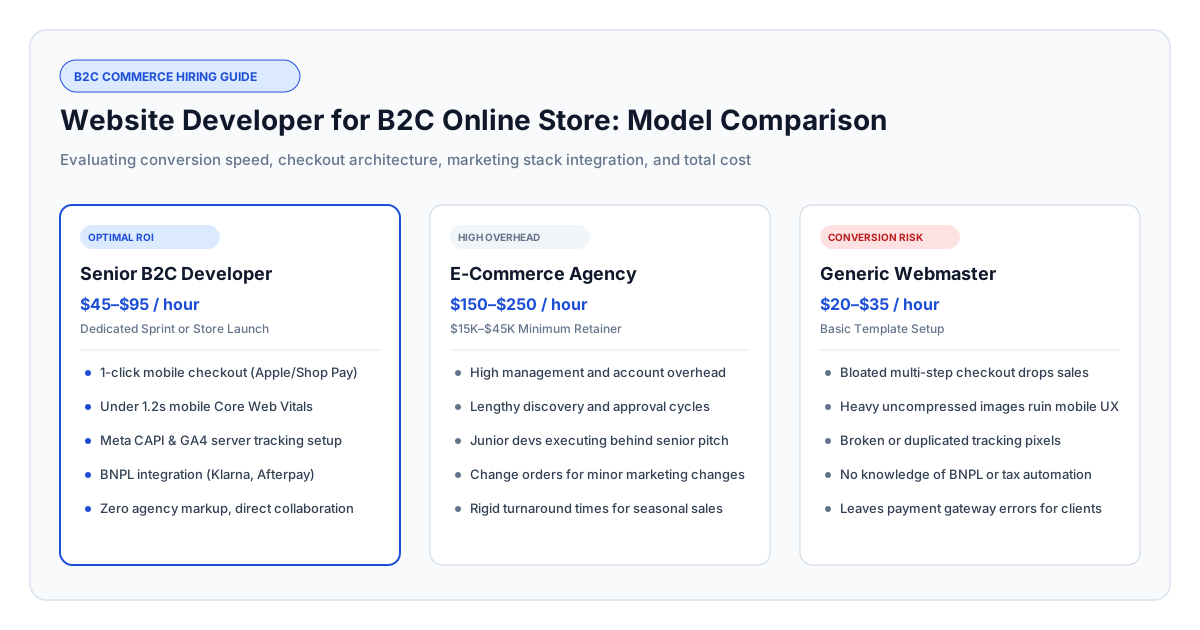
Current as of October 2026. Hiring an independent senior website developer for a business-to-consumer (B2C) online store costs between $45 and $95 per hour, resulting in a typical project investment of $2,700 to $9,500 for a production-ready store build or conversion overhaul (60 to 100 hours). In contrast, specialized e-commerce design agencies quote $150 to $250 per hour ($15,000 to $45,000+ per engagement) while adding account management layers that slow down seasonal marketing rollouts. A qualified B2C developer builds an integrated revenue engine: sub-second mobile page speeds, frictionless accelerated checkout, Buy Now Pay Later (BNPL) payment routing, server-side ad tracking (Meta CAPI and GA4), and automated inventory synchronization.
Unlike Business-to-Business (B2B) portals that prioritize custom credit terms, wholesale volume pricing, and manual purchase order approvals, a B2C online store operates in an impulse-driven, mobile-first consumer environment. More than 70% of consumer retail traffic arrives via mobile devices, where every 100 milliseconds of interface latency reduces conversion rates by up to 7%. When a B2C store underperforms, the issue is rarely aesthetic; it is architectural friction in mobile navigation, checkout drop-offs, or unverified ad-tracking pixels that blind your paid acquisition campaigns. If you need an experienced engineer who understands conversion architecture, explore our vetted Shopify developers or full-stack e-commerce engineers matched directly to your retail category.
Figure 1: Evaluating senior B2C developers against digital agencies and generic template builders across mobile speed, checkout architecture, tracking reliability, and operational cost.
What a B2C Online Store Developer Actually Delivers
A B2C website developer is an e-commerce engineer who translates consumer shopping behavior, merchandising strategies, and marketing campaigns into a technical storefront that converts paid and organic visitors into paying customers. Their core objective is not simply arranging visual banners; it is eliminating friction across the consumer buying journey.
A generic webmaster builds static web pages with pictures and contact forms; an experienced B2C commerce engineer constructs a 5-layer transactional machine:
- Storefront Speed and Mobile Usability: Delivering sub-second product page loads, responsive image delivery, dynamic variant selectors (color swatches, size pickers), and intuitive facet filters that prevent mobile bounce rates.
- Accelerated Payment and Checkout Infrastructure: Implementing 1-click digital wallets (Apple Pay, Google Pay, Shop Pay), recurring subscriptions, and installment gateways (Klarna, Afterpay) with automated real-time sales tax calculation.
- Server-Side Marketing and Conversion Tracking: Setting up server-to-server tracking (Meta Conversions API, TikTok Pixel, Google Analytics 4) to ensure advertising platforms receive accurate conversion signals despite browser privacy blocks and ad blockers.
- Operations, Logistics, and Inventory Sync: Connecting real-time multi-location inventory, warehouse management systems (WMS), automated shipping rate calculators, and tracking notifications.
- Customer Retention and Post-Purchase LTV: Building automated abandoned cart recovery workflows, customer account loyalty portals, and one-click post-purchase upsells that increase average order value (AOV).
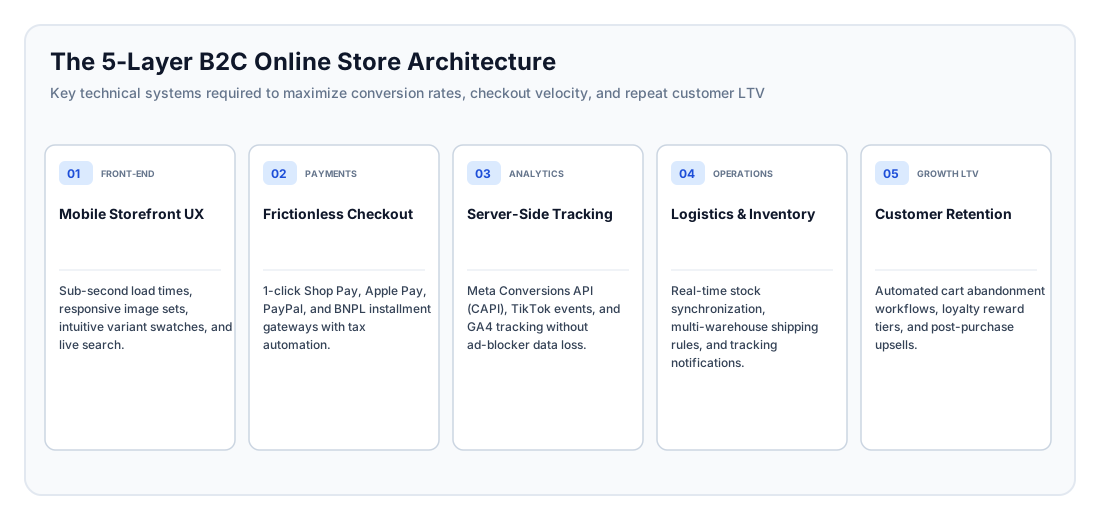
Figure 2: The 5-layer commercial architecture required to maximize mobile conversion rates, payment throughput, and customer lifetime value.
B2C vs. B2B E-Commerce: Core Technical Differences
Hiring a developer who primarily builds corporate B2B portals for a B2C consumer brand is a frequent strategic mistake. B2B and B2C online stores operate under completely opposite user expectations, technical constraints, and transaction flows:
| Architectural Dimension | B2C Consumer Online Store | B2B Wholesale Portal |
|---|---|---|
| Primary User Persona | Individual consumer buying on impulse or emotional appeal. | Corporate procurement manager fulfilling operational requisitions. |
| Device Breakdown | 70%–85% Mobile viewports (smartphones, social app webviews). | 65%–80% Desktop viewports during standard business hours. |
| Checkout Flow | Accelerated 1-click checkout; guest checkout mandatory. | Multi-step approval hierarchies, credit terms (Net 30/60), purchase orders. |
| Payment Methods | Credit cards, Apple Pay, Shop Pay, PayPal, BNPL installments. | Bank wire transfers, automated ACH, corporate invoicing, trade credit. |
| Pricing Logic | Uniform retail pricing, dynamic flash discounts, promotional bundles. | Customer-specific tiered pricing tables, volume tiering, negotiated contracts. |
| Catalog Discovery | Visual swatches, customer reviews, social proof, lifestyle media. | Bulk SKU reorder tables, CSV order uploads, strict technical spec sheets. |
| Marketing Infrastructure | Direct server-side ad attribution (Meta CAPI, TikTok, Google Ads). | Account-Based Marketing (ABM), CRM pipeline sync (HubSpot, Salesforce). |
When you hire a B2C specialist, you are paying for an engineer who understands that forcing guest shoppers to create an account with a password before seeing shipping costs destroys 25% to 35% of checkout completions immediately.
Mobile Speed Optimization: The Direct Link to Revenue
In consumer e-commerce, mobile page load speed is not a technical vanity metric; it is the single largest controllable determinant of advertising return on ad spend (ROAS) and customer conversion rates. Google research confirms that as mobile page load times stretch from 1 second to 3 seconds, the probability of a consumer bouncing increases by 32%; by 5 seconds, bounce rates surge by 90%.
An expert B2C developer engineers performance across four commercial benchmarks:
1. Largest Contentful Paint (LCP) Under 1.8 Seconds
LCP measures the time it takes for the primary product image or hero banner to render completely on a standard 4G mobile connection. Junior developers upload raw 4MB product images directly from photographers, causing mobile browsers to stutter. Senior developers implement automated responsive image sets with next-generation image formats (WebP and AVIF), pre-loading critical hero assets while deferring non-essential media.
2. Eliminating Cumulative Layout Shift (CLS)
CLS measures visual stability. Few experiences frustrate shoppers more than tapping an "Add to Cart" button only for a late-loading banner or review widget to shift the layout downward, causing them to accidentally tap an advertisement or out-of-stock variant. A professional B2C engineer reserves explicit dimensional aspect ratios for all media and lazy-loaded third-party widgets.
3. Third-Party Script Auditing and App Bloat Reduction
Marketing teams love installing Shopify apps for popups, trust badges, countdown timers, and chat widgets. Each uncurated app injects external JavaScript that blocks the mobile browser's main execution thread. A senior developer audits scripts, removes redundant tracking code, and ensures third-party tools load asynchronously without delaying the critical purchasing path.
Checkout Architecture: Digital Wallets and Buy Now Pay Later (BNPL)
Checkout friction is the primary cause of abandoned online shopping carts. Research from the Baymard Institute indicates that the average documented e-commerce shopping cart abandonment rate exceeds 70%, with nearly a fifth of shoppers abandoning specifically due to a "too long or complicated checkout process."
A B2C developer optimizes the money path through three modern payment strategies:
1. Accelerated 1-Click Digital Wallets
Modern consumers rarely type out 16-digit credit card numbers and billing addresses on a smartphone touchscreen. Integrating accelerated checkout options—such as Apple Pay, Google Pay, and Shop Pay—allows repeat consumers to complete transactions in under 10 seconds using biometric facial or fingerprint recognition. Stores offering Shop Pay consistently see checkout-to-order conversion rates up to 50% higher than standard guest checkouts.
2. Buy Now Pay Later (BNPL) Integration
For consumer orders ranging between $50 and $1,500, offering interest-free installment options via providers such as Klarna, Afterpay, or Affirm is essential. Merchandising split payment messaging directly on product display pages (e.g., "or 4 interest-free payments of $24.75") lowers psychological purchase resistance and routinely increases Average Order Value (AOV) by 15% to 25%.
3. Automated Tax and Shipping Calculation
Unexpected shipping costs or missing tax calculations presented late in the checkout flow cause immediate abandonment. A senior engineer configures automated address autocomplete services paired with cloud tax calculation engines (such as Shopify Tax or Avalara), providing instant, accurate shipping tiers and tax breakdowns before the final payment step.
Marketing and Analytics Infrastructure: Server-Side Tracking (CAPI)
Browser-based tracking pixels are no longer sufficient for managing paid customer acquisition. Privacy initiatives—such as Apple iOS App Tracking Transparency (ATT), Safari Intelligent Tracking Prevention (ITP), and widespread consumer ad-blocker extensions—routinely block 20% to 40% of standard client-side browser tracking signals.
When browser pixels fail, ad platforms (Meta Ads, Google Ads, TikTok Ads) cannot attribute purchases back to specific ad campaigns. Your marketing team sees inflated Customer Acquisition Costs (CAC), ad algorithms optimize on incomplete data, and retargeting audiences shrink.
A qualified B2C developer resolves this attribution blind spot by deploying Server-Side Conversion Tracking (Conversions API / CAPI):
- Direct Server-to-Server Attribution: When a consumer completes an order, your e-commerce backend fires an encrypted purchase event directly to Meta's and Google's server endpoints. Even if the consumer's browser blocks cookies or runs aggressive ad blockers, the conversion signal is recorded with 100% fidelity.
- Event Deduplication: To prevent inflating transaction metrics, the developer assigns a unique transaction event identifier to both the browser pixel and the server payload. Ad platforms recognize the matching identifier and merge the data into a single verified conversion.
- Customer Match Enrichment: The server securely passes hashed customer parameters (such as email, phone, city, and postal code) alongside the transaction, dramatically improving Event Quality Match scores and lowering paid ad costs.
Platform Selection: Shopify vs. WooCommerce vs. Custom Headless
Selecting the right underlying platform dictates your store's development timeline, maintenance overhead, and total cost of ownership. For 90% of B2C brands, the choice centers on three architectural approaches:
| Evaluation Criteria | Shopify (Hosted SaaS) | WooCommerce (WordPress) | Custom Headless (Next.js / Storefront API) |
|---|---|---|---|
| Core Strength | Industry-standard checkout velocity, zero server maintenance, enterprise security. | Total code and database ownership, deep content-commerce integration, zero platform fees. | Bespoke interactive product configurators, ultra-fast custom UI, multi-brand storefronts. |
| Checkout Reliability | Highest in industry (99.99% uptime, built-in fraud scoring, Shop Pay network). | Depends on hosting quality, gateway plugin stability, and caching configurations. | Leverages hosted checkout engines (Shopify Checkout or Stripe) via API. |
| Hosting & Maintenance | Included in monthly subscription; platform handles scaling and PCI compliance. | Requires managed hosting (WP Engine, Cloudways), security hardening, and regular updates. | Requires cloud hosting (Vercel, AWS) for the frontend alongside headless commerce APIs. |
| Development Timeline | 2 to 4 weeks for a fully customized, high-converting store. | 3 to 6 weeks for custom theme development and plugin auditing. | 8 to 16 weeks for full-stack frontend engineering and API routing. |
| Total Initial Cost | $2,700 – $8,500 build | $3,200 – $9,500 build | $15,000 – $45,000+ build |
| Best Fit For | Direct-to-consumer (DTC) brands, apparel, beauty, lifestyle, high-growth retail. | Content-heavy blogs expanding into merchandise, businesses wanting self-hosted control. | Enterprise brands with complex interactive design requirements and heavy traffic. |
For most growing B2C retail businesses, Shopify provides the highest commercial return on investment because the platform invests billions of dollars into maintaining checkout conversion rates and global payment compliance. If you need complex content integration or self-hosted control, our WooCommerce hiring guide details self-hosted e-commerce architecture in depth.
Budget Planning, Developer Rates, and Agency Comparison
Understanding developer hourly rates and milestone scopes allows retail founders to budget development expenditures realistically. Independent senior B2C e-commerce developers charge between $45 and $95 per hour depending on their technical background, platform specialization, and conversion optimization track record.
In contrast, digital e-commerce agencies bill at $150 to $250 per hour. On a typical 80-hour store build, an agency costs between $12,000 and $20,000, whereas an independent senior developer delivers the exact same store scope for $3,600 to $7,600—saving your business over 60% while giving you direct, unmediated communication with the person authoring your storefront.
| Project Milestone | Technical Deliverables | Estimated Hours | Independent Cost ($45–$95/hr) | Agency Cost ($150–$250/hr) |
|---|---|---|---|---|
| 1. Architecture & Platform Setup | Platform configuration, domain DNS, shipping zone rules, tax automation, security settings. | 8–14 hrs | $360 – $1,330 | $1,200 – $3,500 |
| 2. Storefront Theme & Mobile UX | Custom responsive layout, mobile navigation, product page variant swatches, sticky add-to-cart. | 20–35 hrs | $900 – $3,325 | $3,000 – $8,750 |
| 3. Checkout & Payment Gateways | Digital wallet integration (Apple Pay, Shop Pay), BNPL setup (Klarna), live payment testing. | 10–18 hrs | $450 – $1,710 | $1,500 – $4,500 |
| 4. Marketing & Server-Side Tracking | Meta Conversions API (CAPI), Google Analytics 4, TikTok event setup with deduplication. | 8–14 hrs | $360 – $1,330 | $1,200 – $3,500 |
| 5. Catalog, Inventory & Logistics | Product catalog upload, variant attributes, shipping carrier rules, email notifications. | 10–16 hrs | $450 – $1,520 | $1,500 – $4,000 |
| 6. Launch QA & Speed Tuning | Mobile performance optimization, cross-browser checkout testing, post-launch live support. | 8–12 hrs | $360 – $1,140 | $1,200 – $3,000 |
| Total Store Build / Overhaul | Complete High-Converting B2C Online Store | 64–109 hrs | $2,880 – $10,355 | $9,600 – $27,250 |
If you have already received an estimate from an external agency or freelancer, you can validate your scope with an independent second opinion software review to verify whether the quoted hours and pricing align with industry standards.
Real-World Case Studies: B2C E-Commerce Engineering
The financial impact of hiring an experienced B2C developer is best demonstrated through real-world commercial improvements.
Case Study 1: Direct-to-Consumer Apparel Brand Checkout Overhaul
Initial Situation: A fast-growing direct-to-consumer activewear brand generating $85,000 in monthly sales suffered from a 76% cart abandonment rate on mobile traffic.
What Was Blocking the Project: The store used an outdated theme with a clumsy multi-step checkout that forced customers to type long addresses on mobile screens. In addition, mobile product pages took 4.8 seconds to load, causing heavy drop-offs from Meta ad campaigns.
The Solution: An independent B2C developer restructured the mobile shopping journey: rebuilt the product template with responsive WebP image sets (dropping LCP from 4.8s to 1.3s); added a sticky mobile add-to-cart bar with instant variant selectors; and activated 1-click Shop Pay alongside Klarna installment payments.
The Business Outcome: Mobile cart abandonment dropped from 76% to 58%, mobile conversion rate jumped from 1.6% to 2.7%, and monthly revenue grew by $38,000 within the first 60 days without increasing advertising spend.
Case Study 2: Clean Beauty Brand Server-Side Ad Attribution
Initial Situation: An organic skincare brand spending $30,000 per month on Meta and TikTok ads noticed their reported ROAS drop from 3.2x to 1.7x following mobile privacy updates.
What Was Blocking the Project: Browser-based pixels were losing over 35% of purchase events due to browser privacy blockers, leaving ad algorithms blind and unable to optimize targeting.
The Solution: The developer audited and re-engineered the store's analytics architecture: eliminated duplicate client-side tracking apps, deployed Meta Conversions API (CAPI) and GA4 through server-side endpoints with cryptographically matched event IDs, and passed customer match parameters securely.
The Business Outcome: Event Match Quality scores surged from 4.2/10 to 8.9/10, purchase signal recovery increased by 38%, and ad algorithms regained accurate attribution, allowing the brand to scale ad spend profitably with a blended ROAS recovery back to 2.9x.
Case Study 3: Gourmet Food Retailer Platform Migration
Initial Situation: A specialty coffee roaster running an unmanaged WooCommerce store on a shared hosting server experienced frequent website crashes during Black Friday promotions.
What Was Blocking the Project: Every time an email blast drove 500 concurrent visitors to the website, the database stalled, checkout timed out, and shoppers were charged without receiving order confirmation emails.
The Solution: The business hired an independent e-commerce developer to migrate the store to Shopify: transferred 12,000 customer records and order histories seamlessly, configured automated recurring coffee subscriptions, and established automated fulfillment routing to their local logistics partner.
The Business Outcome: The store maintained 100% uptime during the holiday shopping rush, handled 2,200 concurrent shoppers without latency, and added $14,000 in recurring monthly subscription revenue within four months.
Pre-Hire Vetting: 7 Technical Questions to Ask B2C Developers
When screening developer candidates for a B2C online store, ask practical questions that evaluate their real-world experience with consumer shopping behavior, payment gateways, and ad tracking:
- "How do you optimize mobile product pages so that Core Web Vitals remain under 1.8 seconds?"
Strong signal: Discusses responsive image sets, lazy loading below-the-fold media, auditing third-party marketing apps, and eliminating render-blocking scripts.
Red flag: Focuses only on desktop design and claims mobile speed depends entirely on the hosting provider. - "What is the difference between client-side pixel tracking and server-side Conversions API (CAPI)?"
Strong signal: Explains that client-side pixels fire inside the consumer's browser and are vulnerable to ad blockers and browser privacy restrictions, whereas server-side CAPI sends data directly from your server to ad networks with event deduplication.
Red flag: Thinks installing a basic Shopify app with a browser pixel is sufficient for ad tracking. - "How do you handle variant switching (e.g., color and size) on product pages without hurting mobile conversion?"
Strong signal: Recommends visual swatches over dropdowns, real-time variant stock level indicators, instant URL parameter updates, and maintaining a sticky "Add to Cart" button on mobile viewports.
Red flag: Relies on standard select dropdown menus that hide variant availability until the shopper taps through. - "How do you implement Buy Now Pay Later (BNPL) gateways like Klarna or Afterpay effectively?"
Strong signal: Explains placing dynamic installment messaging prominently on the product page beneath the price, as well as configuring the gateway in checkout to maximize high-ticket conversions.
Red flag: Views BNPL as just another checkbox in payment settings without merchandising the installment pricing to shoppers. - "How do you prevent shopping cart abandonment during the shipping and tax stage of checkout?"
Strong signal: Emphasizes automatic address autocomplete, transparent shipping calculators on cart drawers before checkout, and clear threshold progress bars for free shipping incentives.
Red flag: Conceals shipping costs until the final payment step. - "What is your process for testing payment gateways before taking a B2C store live?"
Strong signal: Conducts live end-to-end transactions with real credit cards and digital wallets (and immediate refunds), verifying that order confirmation emails trigger, inventory decreases, and webhook signals fire cleanly.
Red flag: Only tests in simulated gateway test modes and leaves live payment verification to the store owner after launch. - "How do you protect a store from app bloat when marketing teams request multiple promotional tools?"
Strong signal: Conducts script performance audits, evaluates whether requested features can be built natively into the theme, and removes unused tracking scripts and orphaned app code.
Red flag: Installs a new marketplace app for every minor promotional feature without evaluating performance impact.
The 3–5 Hour Practical Trial Task & Pass/Fail Rubric
Never hire an e-commerce developer for a mission-critical consumer store based solely on portfolio screenshots. Always conduct a paid, 3–5 hour practical trial task in an isolated development or staging sandbox. Compensate the candidate at their full hourly rate ($45–$95/hr) to ensure senior specialists accept the assessment.
Provide the candidate with a staging store and a sample product with multiple variants (such as clothing with 4 colors and 5 sizes). Task the developer with:
- Building a responsive mobile product view with visual color swatches and instant stock availability feedback.
- Adding a sticky mobile "Add to Cart" interaction that smoothly updates cart drawer state.
- Configuring a test payment gateway and displaying installment split-pricing messaging below the main price.
- Ensuring the page scores above 85 on mobile Google PageSpeed Insights.
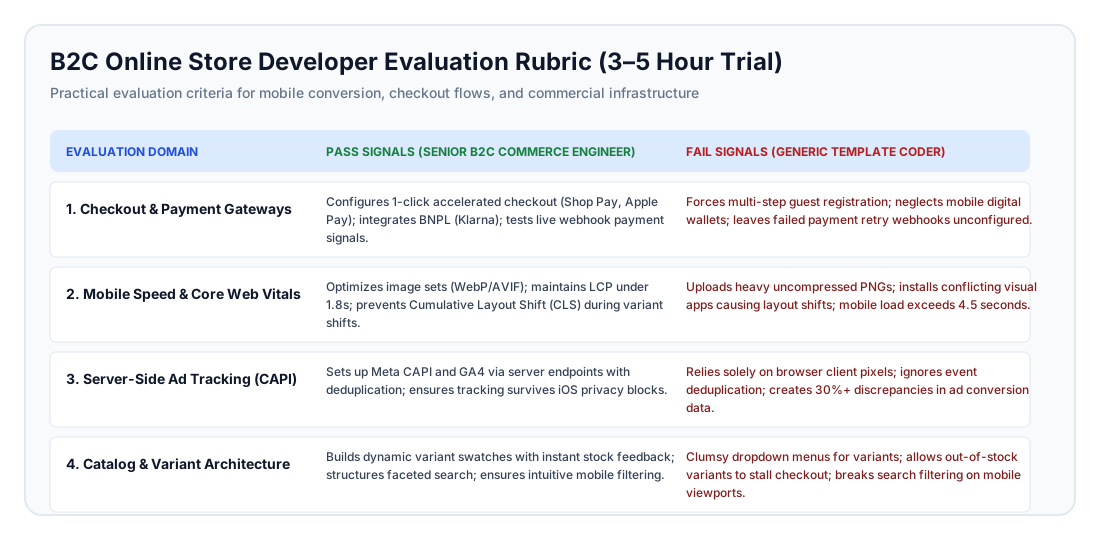
Figure 3: Objective evaluation rubric assessing checkout architecture, mobile speed, marketing tracking, and variant usability.
Candidate Assessment Matrix
| Evaluation Domain | Pass Signal (Senior B2C Commerce Engineer) | Fail Signal (Generic Template Coder) |
|---|---|---|
| Checkout & Payment Setup | Configures digital wallets and installment messaging cleanly; verifies live webhook triggers; ensures guest checkout is smooth. | Forces multi-step registration; neglects digital wallets; leaves payment error handling unaddressed. |
| Mobile Speed & Performance | Optimizes responsive image sizing; maintains mobile LCP under 1.8s; prevents layout shifts during variant toggling. | Uploads oversized raw assets; causes heavy layout jumping; mobile load exceeds 4.5 seconds. |
| Marketing Attribution (CAPI) | Understands server-side tracking and deduplication; validates that ad platforms receive accurate purchase signals. | Relies strictly on unverified browser pixels; ignores signal loss from browser privacy blockers. |
| Variant UX & Merchandising | Visual swatches with clear out-of-stock indicators; sticky mobile action bar; smooth cart drawer transition. | Clumsy nested dropdowns; out-of-stock states confuse shoppers; mobile view requires excessive pinching and zooming. |
| Code Quality & Cleanliness | Clean, modular theme code; avoids excessive third-party dependencies; documents configuration steps clearly. | Hardcodes text directly into templates; installs bloated external libraries for basic UI elements. |
Common Pitfalls When Building a B2C Online Store
Store owners frequently encounter costly mistakes when planning and launching consumer e-commerce websites:
- Prioritizing Desktop Design Over Mobile Conversion: Founders often review storefront mockups on large desktop monitors, approving elaborate layouts that look terrible on a smartphone screen. Over 75% of your customers will buy on mobile; design and evaluate your mobile experience first.
- Forcing User Account Creation Before Purchase: Requiring first-time shoppers to verify an email and create a password before buying is the quickest way to kill conversions. Always provide seamless guest checkout with an optional post-purchase account creation prompt.
- Hiding Shipping Fees Until the Final Screen: Unexpected shipping costs are the number one reason consumers abandon shopping carts. Display transparent shipping rates or clear free-shipping progress bars directly inside the cart drawer.
- Overloading the Store with Conflicting Marketing Apps: Installing multiple apps for popups, countdown timers, spin-the-wheel discounts, and social proof badges slows mobile load times and creates a spammy impression that damages consumer brand trust.
- Failing to Verify Live Payment Webhooks: Testing a checkout with dummy test credit cards does not prove that live gateway webhooks are functioning. Always perform real small-dollar transactions with real credit cards and digital wallets before driving paid advertising traffic.
Expert Advice for Retail Founders and E-Commerce Managers
To ensure maximum revenue and technical resilience from your B2C e-commerce investment:
- Tie Development Milestones to Staging Sign-Offs: Break your store launch into structured phases (Storefront UX → Payment Gateways → Tracking Infrastructure → Fulfillment Sync). Withhold final milestone payments until full checkout transactions and tracking events are verified in a staging environment.
- Audit Ad Tracking Before Launching Paid Campaigns: Never spend money on Meta, Google, or TikTok advertising until your developer verifies that purchase event values and event match quality scores are registering accurately in server dashboards.
- Maintain Direct Ownership of Platforms and Accounts: Ensure your Shopify or hosting account, domain registrar, payment gateways (Stripe, PayPal), and ad accounts are established under your company's corporate credentials, granting developers contributor or staff access.
- Implement Post-Launch Conversion Monitoring: Reserve 10 to 15 hours of developer support for the first two weeks following store launch to monitor real customer checkout sessions, fix unexpected mobile browser bugs, and tune performance under live traffic.
Frequently Asked Questions
How much does it cost to hire a developer to build a B2C online store?
Hiring an independent senior e-commerce developer costs between $2,700 and $9,500 for a complete, high-converting B2C store build or major overhaul (60 to 100 hours at $45–$95/hr). In contrast, specialized e-commerce design agencies quote between $15,000 and $45,000 for comparable deliverables.
What is the best e-commerce platform for a B2C online store?
For the vast majority of B2C retail brands, Shopify is the superior platform because of its unmatched mobile checkout velocity, integrated Shop Pay network, enterprise security, and low maintenance overhead. WooCommerce is suitable if you have deep WordPress content integration, while custom headless setups are reserved for enterprise brands with bespoke configurator needs.
How does mobile page speed impact B2C conversion rates?
Every 100 milliseconds of page latency reduces retail conversion rates by 1% to 7%. Because over 70% of consumer retail traffic originates on mobile devices, keeping mobile Largest Contentful Paint (LCP) under 1.8 seconds directly increases conversion rates and lowers paid advertising costs.
Why are digital wallets like Apple Pay and Shop Pay so important?
Digital wallets eliminate the need for consumers to manually enter 16-digit credit card numbers and shipping addresses on mobile screens. Stores offering 1-click accelerated checkout routinely see checkout conversion rates increase by up to 50% compared to standard form checkouts.
What is the benefit of integrating Buy Now Pay Later (BNPL) options?
Offering interest-free installment payment providers such as Klarna or Afterpay lowers psychological purchase resistance for orders between $50 and $1,500, increasing Average Order Value (AOV) by 15% to 25% and attracting younger demographic consumers.
Why do B2C stores need server-side tracking (Meta CAPI)?
Modern browser privacy protections (iOS ATT, Safari ITP, and ad blockers) block 20% to 40% of standard browser-based pixel tracking. Server-side tracking sends conversion data directly from your server to ad networks, restoring ad attribution accuracy and lowering customer acquisition costs.
How long does it take to develop a custom B2C online store?
A professionally engineered B2C online store typically takes 2 to 4 weeks to design, develop, test, and launch when working with an experienced independent developer, compared to 8 to 16 weeks with a traditional agency.
What are the biggest red flags when hiring a B2C store developer?
Major warning signs include: evaluating design only on desktop monitors, proposing forced account creation for guest shoppers, lacking understanding of server-side ad tracking (CAPI), and testing payments only in simulated test environments without real transaction verification.
Should I hire a freelancer or an agency for my B2C store?
Hiring an independent senior e-commerce developer provides direct collaboration with the engineer authoring your store at a 50% to 70% cost savings compared to an agency. Agencies are only necessary if you require large dedicated teams of copywriters, art directors, and account managers alongside technical development.
Can a B2C store developer help set up shipping and sales tax?
Yes. A qualified e-commerce developer configures automated shipping rate rules (such as flat-rate tiers, weight-based rates, and free shipping thresholds) and integrates cloud sales tax automation (Shopify Tax or Avalara) to ensure compliance across regional tax jurisdictions.
How do I test my store before launching to live customers?
Conduct real small-dollar transactions using live credit cards and mobile digital wallets, verify that order confirmation emails deliver, test that inventory stock levels deduct accurately, and confirm that purchase events register in Meta and Google Analytics dashboards.
Who owns the store code and digital assets after development?
Under standard contractor agreements with "work made for hire" terms, your company retains 100% intellectual property ownership of all custom theme files, branding assets, domain configurations, and store data upon invoice payment.
Launch Your High-Converting B2C Online Store
Building a successful B2C online store requires technical speed, checkout optimization, and reliable marketing attribution. Attempting to build consumer storefronts with generic template coders inevitably leads to mobile abandonment, broken ad tracking, and wasted marketing spend.
If you are launching a new consumer brand or upgrading an existing storefront, connect with our network of pre-vetted engineers. Hire a verified Shopify developer or a full-stack e-commerce engineer matched to your product category, or explore our flexible hourly arrangements to start with an architectural review of your mobile shopping funnel.
Written by Michael Melnyk
Senior IT Technical Writer & Technology Analyst
Senior Technical Writer and IT Industry Analyst with over 7 years of experience analyzing software engineering ecosystems, tech leadership models, and developer procurement frameworks.