Telegram Mini Apps vs. Chat Bots: Which Should You Build?
Decide whether your business needs a traditional text-based Telegram bot or a modern Telegram Mini App (TMA). Compare conversion rates, technical complexity, and costs.

The introduction of Telegram Mini Apps (TMAs) has permanently altered how companies think about mobile product distribution. Rather than demanding that prospective users navigate app stores, download a 100MB native package, and create yet another account from scratch, businesses can now launch full-featured web applications directly inside Telegram's native client with zero installation friction.
Yet for business owners and product managers evaluating the platform, a critical strategic question arises: Should you build a traditional text-and-button chat bot, or invest in a full-fledged Telegram Mini App? Choosing the wrong model can either result in disappointing user conversion or over-engineering a simple notification flow. Here is a definitive comparison of user experience, technical architecture, and development investment.
Understanding the Fundamental Difference
To choose effectively, founders must understand how each approach interacts with the end user:
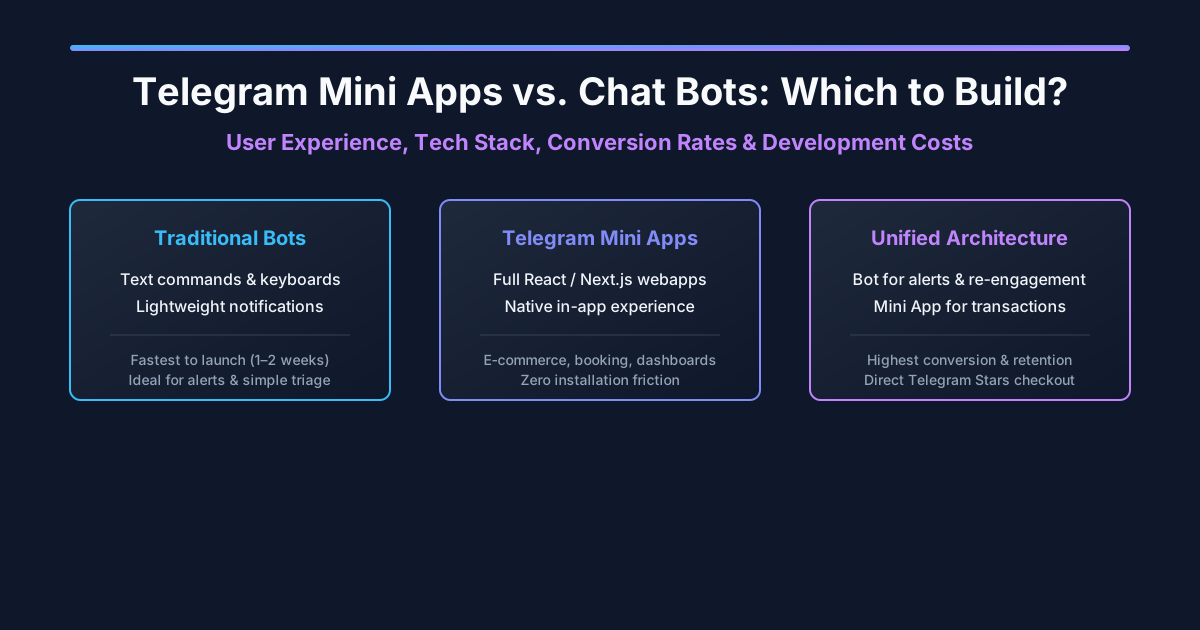
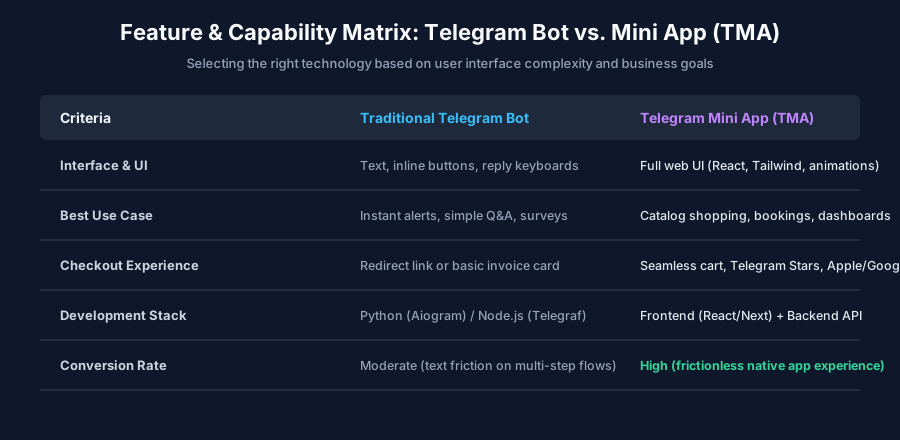
- Traditional Telegram Chat Bots: Interaction occurs purely through sequential messages, inline keyboard buttons, and reply keyboards. Users navigate via command menus (e.g.,
/start,/catalog,/settings). The interface is strictly constrained to text bubbles, images, and audio messages. - Telegram Mini Apps (TMA): A TMA is a responsive single-page web application (SPA) built with modern frontend frameworks (React, Vue, Svelte, Next.js) that opens inside an embedded WebView overlay in Telegram. It delivers a native mobile app feel: smooth animations, interactive swipe gestures, multi-product shopping carts, and dynamic dashboards.
For founders building scalable bot and web solutions, our directory connects you directly with vetted Telegram developers who specialize in both bot backends and frontend Mini Apps.
When to Choose a Traditional Chat Bot
Traditional bots excel at straightforward, linear, or asynchronous communication where a graphical interface would introduce unnecessary complexity:
- Instant Alerts & Notifications: Pushing real-time monitoring updates, server incident alerts, price changes, or order tracking statuses.
- Simple Customer Support Triage: Answering standard frequently asked questions, routing tickets to human agents, and collecting customer feedback.
- Two-Factor Authentication (2FA) & Security Verification: Delivering temporary one-time passwords (OTP) and login confirmations securely.
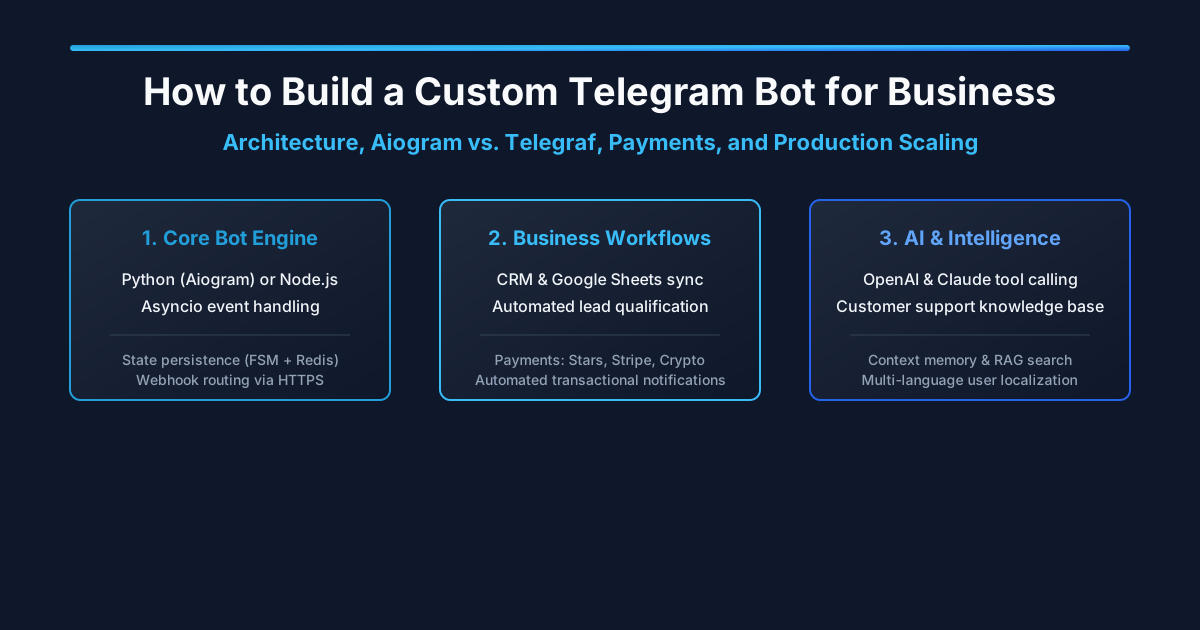
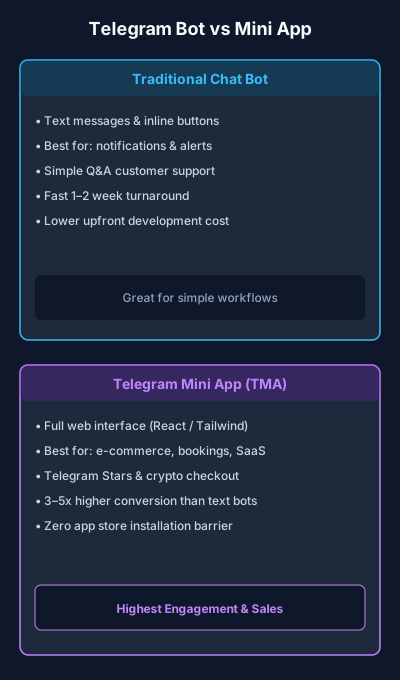
- Rapid Launch Timelines: If you need a functional proof-of-concept operating within 5 to 7 business days on a modest budget, a text-based bot built in Python or Node.js is fastest to market. For an architectural deep dive, read our guide on building custom Telegram bots for business.
When a Telegram Mini App Is Essential
If your customer journey involves browsing multiple items, customizing selections, or visualizing data, text-based bots quickly create user fatigue. A Telegram Mini App is overwhelmingly superior in these scenarios:
- E-Commerce & Product Catalogs: Browsing dozens of products with photos, filtering by category, selecting sizes/colors, and reviewing cart totals in a visual shopping bag. In e-commerce, TMAs routinely achieve 3 to 5 times higher conversion rates than multi-step text menus.
- Service Bookings & Calendars: Selecting appointment dates, viewing available staff slots, and booking consultations through interactive visual calendars.
- Dashboards & SaaS Portals: Allowing subscribers to monitor analytics, view trading positions, manage account subscriptions, or inspect usage metrics visually.
- Native In-App Payments: TMAs integrate seamlessly with Telegram Stars, Apple Pay, Google Pay, and Web3 crypto wallets, providing frictionless checkout without leaving the messenger context.
The Optimal Hybrid Pattern: The "Bot + Mini App" Synergy
The most successful commercial deployments do not treat bots and Mini Apps as mutually exclusive; they combine them into a unified customer funnel:
- The Bot as the Acquisition & Notification Engine: The traditional bot handles initial user greeting, sends transactional purchase receipts, and triggers re-engagement alerts (e.g., abandoned cart reminders or shipping notifications).
- The Mini App as the Conversion Engine: When the user clicks "Open Shop" or "View Dashboard", the Mini App launches instantly to handle rich visual browsing, selection, and checkout.
This hybrid approach captures the best of both worlds: the high viral distribution and instant push notifications of Telegram messaging, combined with the conversion power of modern web applications.
Technical Stack and Development Cost Benchmarks
From an engineering perspective, developing a Telegram Mini App requires full-stack capabilities:
- Frontend: React, Next.js, or Vite paired with Tailwind CSS and the official
@telegram-apps/sdkfor native theme synchronization, haptic feedback, and cloud storage access. - Backend: Fastify, Express (Node.js), or FastAPI (Python) with rigorous HMAC-SHA256 signature verification of Telegram's
initDatato guarantee user authenticity. - Database & Hosting: PostgreSQL (Supabase) for structured data, Redis for caching, and Vercel / Cloudflare for low-latency global CDN delivery.
In terms of investment, simple text bots typically range from $800 to $2,000, while custom Telegram Mini Apps with payment integration and administrative backends range from $2,500 to $7,000. Working with independent senior developers on ProofDevs allows you to bypass agency markups and build with experienced engineers at direct rates ($40–$80/hour).
Build Your Telegram App with Vetted Specialists
Whether you need an automated customer service bot or an interactive, high-converting Telegram Mini App, connecting with the right technical expert is critical for security, scalability, and performance.
Check out our vetted talent in the Telegram bot developers category, or submit your project details on ProofDevs to receive tailored developer proposals within hours.
Written by Michael Melnyk
Senior IT Technical Writer & Technology Analyst
Senior Technical Writer and IT Industry Analyst with over 7 years of experience analyzing software engineering ecosystems, tech leadership models, and developer procurement frameworks.