Lovable App Creator: How Developers Turn AI Prototypes Into Production Apps
Lovable can turn a clear prompt into a convincing prototype quickly. A developer makes the next step safe: validating the code, securing data, connecting real services, and shipping a product your business can operate.

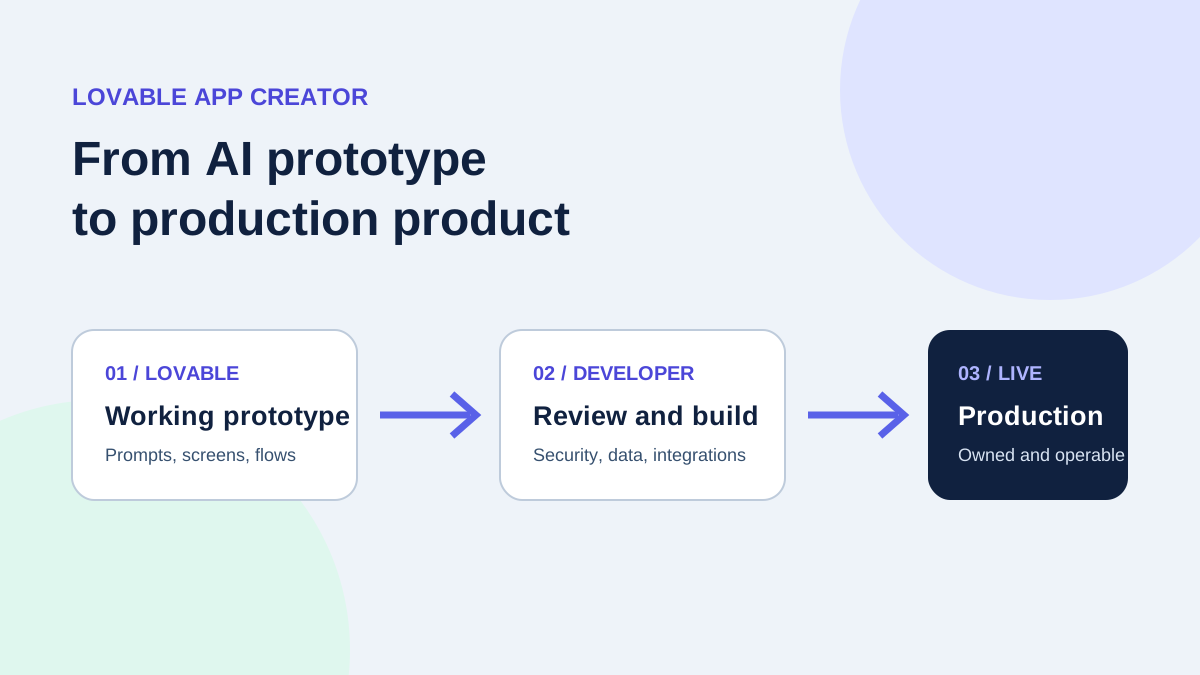
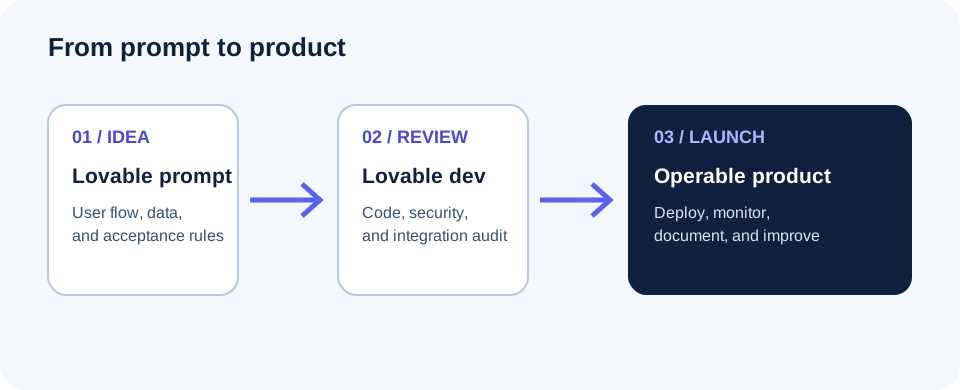
A Lovable app creator is the person who turns a Lovable prototype into a product that real users can trust. Lovable is useful for moving from an idea to working screens and a first data flow. A Lovable dev adds the engineering work that a prompt cannot guarantee: a reviewable codebase, safe authentication, reliable integrations, testing, deployment, and a handover your team can operate.
This guide explains what lovable tech is good at, when to hire a developer or freelancer, and how to choose between staying in Lovable, moving Lovable to WordPress, connecting Lovable and Shopify, or rebuilding a product on a custom stack. The examples are planning scenarios, not fixed quotes.
What does a Lovable app creator do?
A Lovable app creator can be a freelancer, an independent software engineer, or a small delivery team. Their job is broader than writing another prompt. They translate a business outcome into a tested release and make the generated project maintainable.
- Clarify the workflow: turn a vague idea into users, permissions, states, edge cases, and acceptance criteria.
- Audit the generated code: inspect dependencies, database rules, error handling, accessibility, and performance.
- Connect real services: payments, email, analytics, CRM, storage, maps, AI APIs, or internal systems.
- Prepare production: configure domains, environments, secrets, backups, logging, monitoring, and release controls.
- Leave a handover: document how to deploy, change content, rotate credentials, and recover the app.
A prompt can produce a useful starting point. It cannot by itself prove that a user can access only their own records, that a failed payment is reconciled, or that a future developer can safely change the code.
When should you hire a Lovable developer or freelancer?
Hire a Lovable developer when the prototype has business value but the cost of an unnoticed defect is rising. The strongest trigger is a real user, payment, private data, or operational dependency—not a desire to add more screens.
| Situation | Useful Lovable service | What to request |
|---|---|---|
| Idea or internal tool | Prompt refinement and prototype review | One tested happy path and a list of assumptions |
| Customer-facing MVP | Production-readiness audit | Prioritised risks, estimate, and launch plan |
| Existing Lovable app | Rescue and completion | Repository ownership, bug fixes, tests, and handover |
| Content-led marketing site | Lovable to WordPress migration or integration | Editable content, SEO-safe URLs, redirects, and ownership |
| Online store | Lovable and Shopify integration | Product, cart, checkout, customer, and analytics boundaries |
What services do Lovable specialists offer?
Good service descriptions name the outcome, not only the tool. A buyer may search for a Lovable app creator, a Lovable tech expert, or a Lovable dev, but they still need to know what will be delivered.
Lovable prototype to production
The developer reviews the project, fixes unsafe assumptions, adds missing states, and deploys a small release with monitoring. This is a fit for founders who have a convincing demo but no reliable launch path.
Lovable prompts for websites
A specialist can turn a brand brief into reusable prompts for page types, forms, content states, and responsive layouts. The valuable output is a consistent system and acceptance checklist—not a collection of one-off prompts that only the original author understands.
Lovable to WordPress
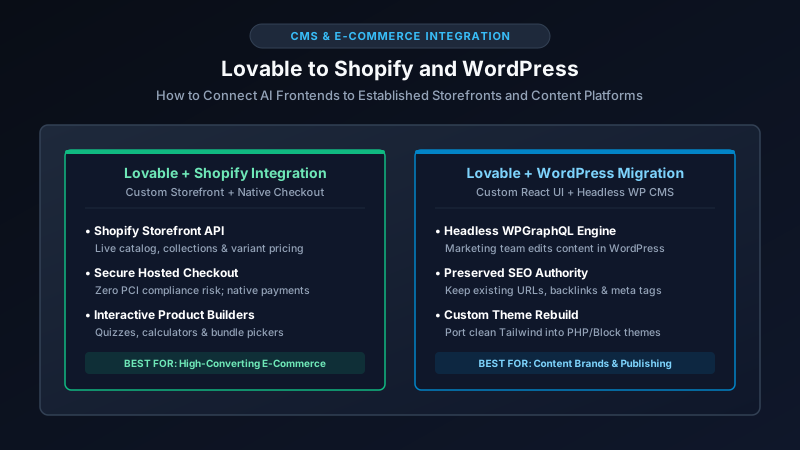
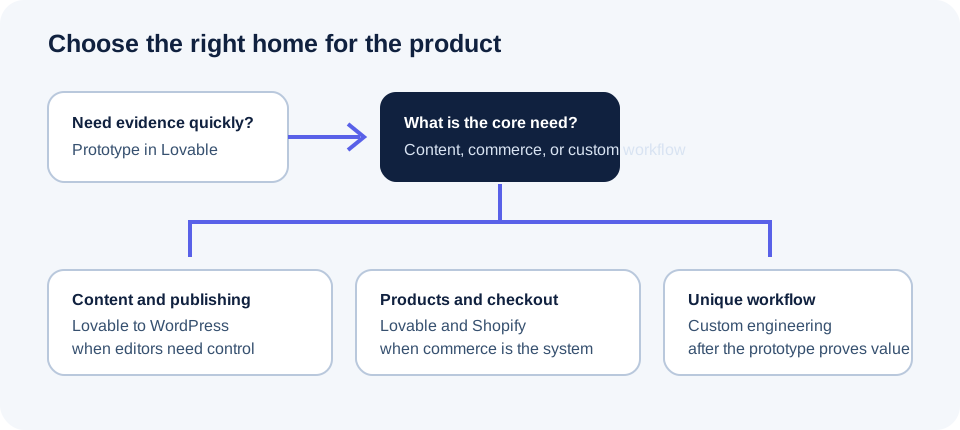
Choose this path when editors need WordPress administration, a mature publishing workflow, or an existing WordPress site must keep its rankings. The work may be a migration, a headless setup, or a rebuild that preserves URLs, metadata, redirects, and content ownership. See our step-by-step guide to connecting Lovable to Shopify and WordPress.
Lovable and Shopify
Lovable can help prototype a commerce experience, while Shopify can remain the system of record for products, checkout, orders, and customers. Ask the developer to define which screens are custom, which data comes from Shopify, how webhooks are handled, and where customer privacy boundaries sit.
Lovable database and backend security
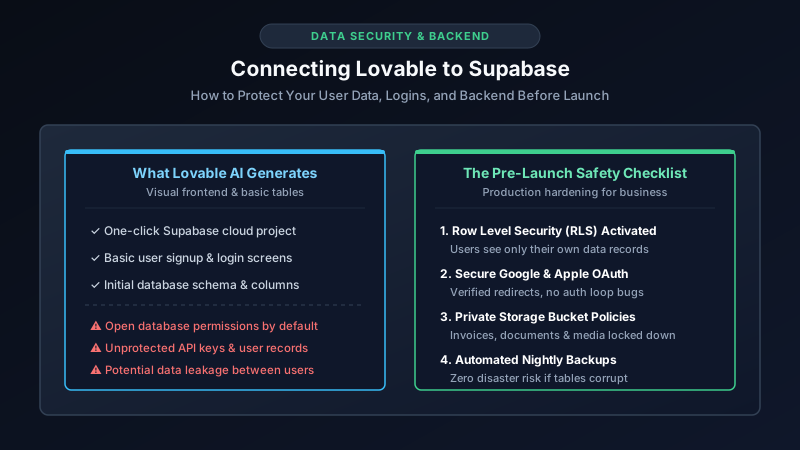
Connecting real user accounts requires proper PostgreSQL and Row Level Security (RLS) rules. Read our breakdown on connecting Lovable to Supabase safely before onboarding public users.
Lovable code export and ownership
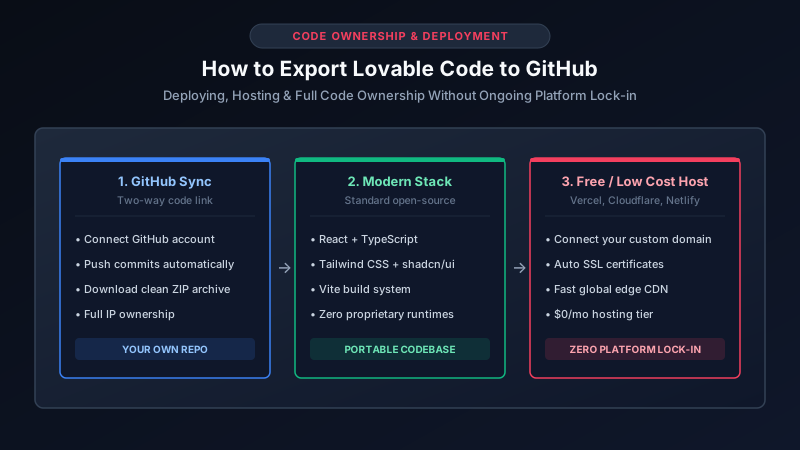
To avoid perpetual platform lock-in, developers sync your project to your own repositories. See our technical walkthrough on exporting Lovable code to GitHub and hosting independently.
Lovable rescue and technical review
A short assessment can be the right first purchase when another freelancer stopped responding or the generated app behaves unpredictably. The review should produce evidence: a risk list, reproducible bugs, ownership gaps, and a safe next milestone.
How a professional Lovable project should run
- Discovery: define the user, business outcome, data, integrations, and one measurable first release.
- Prototype review: inspect the Lovable project and separate reusable work from demo-only shortcuts.
- Technical plan: decide what stays in Lovable, what moves to WordPress or Shopify, and what needs custom code.
- Delivery: work in a repository owned by the client, use small milestones, and demonstrate each acceptance rule.
- Launch: test authentication, permissions, forms, payments, mobile layouts, analytics, and failure states.
- Handover: provide deployment notes, environment variables, content instructions, known limitations, and a support option.
Ask for a working release at each milestone. A screenshot is not evidence that the data flow, permissions, or recovery path works.
How much does a Lovable app creator cost?
Cost depends on whether the developer is reviewing a prototype, finishing an MVP, migrating content, or integrating a live store. A short audit is usually a smaller commitment than a production build. A useful proposal separates discovery, implementation, external services, and ongoing support instead of hiding every task inside one “AI app” price.
For planning, ask for three numbers: the cost to validate the current project, the cost to ship the smallest safe release, and the cost to operate it for the first three months. Label all estimates with their assumptions; Lovable projects vary widely in code quality and scope.
Questions to ask before hiring a Lovable dev
- What similar Lovable project have you taken beyond the prototype?
- Will the repository, hosting, domain, analytics, and service accounts stay in my company’s name?
- How will you test authentication, permissions, payments, and error states?
- When would you recommend Lovable to WordPress instead of keeping the current stack?
- How would you divide responsibilities between Lovable and Shopify?
- Which parts of the current prompt or generated code are risky?
- What documentation and handover will I receive?
- What is excluded from the estimate?
FAQ about Lovable app creators
Is Lovable a replacement for a developer?
Lovable reduces the cost of expressing an idea and producing a first implementation. It does not remove the need for engineering judgment when a product has real users, private data, payments, integrations, or uptime expectations.
Can a Lovable developer build a production website?
Yes, when the developer reviews the generated code, adds testing and operational controls, and chooses an appropriate deployment and content setup. A marketing site may stay in Lovable; a publishing-heavy site may be better as Lovable to WordPress.
Can Lovable connect to Shopify?
It can be used to prototype or build a custom storefront around Shopify services. The developer must define the boundary for products, checkout, orders, customer data, webhooks, and analytics before implementation.
What are Lovable prompts for websites?
They are structured instructions describing page goals, components, content states, responsive behaviour, and acceptance criteria. The best prompts are reusable and paired with a review process; they are not a substitute for a sitemap or product brief.
Should I hire a freelancer or an agency?
Hire an independent Lovable freelancer for a bounded review or a direct technical relationship. Choose an agency when you need several roles, managed delivery, or broader support. In either case, keep accounts and the repository under your control.
Can a developer migrate a Lovable project to WordPress?
Yes. The migration may preserve the visual design while moving content and publishing controls, or it may rebuild the site around WordPress templates. Protect URLs, metadata, redirects, forms, and analytics during the move.
What should I do if my Lovable app is stuck?
Pause feature prompts and commission a technical assessment. Give the reviewer the repository, deployment access, error logs, and intended user flow. A short evidence-based rescue plan is safer than adding more generated code blindly.
If you have a Lovable prototype and need to decide whether to launch it, migrate it, or rebuild part of it, send ProofDevs a short brief. A developer can review the current state and define the smallest safe next step.
Written by Michael Melnyk
Senior IT Technical Writer & Technology Analyst
Senior Technical Writer and IT Industry Analyst with over 7 years of experience analyzing software engineering ecosystems, tech leadership models, and developer procurement frameworks.