AI Developer Cost: Hourly Rates by Project Type and Hiring Model
AI developer cost depends on the work, not only the title. Compare hourly rates, fixed-task budgets, part-time retainers, AI API costs, and the questions that expose an incomplete quote.

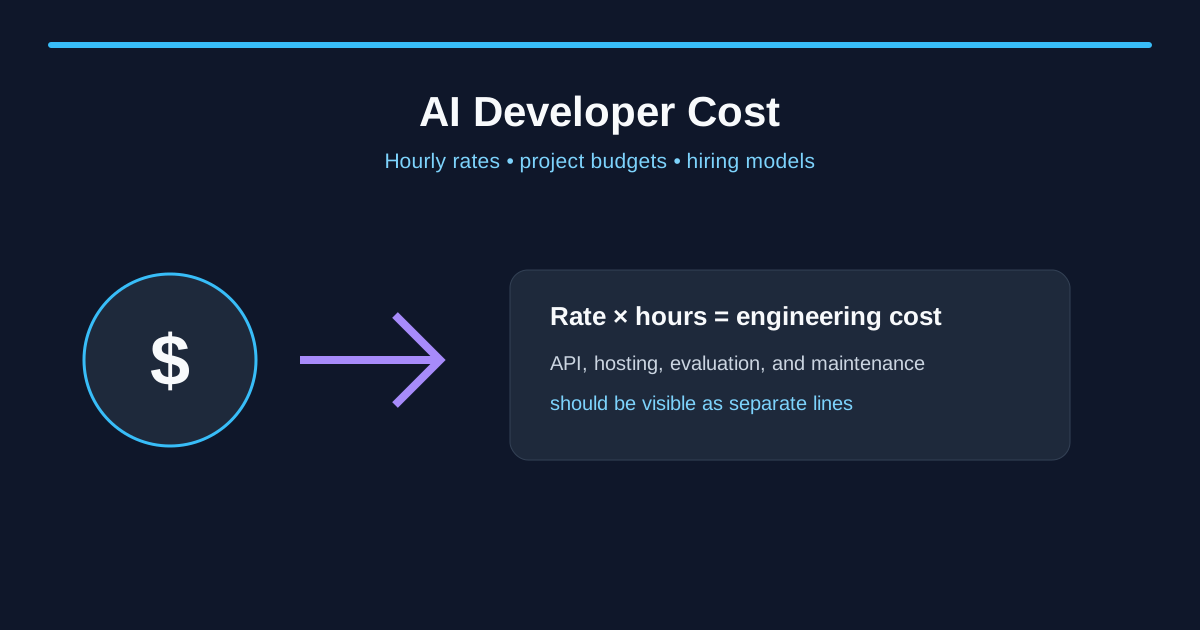
For freelance or contract work, plan on roughly $45–$95 per engineering hour for an independent senior AI developer, then multiply the rate by the hours needed for the specific feature. A validated API feature may take 10–20 hours, a production-minded RAG feature 25–50 hours, and an approval-gated AI agent 30–60 hours. Model usage, hosting, evaluation, and maintenance are separate budget lines.
That is a planning range, not a universal market quote. The right number depends on whether you need a small integration, a fixed-scope build, a part-time contractor, or someone to take over a fragile prototype. This guide covers contract hiring only; it does not estimate employee compensation or compare countries.
Once the budget model is clear, use the AI developer hiring checklist to verify production skills, interview judgment, and a paid trial before approving a larger milestone.
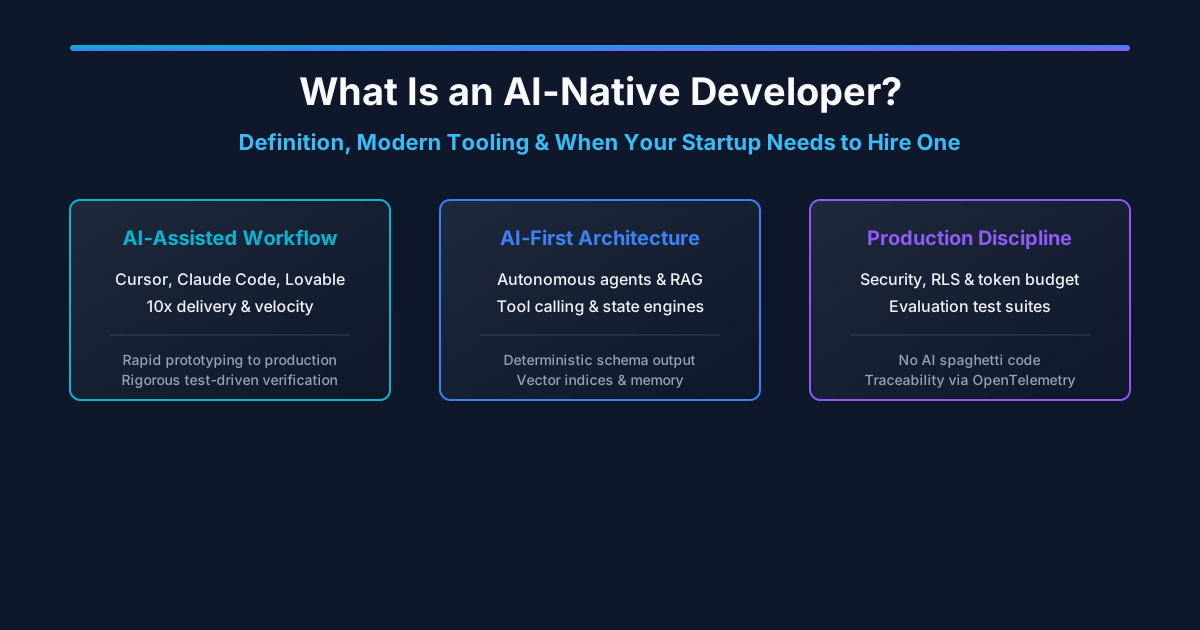
If the role itself is unclear, start with AI engineering specialists for LLM, RAG, and integrations or the broader AI-native developer category. If the scope is clear, the cost model below will help you ask for a quote that can be checked.
OpenAI’s API pricing and Anthropic’s pricing change independently of engineering rates. Keep provider billing in your own account so usage, limits, and ownership remain visible.
AI developer cost by hiring model
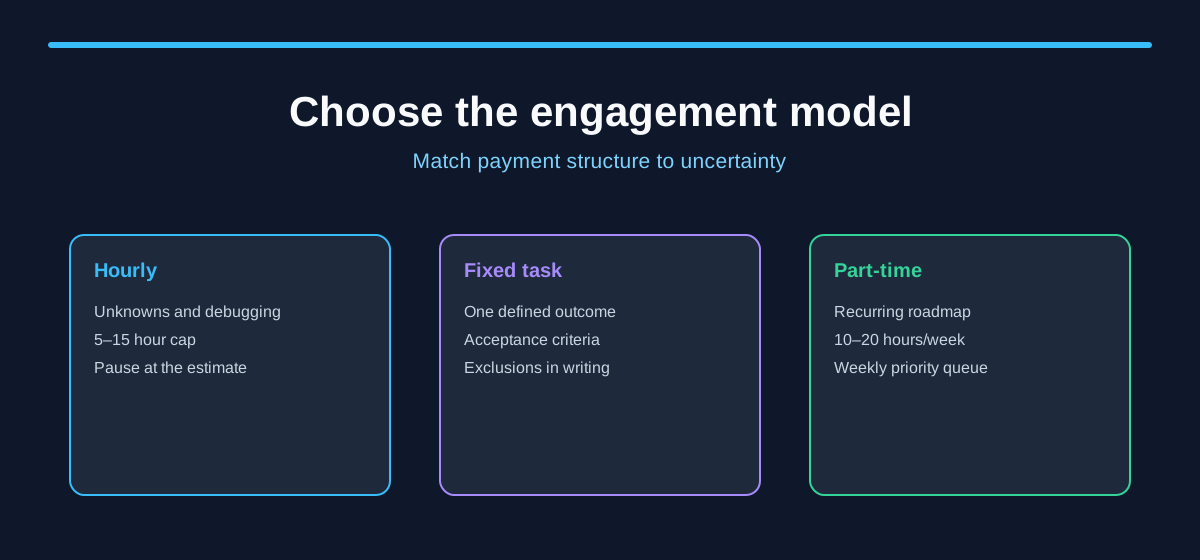
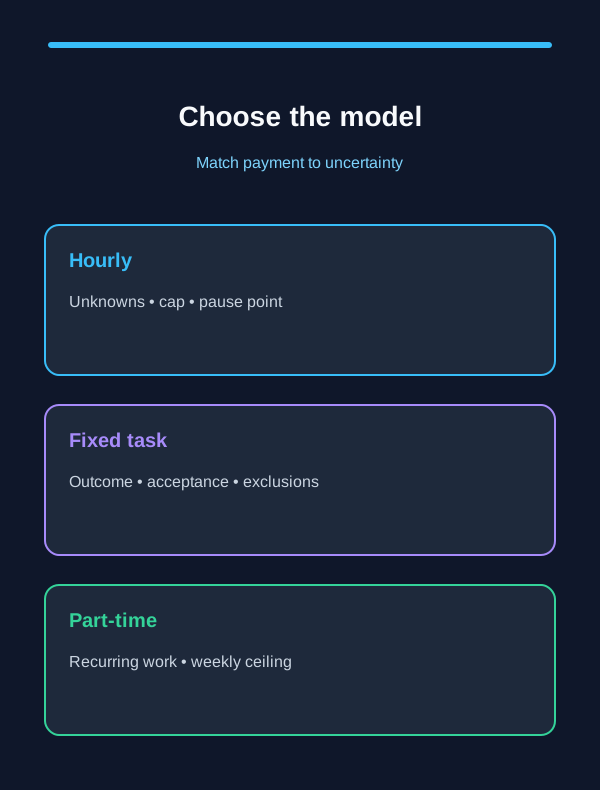
There are three useful ways to pay a contract AI developer. Hourly work keeps discovery flexible. A fixed task puts a ceiling around a defined outcome. A part-time retainer buys recurring capacity and continuity. The rate may be similar across all three; what changes is who carries uncertainty and how much planning happens before coding.
| Hiring model | Use it for | Planning example | Control to require |
|---|---|---|---|
| Hourly | Unknowns, debugging, technical discovery | $45–$95/hr; approve a 5–15 hour cap | Written estimate and stop points |
| Fixed-scope task | One feature with acceptance criteria | 10–20 hours for a validated API feature | Definition of done and exclusions |
| Part-time retainer | Ongoing roadmap or product support | 10–20 hours/week at the agreed rate | Weekly ceiling and priority queue |
| Agency or consultancy | Several workstreams and coordination | Often $150–$250/hr billed by the agency | Named delivery team and handover terms |
These are planning examples rather than a claim that every contractor or agency charges the same amount. Confirm the individual developer’s rate, availability, relevant shipped work, and whether discovery is billable. The developer rates guide explains why a rate without an hour estimate is not a useful comparison.
How many hours does an AI feature take?
The work is usually more than the model call. A production estimate includes input validation, secrets, retries, provider errors, structured output, tests, logs, deployment, and a handover. If a quote includes only prompt writing, ask what happens when the model returns malformed data or the provider is unavailable.
| Project type | Hours | What the band assumes |
|---|---|---|
| Direct model API feature | 10–20 | One workflow, server-side key, schema validation, basic tests and deployment |
| RAG search or assistant | 25–50 | Ingestion, chunking, embeddings, retrieval, citations and a small evaluation set |
| Approval-gated AI agent | 30–60 | Two or three tools, permissions, state, human approval, audit logging and failure paths |
| Prototype hardening | 15–40 | Repository review, key removal, backend boundary, tests, deployment and handover |
Those bands narrow after a short repository and data review. A RAG build over clean, documented files is different from one that must extract tables from scanned PDFs. An agent that drafts a ticket is different from one allowed to refund a customer. Ask the developer to name the assumption that would move the estimate up or down.
What is included in the total AI developer cost?
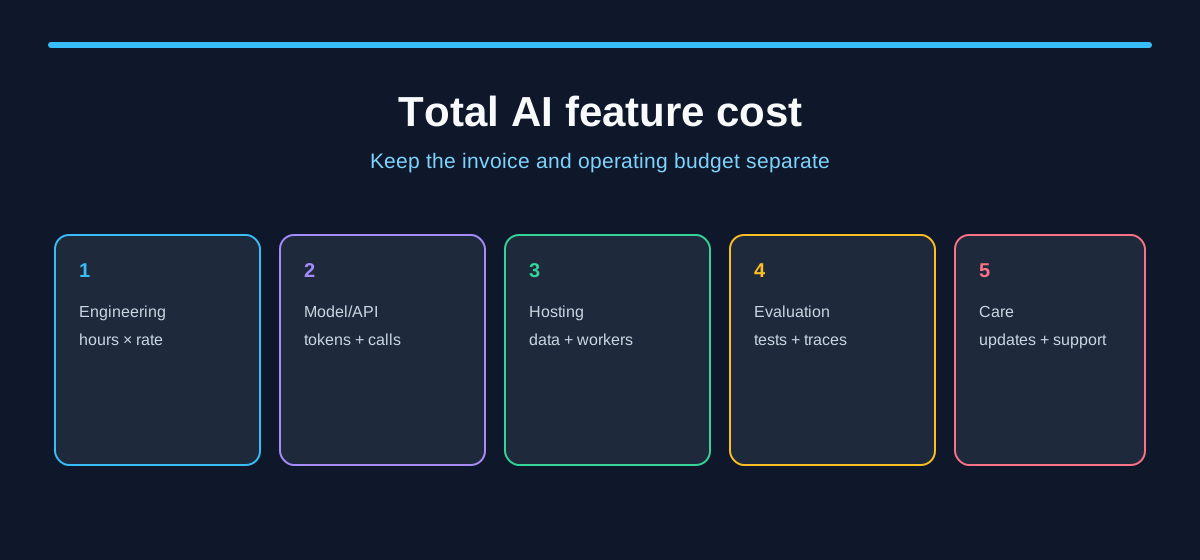
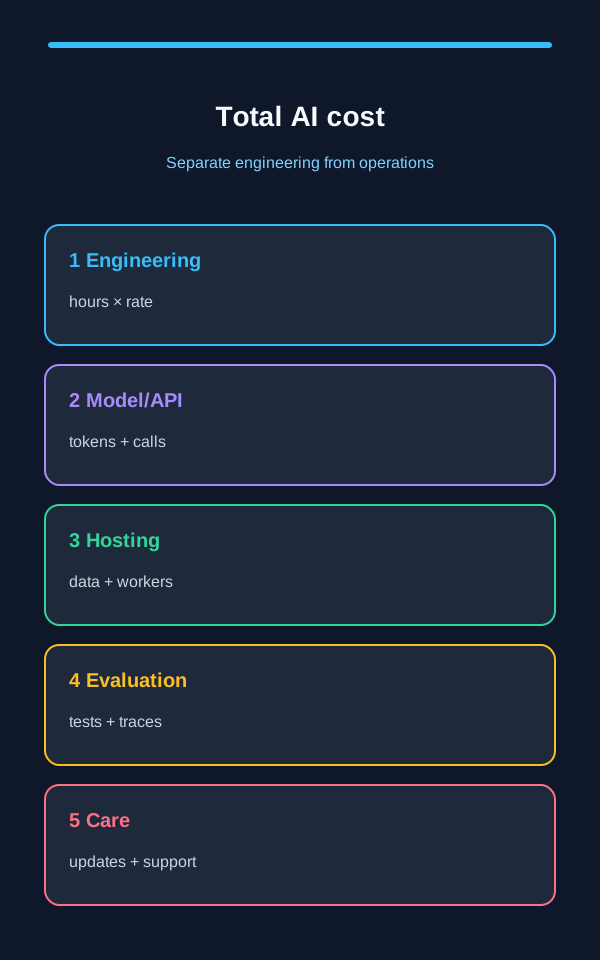
Separate the invoice into engineering work and operating costs. This makes an inexpensive prototype easier to compare with a production-ready build and prevents provider usage from disappearing inside a vague “AI development” line.
Engineering hours
Engineering covers discovery, implementation, tests, review, deployment, documentation, and handover. For a contract developer, the estimate should name the repository, environments, integrations, acceptance criteria, and expected review cycle. A quote that has no testing or handover line is incomplete even when the demo looks good.
Model and API usage
Tokens, embeddings, reranking, speech, image generation, file search, and batch jobs may all have separate charges. The application should record provider, model, input and output volume, retries, and cost per task. Use provider billing limits and alerts before inviting real users.
Hosting and data services
Budget for the database, vector index, object storage, queues, logs, scheduled jobs, and outbound bandwidth. A small RAG service may fit an existing PostgreSQL deployment; another may need a separate vector service and worker. Check the current Supabase pricing or your chosen host instead of copying an old estimate.
Evaluation and monitoring
Evaluation is engineering work, not a decorative report. Reserve time to collect representative examples, define pass criteria, compare model or prompt changes, inspect failures, and add regression checks. Monitoring should expose latency, failed tool calls, refusal rates, token volume, and cost per completed task.
Maintenance and model changes
Prompts, model versions, SDKs, source documents, indexes, and provider limits change. A small monthly allowance can cover dependency updates, index refreshes, evaluation runs, and a review of spend. If response-time commitments matter, put them in an on-call retainer rather than treating availability as free support.
How to check an AI developer quote
A useful quote lets a non-specialist see what is being bought and what remains their responsibility. Before approving it, ask for these details:
- Outcome: What user action works at the end, and what does not?
- Hour band: What is the expected range, and at which point will the developer pause for approval?
- Inputs: Which documents, API credentials, data fields, and test examples are available?
- Safety: Which actions require validation, permissions, rate limits, or human approval?
- Quality: How will the team measure a good answer, retrieval result, or tool call?
- Operating cost: Which model, hosting, storage, and monitoring bills are excluded?
- Ownership: Where will code, prompts, evaluation cases, logs, and data live after payment?
- Handover: What documentation, environment setup, tests, and deployment notes are included?
Ask the developer to make exclusions explicit. “Build an AI assistant” can hide document cleanup, authentication, a user interface, feedback capture, admin controls, and an evaluation dataset. A short paid discovery task is often cheaper than arguing over a fixed quote built on guesses.
When to choose hourly, fixed-scope, or part-time work
Choose the arrangement that matches uncertainty. Hourly work is a good fit when the repository or data is not understood. A fixed task works when the acceptance criteria are testable. A part-time retainer works when the same engineer will return each week and continuity is worth paying for.
- Choose hourly developer work for a technical audit, debugging, provider migration, or an experiment with a strict cap.
- Choose a one-time task for a bounded API integration, evaluation setup, or prototype hardening milestone.
- Choose a retainer when the product needs a predictable 10–20 hours each week, recurring maintenance, or a developer who already knows the system.
For a startup with an ongoing AI roadmap, compare this cost model with the practical guidance on hiring a part-time senior AI engineer. For terminology and workflow context, see what an AI-native developer means; it is not a substitute for defining the deliverable.
Common mistakes that inflate AI developer cost
- Starting with an agent when a single validated API call would solve the task.
- Putting provider keys in the browser or a generated repository.
- Skipping representative test cases and judging quality from two impressive demos.
- Indexing private documents without tenant filters, deletion rules, or access checks.
- Bundling provider charges into a developer invoice without usage visibility.
- Agreeing to an open-ended hourly meter with no cap or stop point.
- Paying for tuning before fixing broken source data or unclear acceptance criteria.
Plan the smallest safe AI milestone
The fastest way to make AI developer cost concrete is to describe one user decision, a few representative inputs, the forbidden actions, and the proof that the result is acceptable. ProofDevs can help scope that milestone, match an independent developer, and keep the rate, hours, provider usage, and ownership visible from the first task.
Frequently asked questions
How much does an AI developer cost per hour?
For freelance or contract planning, an independent senior AI developer commonly falls in the $45–$95 per hour range on ProofDevs. Confirm the person’s current rate and multiply it by a task-specific hour band; model and hosting bills are separate.
What changes an AI developer’s hourly rate?
The main factors are the difficulty of the system, relevant production experience, security and data requirements, urgency, and whether the work includes architecture, testing, deployment, and handover. The title alone does not establish a rate.
Is hourly or fixed-price AI development cheaper?
Hourly is usually clearer for unknowns, while fixed scope can cap the total for a well-defined outcome. A fixed price built on vague requirements often includes hidden contingency or creates change-order disputes.
How much does a RAG feature cost?
A first production-minded RAG feature often takes about 25–50 engineering hours for ingestion, chunking, retrieval, citations, deployment, and a small evaluation set. Document quality, permissions, connectors, and the required test coverage can move the range.
How much does an AI agent cost to build?
An approval-gated agent with two or three tools commonly needs about 30–60 engineering hours. That band assumes permissions, state, audit logs, failure handling, and human approval rather than a prompt-only demo.
Are model API costs included in the developer rate?
Usually not. API calls, embeddings, reranking, storage, hosting, and monitoring should appear as separate operating costs in the quote, with a test budget and usage limits before production traffic.
What is prototype hardening?
Prototype hardening turns a demo into code that can be operated: secrets move server-side, data access is constrained, outputs are validated, failures are observable, tests cover important paths, and deployment and handover are documented. A small prototype may need 15–40 hours.
When should I hire a part-time AI developer?
Choose part-time work when the product needs recurring delivery but not a full-time workload, often around 10–20 hours per week. A weekly cap and a priority queue protect the budget while preserving continuity.
How do I compare two AI developer quotes?
Compare the same outcome, assumptions, hour band, exclusions, acceptance tests, operating costs, ownership terms, and handover deliverables. The lower hourly rate is not cheaper if it omits evaluation, security, or deployment.
How many hours does the first AI feature take?
A narrow direct API feature may take 10–20 hours when the product and data are ready. Add time for authentication, UI work, source cleanup, evaluation, or deployment complexity rather than treating the model call as the whole feature.
Who should own the provider accounts and API keys?
The client should normally own the provider, hosting, repository, and billing accounts. Give the contractor least-privilege access, keep keys server-side, and include prompt, evaluation, code, and data ownership in the agreement.
Do I need a retainer after an AI feature launches?
Not always. A small scheduled maintenance allowance is enough for occasional updates; use an on-call retainer when response windows, recurring index refreshes, or production incident support have real business value.
Written by Michael Melnyk
Senior IT Technical Writer & Technology Analyst
Senior Technical Writer and IT Industry Analyst with over 7 years of experience analyzing software engineering ecosystems, tech leadership models, and developer procurement frameworks.