Custom Domain and Hosting for Small Business: Setup, Costs, and Ownership
A custom domain plus decent hosting is the cheapest credibility a small business can buy. This guide covers what each piece costs, where to buy, free-tier traps, custom email, and how to keep ownership no matter who builds the site.

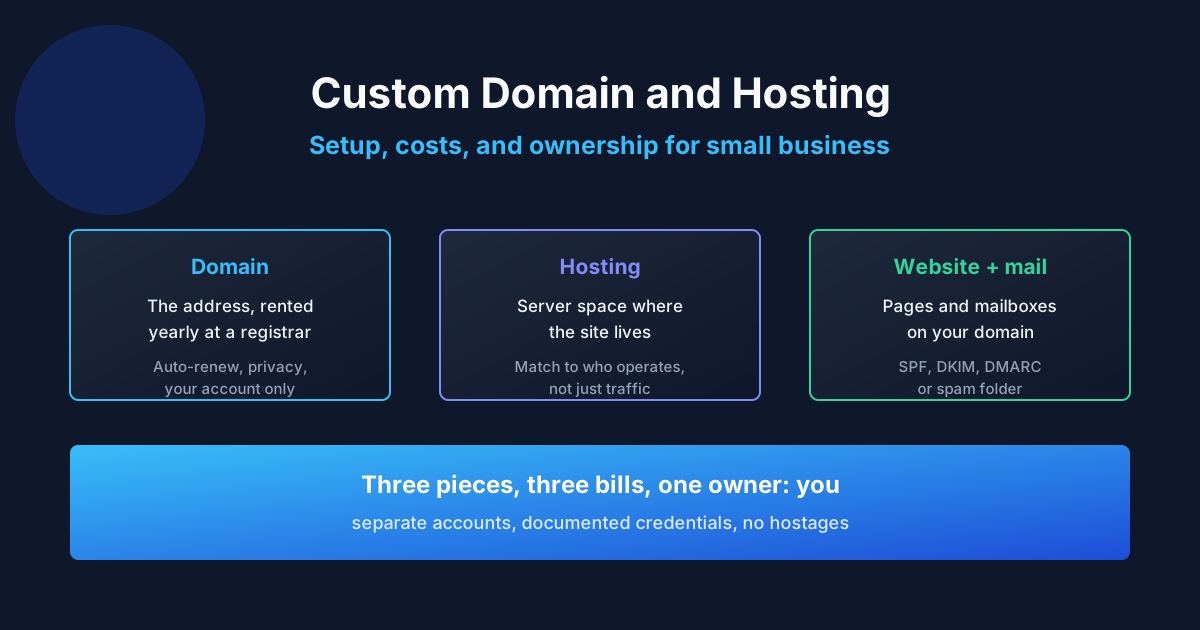
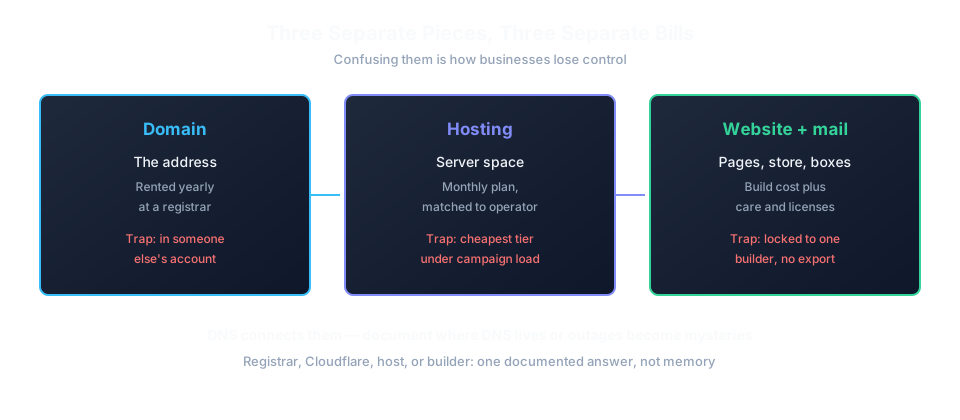
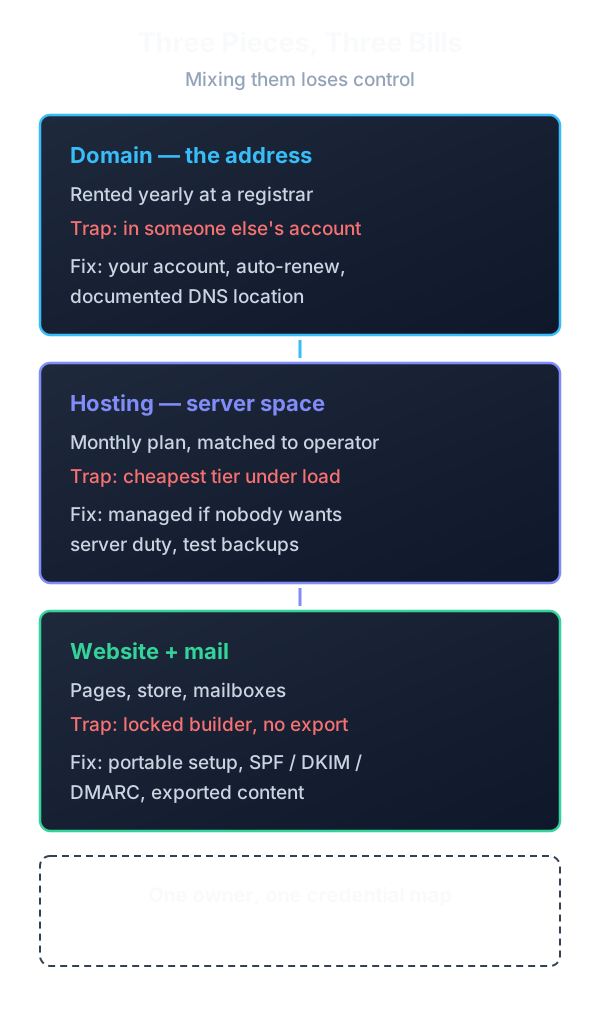
A custom domain is your business address on the internet that you rent yearly from a registrar; hosting is the rented server space where your website lives; the website itself is a third, separate thing. Confusing the three is how small businesses lose control — the developer who “takes care of everything” often ends up owning all three. This guide separates them, prices each, and shows how to keep everything in your name. Reviewed September 2026. Figures below are illustrative planning examples, not market averages or ProofDevs quotes.
Searches like “what is a custom domain,” “how much does a custom domain cost,” “where to buy custom domain,” and “can i get free domain and hosting” come from owners setting up their first real web presence — or reclaiming it from someone else. If you are also budgeting the site itself, see how much a custom website costs; if someone else will build it, read how to hire a website development company first.
What is a custom domain?
A custom domain is a unique name your business controls — yourbusiness.com instead of yourbusiness.wixsite.com or yourbusiness.notion.site. You do not buy it outright; you register exclusive use, usually for one to ten years, and renew to keep it. The domain itself does nothing until connected: DNS records point it at hosting, and mail records point it at an email provider.
Why it matters: customers trust addresses that match the business name, email from your domain converts better than free-mailbox addresses, and every link, card, and listing you ever print keeps working only if you control the domain independently of any builder or developer.
Domain vs hosting vs website: stop mixing them
| Piece | What it is | You pay | Typical trap |
|---|---|---|---|
| Domain | The name, registered at a registrar | Yearly registration + privacy | Registered in the developer's account |
| DNS | The directory mapping name to servers | Usually free with registrar or Cloudflare | Nobody knows where DNS is managed |
| Hosting | Server space running the site | Monthly or yearly plan | Cheapest shared tier that collapses under traffic |
| Website | Pages, store, booking logic | Build cost + care plan | Locked to one builder with no export |
| Mailboxes on your domain | Per-user monthly fee or hosting bundle | Free forwarding that silently drops mail |
How much does a custom domain cost?
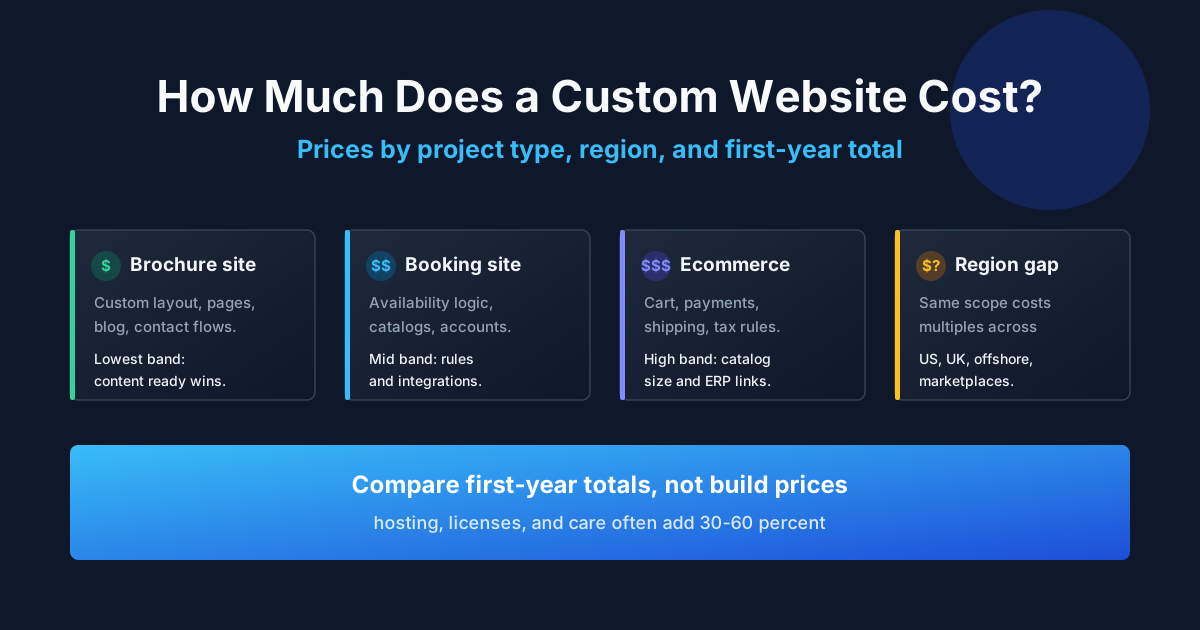
Standard .com registration costs roughly a lunch per year; newer extensions like .site, .store, or .dev range from cheaper to premium depending on the exact name — short, dictionary-word domains on any extension cost more. Add domain privacy (often free now), and budget renewal at the non-promotional rate: first-year discounts routinely double at renewal, which is the most common “does a website domain cost money” surprise after year one.
Illustrative planning example: one .com at $13 per year, privacy included, plus one .store defensive registration at $10 per year, both on auto-renew with a payment method you control. Ten-year cost under $250 — the cheapest insurance in the whole project.
Where to buy a domain without regret
Buy from an established registrar with transparent renewals, free privacy, two-factor authentication, and an easy transfer-out process — the exact brand matters less than these four properties. Avoid bundling the domain into a developer's or agency's account to “save time”; the minutes saved become leverage against you later. Keep the registrar login, the DNS location, and the renewal calendar in your own hands from day one; the ICANN beginner resources explain registrant rights if a dispute ever arises.
Free domain and free hosting: the real price
“Can i get free domain and hosting” and “free website builder with custom domain” have honest answers with strings attached. Free subdomains (yoursite.builder.com) cost credibility and portability. Free custom-domain offers usually mean a free first year, a free domain with paid hosting you cannot leave, or a free tier with builder branding and limits that force an upgrade the moment the site matters. Free static hosting with a custom domain is genuinely viable for simple sites — but email, backups, and support still need owners and budgets.
Rule: free is fine for experiments, never for the address customers memorize. The domain itself should always be yours, paid, and independent — even if hosting starts free.
Builder domains: Wix, Canva, Notion, and moving away
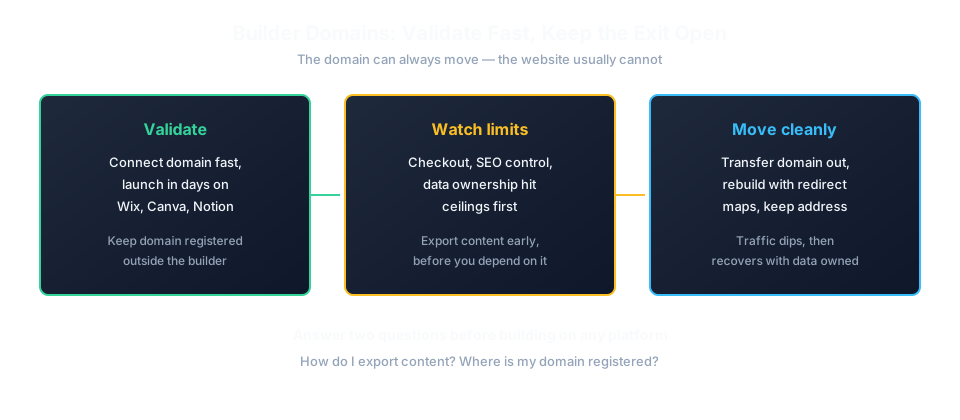
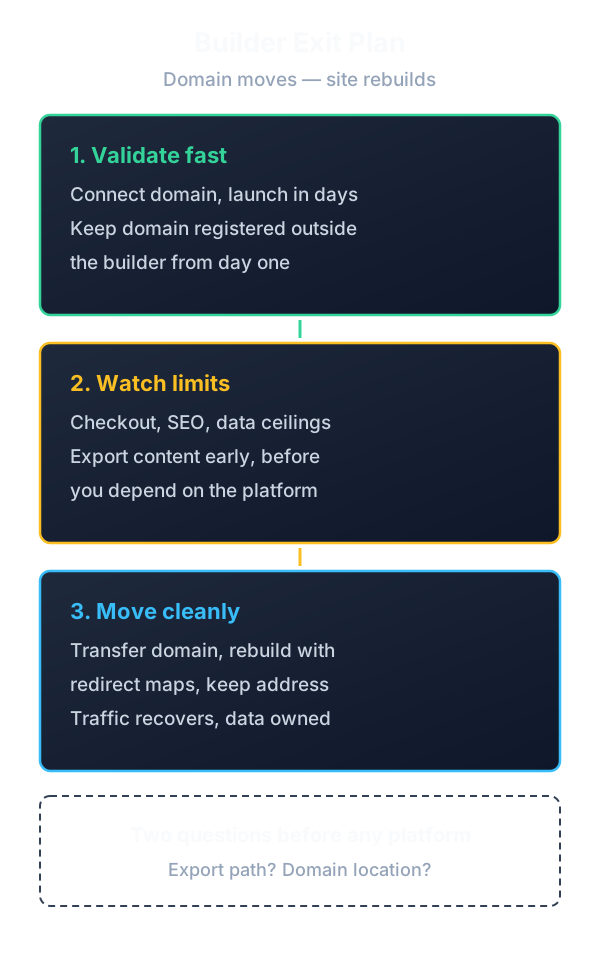
Builders let you connect a custom domain quickly — Canva, Notion, and Wix all support it — which is perfect while validating an idea. The lock-in appears at exit: “can i take my wix domain to another site” is asked constantly because content, checkout, and sometimes the domain purchase itself live inside the platform. The domain can always transfer out (it is yours if registered so); the website usually cannot move, only be rebuilt.
Before building on any platform, answer two questions: how do I export my content, and where is my domain registered. If either answer is “inside the builder account,” fix the domain part immediately and treat the site as disposable. Our builder comparison maps where each platform stops being enough.
Custom email on your domain
you@yourbusiness.com beats yourbusiness123@freemail.com on every trust metric that matters: quotes answered, invoices paid, spam filters passed. Options range from mailboxes bundled with hosting (cheap, basic) to business email suites (per-user monthly, with calendar, drive, and proper deliverability). Whatever you choose, set up SPF, DKIM, and DMARC records — without them, your quotes land in spam and you will blame the developer for a DNS problem.
Which hosting fits a small business?
| Hosting type | Good fit | Watch for |
|---|---|---|
| Shared hosting | Brochure sites with modest traffic and tight budgets | Noisy neighbors; slow under campaigns |
| Managed WordPress / platform hosting | Business sites and stores that must just work | Higher monthly price; plugin and visitor limits |
| VPS | Custom apps, staging needs, technical owner available | You own updates, security, and 3 a.m. incidents |
| Static / edge hosting | Fast brochure and docs sites, often free tiers | No server-side logic without extra services |
Match hosting to who operates it, not just to traffic. Managed hosting is worth the premium when nobody in-house wants server duty; a VPS is cheaper only if someone competent owns it. “How can i host my own website for free with my own domain” works for static sites — pair free static hosting with your paid domain and a business email suite.
One-event websites: weddings and launches
Wedding platforms (Zola, Minted, The Knot, Joy) sell convenience: quick setup with a custom domain option for one big day. That is a fair trade for a temporary site — but apply the same ownership rule in miniature: point a subdomain you control (wedding.yourname.com) at the platform instead of buying the domain inside it, so the address survives whatever happens to the service. After the event, the subdomain can redirect to a gallery or expire quietly.
Moving a domain or host without downtime
Transfers fail on process, not technology: unlock the domain, get the authorization code, approve transfer emails, keep DNS untouched until propagation completes, and never transfer during campaigns or renewals. Migrate hosting by copying the site to the new server first, testing on a temporary address, switching DNS with a low TTL set in advance, and keeping the old hosting for a week as rollback. One owner, one checklist, zero heroics.
Realistic setup scenarios
Bakery reclaims its domain
Situation: a bakery's domain sits in a former contractor's personal account; renewal notices go to his inbox. Blocker: expiry in six weeks, no access. Fix: transfer to a registrar account owned by the bakery, enable auto-renew and two-factor, document DNS. Result: renewal secured; the bakery now holds every credential.
Store leaves a builder keeping its address
Situation: a gift store outgrows a hosted builder but fears losing search traffic. Blocker: domain bought inside the platform, URLs platform-specific. Fix: transfer the domain out first, rebuild on WooCommerce, map every old URL with redirects. Result: address preserved, rankings dip for weeks then recover; data finally owned.
Nonprofit starts free, stays independent
Situation: a nonprofit needs presence with zero budget. Blocker: free builders demand branding or lock-in. Fix: paid domain plus free static hosting and a donated email suite. Result: total yearly cost under $20; upgrade path open whenever funds arrive.
Typical mistakes
- Domain in someone else's account. The classic hostage situation — fix on day one.
- Believing first-year pricing is the price. Renewals double; budget the non-promotional rate.
- Free subdomain as the business address. Unportable, untrusted, unprintable on packaging.
- Nobody knows where DNS lives. Registrar, Cloudflare, host, or builder — document it.
- No auto-renew with a live payment method. Expired domains get sniped within days.
- Email without SPF, DKIM, DMARC. Quotes in spam folders look like being ignored.
- Cheapest shared hosting for a store. Campaign traffic becomes downtime.
- Builder lock-in discovered at exit. Check export and domain transfer before building.
- Transferring during peak season. Move infrastructure in quiet weeks only.
- No credential map. Registrar, DNS, hosting, email, analytics — one documented list.
Expert advice
Once a year, run a fifteen-minute ownership audit: log into the registrar and confirm auto-renew, check DNS actually points where you think (use a public DNS checker, not memory), verify one backup restores, and confirm the payment method is current. Businesses lose domains not to hackers but to expired cards and departed contractors — the audit costs nothing and prevents the only outage money cannot quickly fix.
FAQ: custom domain and hosting
What is a custom domain?
A domain name your business controls, like yourbusiness.com, instead of a builder subdomain. You register it yearly at a registrar, then connect it to hosting and email with DNS records.
How much does a custom domain cost?
A standard .com runs about $10–15 per year plus renewals; newer extensions vary by name. Budget the non-promotional renewal rate and keep auto-renew on a payment method you control.
Where should I buy a domain?
Any established registrar with transparent renewals, free privacy, two-factor login, and easy transfer-out. Never let it live in a developer's or agency's personal account.
Can I get a domain and hosting for free?
Free subdomains and free tiers exist, but a business address should be a paid domain you own. Free static hosting pairs fine with it for simple sites; email and backups still need budgets.
What is the difference between domain and hosting?
The domain is the address, hosting is the server space, the website is the building. Separate owners, separate bills, separate failure modes — document all three.
Can I move my Wix domain to another site?
The domain itself can transfer out if registered in your name; the website usually cannot move and must be rebuilt. Transfer the domain first, then rebuild with redirect maps.
Do I need custom email on my domain?
Yes for anything customer-facing: trust, deliverability, and professionalism. Set up SPF, DKIM, and DMARC or your mail lands in spam regardless of provider.
Shared, managed, or VPS hosting for small business?
Shared for tight budgets and modest traffic, managed when nobody wants server duty, VPS only with a competent owner. Match hosting to the operator, not just the price.
How do I transfer a domain without downtime?
Unlock, authorize, approve emails, keep DNS untouched until propagation finishes, and never transfer in peak season. Keep old hosting a week as rollback.
How do wedding websites with custom domains work?
Platforms like Zola or Minted accept custom domains for the event. Best practice: point a subdomain you control at the platform so the address survives after the event.
Who should own our DNS records?
You should, in an account you control — whether at the registrar or a DNS provider. Document the location; “somewhere the developer set up” is how outages become mysteries.
What happens if my domain expires?
Site and email stop, then a grace window, then public re-registration where anyone can grab it. Auto-renew plus a current payment method plus a yearly audit prevents nearly all expiries.
Setting up a domain, email, and hosting — or reclaiming them from someone else? Send the brief to ProofDevs and get the ownership checklist sorted before it costs you.
Written by Michael Melnyk
Senior IT Technical Writer & Technology Analyst
Senior Technical Writer and IT Industry Analyst with over 7 years of experience analyzing software engineering ecosystems, tech leadership models, and developer procurement frameworks.