How to Hire a Website Development Company: Local vs Offshore Guide
The right web development company fits your scope, communication needs, and budget — whether local, offshore, or marketplace. This guide covers vetting, regional tradeoffs, contracts, and the ownership details that protect you.

To hire a website development company well, define one measurable outcome, shortlist three to five candidates, run a paid discovery or pilot, and verify repository access, staging habits, and handover terms before signing. Whether the company sits in your city, in London, Dubai, Bangalore, or on Fiverr matters less than whether you can check their work weekly and keep control of accounts and code. Budget figures below are illustrative planning examples, not market averages or ProofDevs quotes.
Searches like “custom website development company in usa,” “web design agency london,” “website development company in bangalore,” and “custom website developers near me” all express the same need from different places: someone trustworthy to build the site. This guide covers the three hiring channels — local studios, offshore agencies, and marketplaces — how to vet each, what they cost, and which contract terms keep you safe. For the models behind the choice, see our outsource-versus-hire comparison; for pricing in depth, see how much a custom website costs.
What “hiring a company” should buy you
A website development company should deliver a working outcome plus the delivery apparatus around it: discovery, design, development, QA, project management, launch, documentation, and support. The company part matters when your project needs several disciplines at once or when you cannot manage individual freelancers. For a narrow, well-defined build with weekly decisions on your side, one strong freelancer often beats a small agency — our guide to hiring a freelance web developer covers that path.
Local studio, offshore agency, or marketplace?
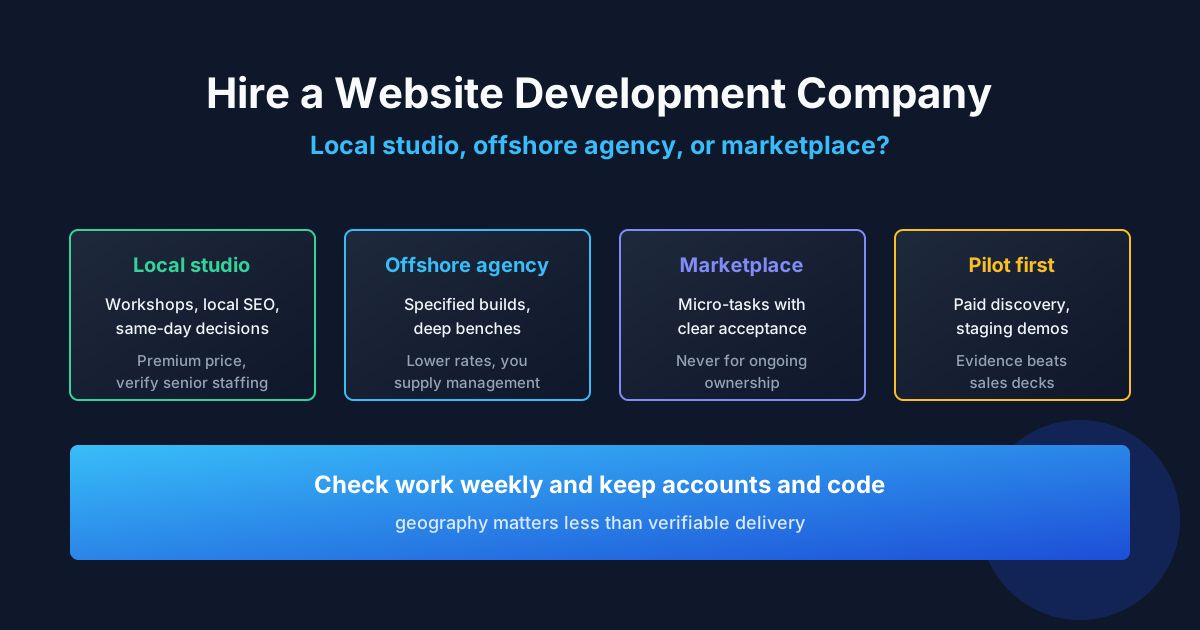
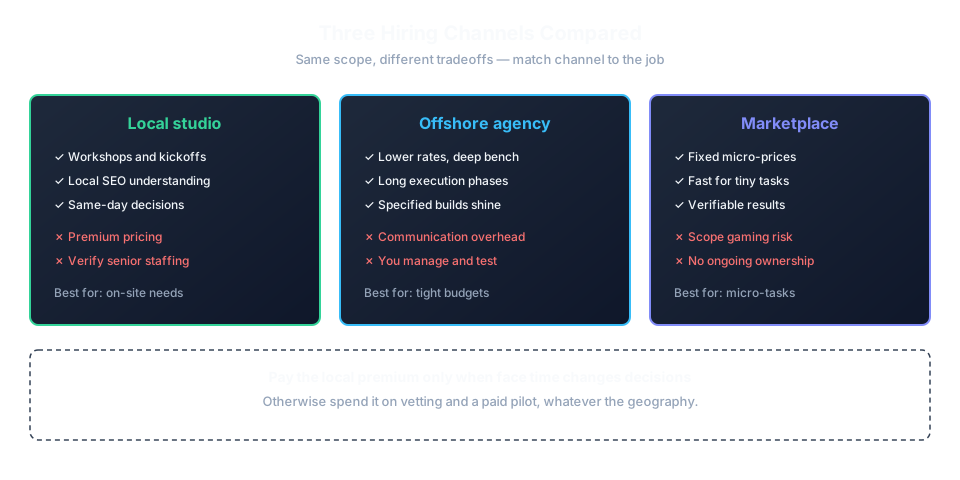
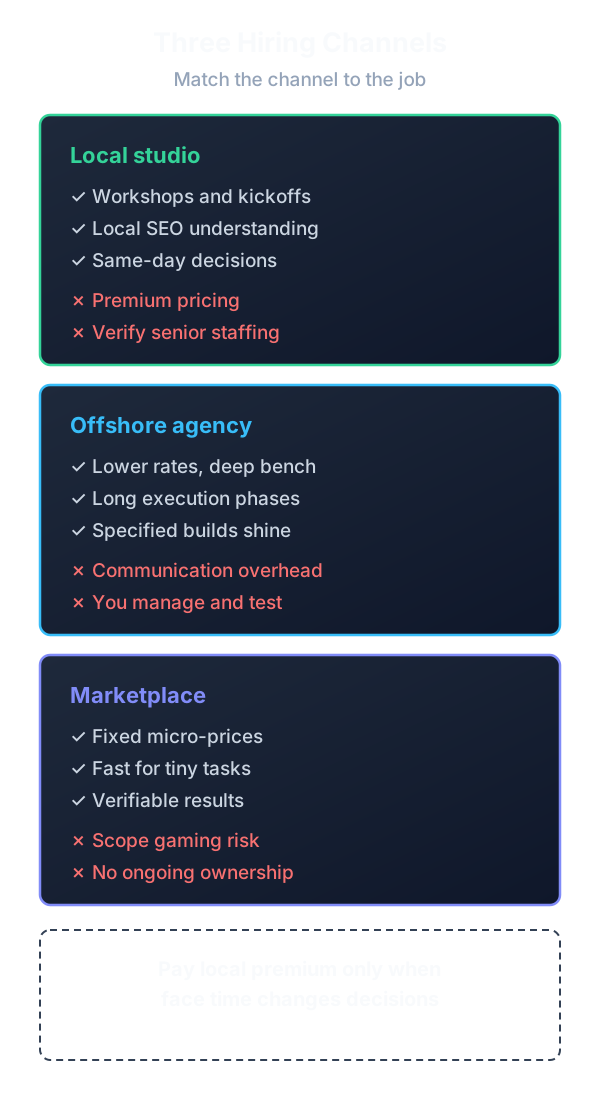
Hire locally when on-site collaboration, photography, local market knowledge, or same-time-zone decisions justify the premium — searches for “website design near me,” “custom website design nyc,” or “web design agency toronto” reflect exactly this. Hire offshore when the scope is well-specified and you can manage remotely; agencies in India, Eastern Europe, or Latin America deliver the same technical work at lower rates. Use marketplaces like Fiverr for bounded micro-tasks with clear acceptance, never for architecture or ongoing ownership.
| Channel | Good fit | Watch for |
|---|---|---|
| Local studio / agency | Workshops, local SEO, photography coordination, urgent on-site needs | Premium pricing; confirm seniors do the work, not juniors |
| Offshore agency | Well-specified builds, long execution phases, tight budgets | Communication overhead; you supply testing and management |
| Marketplace (Fiverr, Upwork) | Logos, landing tweaks, theme installs, fixed micro-deliverables | Scope gaming, revision limits, weak handover discipline |
| Staff augmentation | Continuous backlog under your management | You own product decisions and technical leadership |
What “near me” actually buys you
Proximity buys meeting ease, shared business hours, local search understanding, and occasionally photography or print coordination. It does not buy quality by itself — a weak local studio loses to a strong remote agency on every metric that matters after launch. Pay the local premium when face time changes decisions; otherwise spend it on better vetting and a paid pilot regardless of geography.
Offshore without regret: India, Eastern Europe, and beyond
Offshore agencies in hubs like Bangalore, Mumbai, Delhi, or Kolkata offer deep WordPress, Shopify, and custom development benches. The rate advantage is real, but so is the management tax: specification quality, review cycles, and testing discipline move to your side. Fix this with a paid discovery that produces clickable designs and a technical plan before any build contract, weekly demos on staging, and acceptance tied to working journeys rather than “task completed” checkmarks.
Ukraine deserves a separate mention for engineering talent under your direct management — compare delivery models in our outstaffing vs outsourcing in Ukraine guide, or review costs and legal structures in our outstaffing in Ukraine overview.
Fiverr and marketplaces: where micro-gigs work
Marketplaces excel at commoditized tasks: logo tweaks, theme installation, speed checklists, and small fixes with screenshot-verifiable results. They fail at architecture, integrations, and anything requiring judgment across weeks. “How much do custom react websites cost on fiverr” has an answer — but the follow-up question is who owns the result when requirements change mid-project. Cap marketplace exposure: fixed scope, milestone payments, repository access from day one, and no production credentials beyond the task.
Vetting a marketplace seller differs from vetting an agency: ignore gig-level ratings and read the one-star reviews for patterns — missed deadlines, vanished sellers, and “extra charges for basic fixes” repeat across accounts. Prefer sellers who ask clarifying questions before accepting the order; instant acceptance of a vague brief is a red flag, not efficiency. For anything above a few hundred dollars, move the relationship to a direct contract with the same milestone and handover terms you would demand from an agency.
How to vet a web development company
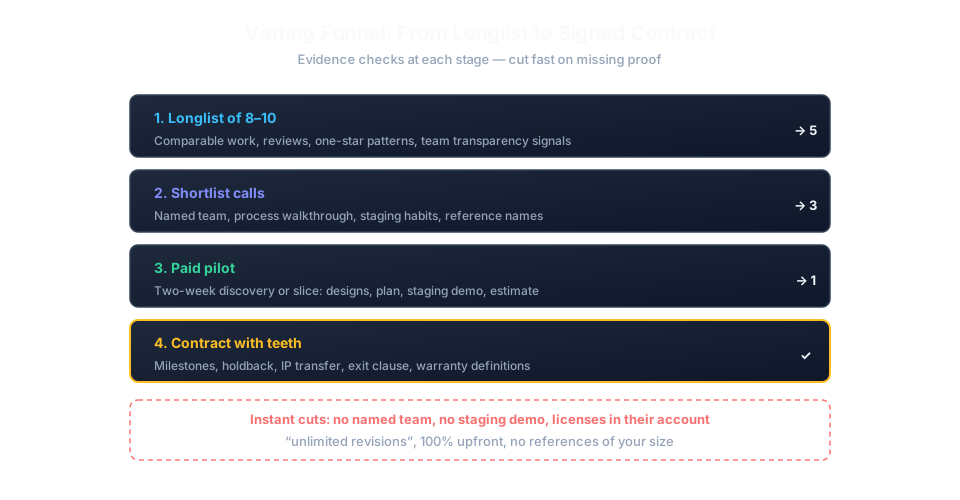
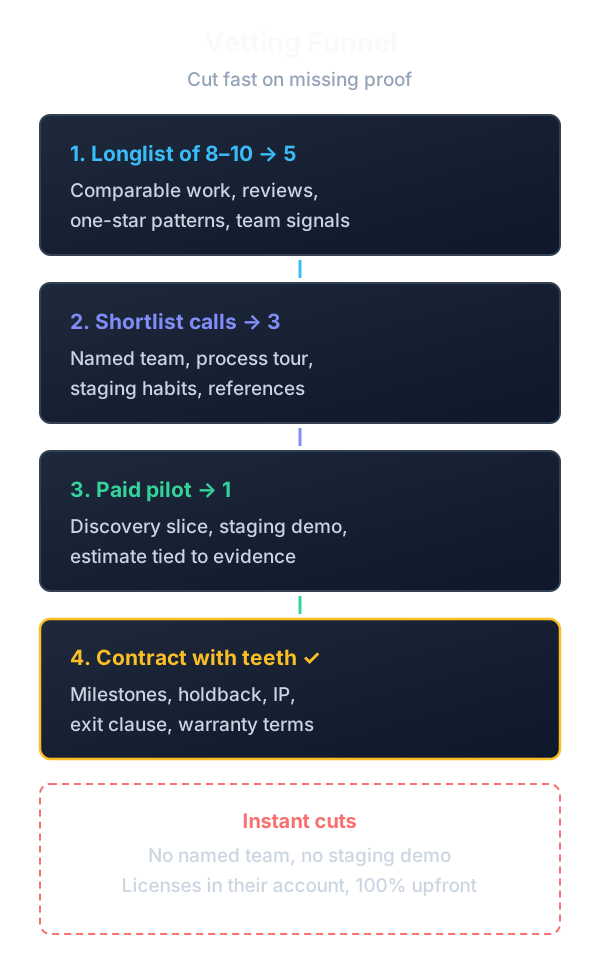
Vet around evidence of comparable shipped work and the people assigned to you — not awards pages or client logos. Ask which team members will do the work, what each personally delivered, how staging and QA run, and how the company handles a missed milestone. Then verify: a staging demo of a live client project, a reference call with a past client of similar size, and a code or process review by an independent technical person.
- Team transparency: names, roles, and seniority of your actual team — not the sales team.
- Process evidence: staging environments, QA checklists, deployment notes, and post-launch support tiers in writing.
- Comparable work: projects of your size and complexity, with contactable references.
- Communication rhythm: weekly demos, written decisions, and a single accountable manager.
- Ownership posture: your accounts, your repository, your licenses from day one — non-negotiable.
Red flags in agency proposals
Single lump sums with no milestone breakdown, “unlimited revisions,” missing content responsibility, no staging process, licenses held in agency accounts, and acceptance defined as delivery rather than working software. Offshore proposals add their own flags: no named team, no overlap hours with your timezone, and testing listed as your responsibility without saying so plainly. Run every shortlisted proposal through our proposal comparison checklist and the quote reasonableness guide.
What agencies charge across regions
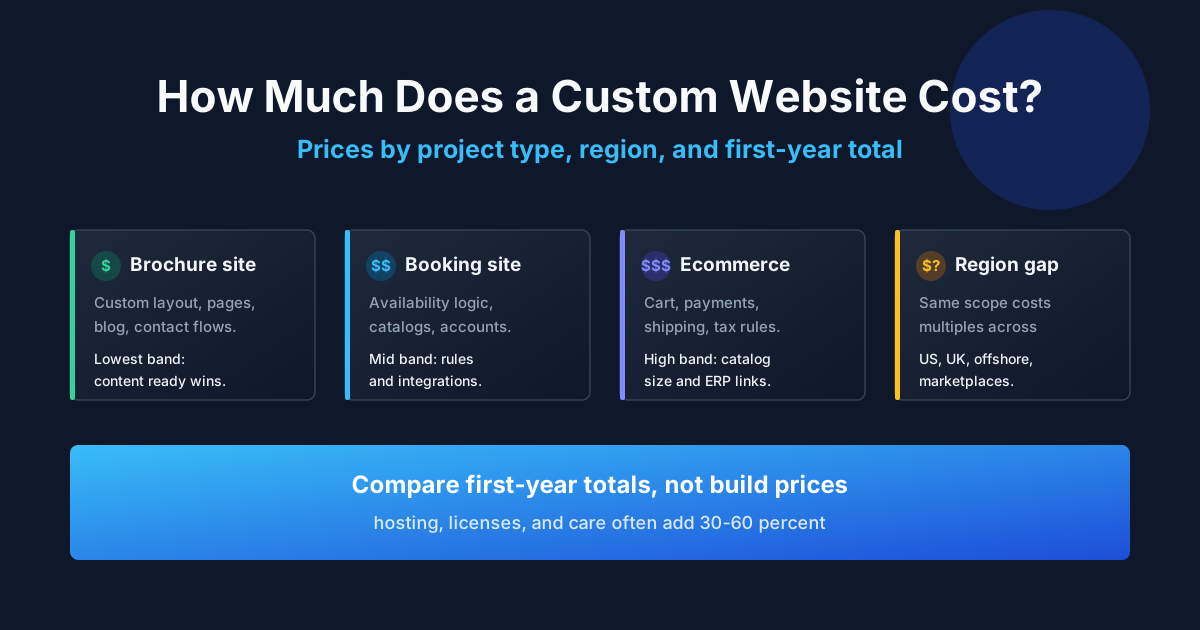
US and UK agencies price discovery, design, QA, and management into retainers or project fees; Indian agencies quote lower rates with thinner process layers; marketplace sellers price micro-deliverables. Illustrative planning example: the same 100-hour brochure-plus-booking build might be quoted at $12,000 by a US studio, $6,000 by a UK freelancer collective, and $2,500 by an Indian agency — before adding your management hours on the cheaper options. Compare delivered-outcome cost, and read the full developer rates overview before negotiating.
Contract and ownership checklist
Your agreement should define scope with exclusions, milestones with acceptance criteria, payment schedule with a handover holdback, intellectual-property transfer, license ownership and renewals, backup and update responsibility, support response times, confidentiality and data handling, change control pricing, and termination with knowledge transfer. Keep domain, hosting, repository, analytics, payment, and DNS accounts in your name; the agency gets minimum-necessary access, documented before work starts.
Two clauses deserve special attention with agencies. First, the substitution clause: who replaces your lead developer if they leave mid-project, and what overlap is guaranteed. Second, the warranty window: define its length, what counts as a defect versus a change request, and response times inside it. Vague warranty language is where post-launch disputes live — “30 days of free support” means nothing until support, defect, and response are defined.
Realistic hiring scenarios
Restaurant hires a local studio
Situation: a restaurant needs reservations, menu management, and local search visibility. Blocker: no staff time for remote management. Fix: local studio runs two workshops, builds the site, photographs dishes, and trains staff. Result: premium price justified by on-site work; launch in six weeks with same-day support.
Startup hires an Indian agency
Situation: a SaaS startup needs marketing site plus docs portal on a tight budget. Blocker: local quotes exceed runway. Fix: paid discovery first, then fixed-milestone build with weekly staging demos and an independent review before final payment. Result: launch on budget with documented handover; the startup keeps all accounts and continues with a care plan.
Store burned by a marketplace gig
Situation: a gift store buys a cheap “full ecommerce site” gig with no milestone structure. Blocker: delivered theme demo with sample products, no payments, no handover, seller unresponsive. Fix: independent developer freezes the mess, rebuilds checkout on a clean install, migrates real products, and documents everything. Result: store live in five weeks; the owner now requires staging demos and milestone payments from every supplier.
Typical mistakes
- Hiring on portfolio screenshots. Ask who did the work, what broke, and how it is maintained today.
- Skipping the paid pilot. A two-week discovery reveals more than ten sales calls.
- Comparing totals instead of scope. Normalize milestones, hours, and assumptions first.
- Ignoring timezone overlap. Zero shared hours turns every question into a 24-hour delay.
- Accounts in agency hands. Domain, hosting, and licenses must be yours from day one.
- Accepting “unlimited revisions.” It means undefined scope, billed later as change requests.
- No staging discipline. Updates tested on production will break revenue pages.
- Marketplace gigs for architecture. Micro-task platforms cannot own judgment across weeks.
- 100% upfront payment. Keep a holdback until handover is delivered and verified.
- No exit clause. Termination, knowledge transfer, and credential rotation belong in the contract.
Expert advice
Ask every shortlisted company for the staging URL and admin walkthrough of one live client project — before discussing price. The answer exposes process maturity, documentation habits, and client retention in fifteen minutes. A company that cannot show a maintained project it is proud of will not start being proud with yours.
FAQ: hiring a website development company
How do I choose a website development company?
Define one measurable outcome, shortlist three to five candidates, run a paid discovery or pilot, and verify staging habits, references, and handover terms. Choose the team whose evidence matches your scope — not the glossiest pitch.
Should I hire a local web design agency or offshore?
Hire locally when on-site work, local SEO, or same-day collaboration justifies the premium. Hire offshore for well-specified builds you can manage remotely. Either way, verify with staging demos and a paid pilot.
How much does it cost to hire a web development agency?
It depends on scope, region, and process depth — US/UK agencies price management layers in, offshore teams quote lower with thinner process. Compare delivered-outcome cost including your management hours, not headline rates.
Is it safe to hire a website developer on Fiverr?
For bounded micro-tasks with verifiable results, yes. For architecture, integrations, or ongoing ownership, no — cap exposure with fixed scope, milestone payments, and repository access from day one.
What should a web development proposal include?
Scope with exclusions, milestones with acceptance criteria, hours per milestone, content responsibility, staging and QA process, launch steps, license ownership, support terms, and a handover package.
How do I check an agency's past work?
Ask for comparable projects with contactable references, a staging demo of live client work, and the names and seniority of your assigned team. Verify independently where the budget justifies it.
Who owns the website, code, and accounts?
You should: domain, hosting, repository, analytics, payment accounts, licenses, and DNS. The agency works with minimum-necessary access. Anything else becomes leverage against you later.
What if the agency disappears mid-project?
Milestone payments, repository access, documented credentials, and an exit clause limit the damage. If already stuck, commission an independent assessment before funding new features.
How long does an agency website build take?
Brochure sites take weeks with ready content; stores and booking platforms take one to three months. Missing content and approval delays — not coding — cause most overruns.
Do I need a care plan after launch?
Yes, unless someone in-house owns updates, backups, and monitoring. Price it against one bad week of downtime or a hacked store, not against zero.
Can one freelancer replace an agency?
For bounded builds with weekly decisions on your side, often yes — at lower overhead. Agencies win when you need design, QA, management, and coverage under one contract.
How do I compare US, UK, and Indian agency quotes?
Normalize scope, milestones, and assumptions first, then add your management and review hours to offshore options. The cheapest headline rarely survives this arithmetic — but sometimes it fairly does.
Need a company shortlisted around your scope instead of sales decks? Send the brief to ProofDevs for a vetted shortlist matched to your scope, budget, and timezone.
Written by Michael Melnyk
Senior IT Technical Writer & Technology Analyst
Senior Technical Writer and IT Industry Analyst with over 7 years of experience analyzing software engineering ecosystems, tech leadership models, and developer procurement frameworks.