What Agreement Does a Technical Co-Founder Need to Protect Their Equity?
A technical co-founder usually needs a coordinated founder agreement, share issuance terms, vesting, and IP assignment—not a handshake promise.


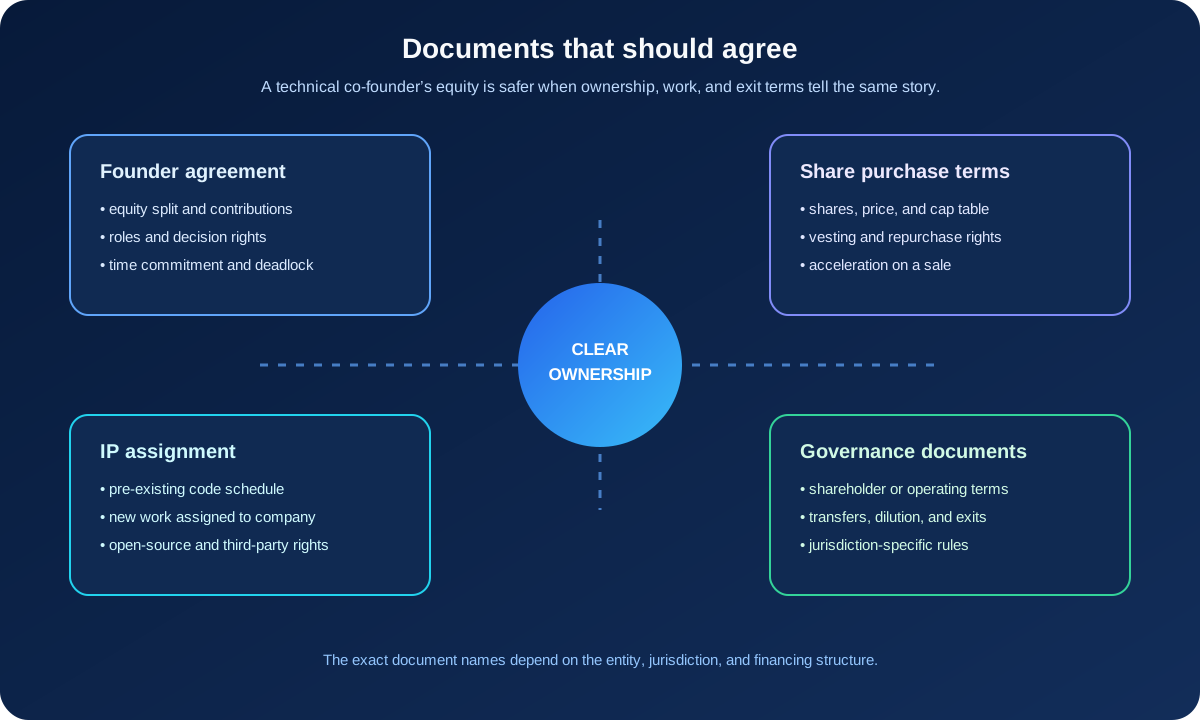
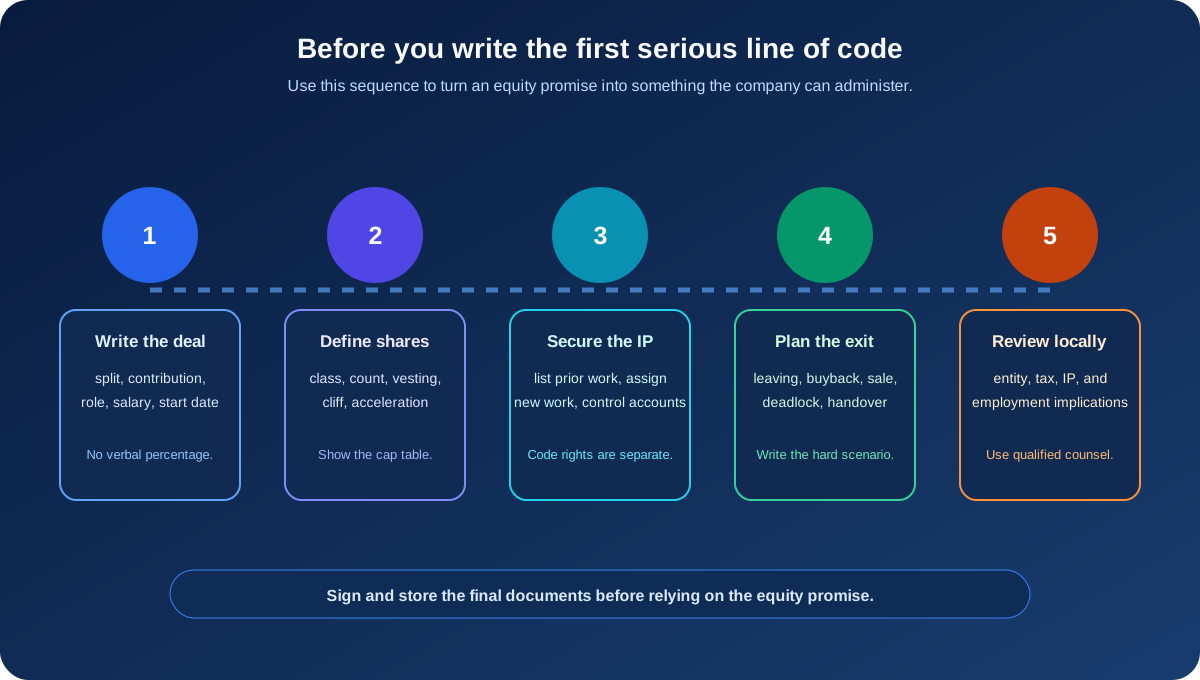
What agreement does a technical co-founder need to protect their equity? Usually, not one document. The practical package is a written founders’ agreement plus the company’s share-issuance documents, a vesting or repurchase schedule, and an intellectual-property assignment. Depending on the entity and jurisdiction, shareholder or operating documents, confidentiality terms, and a founder service agreement may also be needed.
The important point is that the percentage alone is not the protection. The documents should identify what the technical co-founder receives, what they must do to earn it, who owns the code, what happens if either founder leaves, and how future financing or a sale affects the arrangement.
This is general information, not legal or tax advice. Equity, employment, IP, and tax rules vary by country, state, entity, and financing structure. Have a qualified lawyer and tax adviser review the documents before signing.
It is a document package, not a handshake
“You will get 30% when this works” is not a usable equity arrangement. It leaves open whether the promise means shares, options, profits, or a future grant; whether the percentage is before or after an option pool; and whether the founder keeps it after leaving.
For a US corporation, the company often formally issues founder stock and documents the purchase in a restricted stock purchase agreement. That agreement can include a right to repurchase unvested shares if a founder leaves. Cooley’s founder guidance describes founder stock, vesting, and IP assignment as connected parts of the setup, while Y Combinator describes four-year vesting with a one-year cliff as a common startup arrangement—not as a universal legal requirement.
Other structures use different names. An LLC may use an operating agreement and membership-interest terms. A company outside the US may use a shareholders’ agreement, employment or service agreement, and local equity instruments. The label matters less than whether the signed documents agree with the cap table and the company’s governing records.
Which agreements should a technical co-founder review?
| Document or term | What it should clarify | Why it matters to the technical co-founder |
|---|---|---|
| Founders’ agreement | Ownership split, contributions, roles, time commitment, decisions, and disputes | Turns a shared plan into terms the founders can compare before work begins |
| Share purchase or equity grant agreement | Entity, share class, number of shares, price, vesting, repurchase, and acceleration | Defines what equity is actually issued instead of leaving the percentage abstract |
| IP and invention assignment | Prior work, new code, inventions, documentation, and third-party materials | Protects both the company’s ability to use the product and the founder’s pre-existing work |
| Shareholders’ or operating agreement | Transfers, dilution, voting, reserved decisions, distributions, and exits | Explains how ownership operates after incorporation and when new money arrives |
| Founder service or employment agreement | Role, pay, expenses, benefits, confidentiality, termination, and ongoing work | Separates compensation for labor from ownership of the company |
These documents can be combined or separated, but do not assume that a general founders’ agreement replaces the paperwork that actually issues shares or transfers IP. The company should also keep an accurate cap table, board or member approvals, signed copies, and a record of what was contributed.
How should the equity terms be written?
State a number of shares, not only a percentage
A percentage is meaningful only against a defined capitalization. The agreement should state the number and class of shares or interests, the total capitalization used for the calculation, the treatment of an option pool, and whether the number is measured before or after known SAFEs, notes, or other promised equity.
Ask for a simple cap-table example. If the company later creates an option pool or raises investment, the technical co-founder should be able to see how their percentage changes and why. This is not a promise against dilution; it is a way to avoid arguing about what the original percentage meant.
Define vesting and the cliff
Vesting connects the equity to continued contribution. A common US startup pattern is four years with a one-year cliff and monthly vesting afterward, but founders can negotiate different terms based on prior work, full-time commitment, or the stage of the company. The agreement should state:
- the vesting start date and whether it is credited from work performed before signing;
- the cliff, monthly or quarterly schedule, and treatment of partial months;
- what happens to vested and unvested equity on resignation, termination, death, disability, or a change in role;
- the company’s repurchase right, price, deadline, and process for unvested shares;
- whether any acceleration applies on a sale and whether it requires both a sale and termination.
Do not accept “standard vesting” as a complete answer. The schedule, trigger, and consequences should appear in the signed documents and match the company’s records.
Separate founder equity from payment for work
Equity compensates ownership and long-term risk. It does not automatically pay rent, reimburse expenses, or define the hours required each week. If the technical co-founder is working without salary, write down the expected time commitment, decision authority, expense approval, and the event that changes the arrangement.
If the relationship is actually a paid development engagement, use a development contract with scope, milestones, acceptance criteria, IP transfer, account ownership, and handover. A promise of future equity should not silently replace a contract for clearly defined delivery. The guide on how to hire a freelance web developer covers the separate protections needed for paid development work.
How does the agreement protect the code and other IP?
Equity and IP are related but different. A technical co-founder can own shares while the company lacks a clean transfer of the code it needs to operate. The IP terms should cover work created before incorporation, work created after incorporation, inventions, documentation, designs, domain assets, repositories, deployment configuration, and relevant data or content.
Start with a schedule of excluded pre-existing work. List libraries, frameworks, personal projects, patents, reusable tools, and employer-owned materials that are not being transferred. For anything the startup needs but the founder will retain, use a written licence with clear duration, scope, sublicensing, and termination terms. Do not assume that a vague “all work” clause answers ownership of every old repository.
For new work, the agreement should state who receives the rights, when the transfer occurs, and what the founder must do to complete it. It should also address open-source and third-party licences. If a patent or registered right is involved, local formalities may apply; the USPTO explains that patent ownership transfers through a written assignment and that assignment questions are governed by the relevant jurisdiction.
Keep the operational accounts under company control: source repository, domain, hosting, cloud, package registries, analytics, email, and payment providers. Account access does not itself prove legal ownership, but losing access can make the legal right difficult to use in practice.
What governance terms prevent an equity dispute?
A technical co-founder should not negotiate only the percentage. The agreement should explain how the founders work together when the product, budget, or hiring plan changes.
- Role and authority: distinguish technical architecture, product priorities, hiring, security, spending, fundraising, and public representations.
- Reserved decisions: identify decisions that require both founders or a defined board or member approval, such as issuing equity, selling the company, taking major debt, or transferring core IP.
- Deadlock: define a neutral escalation, mediation, board process, or other method before a disagreement becomes operational paralysis.
- Future financing: explain how new shares, an option pool, SAFEs, convertible notes, and investor rights affect the existing cap table.
- Information rights: specify access to financial records, cap-table updates, board decisions, and material company contracts.
- Confidentiality and conflicts: clarify side projects, employer restrictions, customer data, and what can be disclosed publicly.
These terms protect the company as well as the technical founder. A technically strong founder can still be exposed if another person can change the cap table, move the IP, or make a major commitment without a defined approval process.
What should happen if the technical co-founder leaves?
The agreement should describe departure before the founders are angry. It should distinguish voluntary departure, termination without cause, termination for cause, disability, death, and a negotiated transition. The labels and legal effect depend on the jurisdiction, so the document should not copy a generic “good leaver/bad leaver” clause without review.
At minimum, settle these questions:
- Which unvested shares can the company repurchase and at what price?
- Does the founder keep vested equity, and are there transfer restrictions or a right of first refusal?
- What happens to access, credentials, devices, repositories, documentation, and unfinished work?
- How are customer, investor, and team communications handled?
- Does a sale or termination change the vesting result?
- Who values an interest if a buyback is permitted and the parties disagree?
A short, fair handover process is especially important for a technical co-founder because the product may depend on knowledge that is not yet documented. Equity terms should not be used as a substitute for an operational continuity plan.
What changes before and after incorporation?
Before the company exists
Founders may use a short collaboration or term sheet to record the intended split, responsibilities, expenses, confidentiality, and the steps required to form the company. Be precise about whether it is binding and which provisions survive if the company is never incorporated.
Do not leave valuable code in a legal grey area while waiting for paperwork. Decide whether pre-incorporation work is assigned to the future company, licensed temporarily, or held by a founder until a defined closing. Also check whether a current employer, client, university, or prior agreement could claim rights in the work.
At and after incorporation
Once the entity exists, align the founders’ commercial agreement with the actual equity issuance, governing documents, IP assignments, and service arrangements. Confirm who approved the issuance and where signed documents are stored. If a US restricted stock transfer is subject to vesting, ask a tax professional whether a Section 83(b) election is relevant; the IRS states that an election under Section 83(b) generally has a 30-day filing deadline after the property transfer. That deadline and its consequences require professional advice.
For a detailed comparison of a technical co-founder, hired developer, and other models, see how a non-technical founder can choose the right development relationship. A co-founder arrangement is a company-building partnership; a developer contract is a defined delivery relationship.
Red flags before signing a technical co-founder agreement
- The equity percentage is written in a message, but no share count or cap table exists.
- The founder is expected to work full-time, but time commitment, salary, expenses, and authority are undefined.
- Vesting is called “standard” without a start date, cliff, repurchase rule, or acceleration terms.
- The company wants all code, but prior repositories, employer restrictions, and third-party licences are not discussed.
- One founder can issue shares, sell core IP, or change the business without a defined approval process.
- The documents name the wrong entity or do not match the company’s actual jurisdiction.
- The agreement promises equity “after funding” without defining what happens if funding never arrives.
- Either side refuses independent legal or tax review because the arrangement is “just between founders.”
Technical co-founder equity agreement checklist
Before signing, both founders should be able to answer these questions in writing:
- What entity is receiving the IP and issuing the equity?
- How many shares or interests are issued, in which class, and against which cap table?
- What work, money, customer access, or other contribution supports the arrangement?
- When does vesting start, and what exactly happens if either founder leaves?
- Who owns pre-existing code, new code, inventions, designs, and documentation?
- Who controls the source repository, production systems, domain, and billing accounts?
- Which decisions need both founders’ approval?
- How are dilution, new financing, a sale, and a deadlock handled?
- Which country and state law applies, and who will review tax consequences?
- Where are the signed agreement, cap table, approvals, and IP schedules stored?
Frequently asked questions
Is a founders’ agreement enough to protect a technical co-founder’s equity?
Not always. It can record the founders’ deal, but the equity may also need a share purchase or grant agreement, company approval, cap-table entry, and governing-document updates. IP assignment and service terms should be handled explicitly rather than assumed to be covered by a title.
Should a technical co-founder get equity or a salary?
Those solve different problems. Equity reflects ownership and long-term risk; salary pays for work. The founders can negotiate a combination, but the documents should state the cash compensation, expected commitment, and equity mechanics separately.
What vesting schedule is fair for a technical co-founder?
There is no universal answer. Four-year vesting with a one-year cliff is a common US startup reference point, but prior product work, full-time status, funding stage, and jurisdiction can justify different terms. Compare the schedule to the actual contribution and have counsel review it.
Who owns code written by a technical co-founder before incorporation?
That depends on the facts and applicable law. The agreement should identify the prior work, state whether it is assigned or licensed, and address any employer, client, open-source, or third-party claims. Do not rely on the fact that the code is in a company repository.
Can a technical co-founder lose equity after leaving?
Unvested equity may be subject to contractual repurchase or forfeiture terms, while vested equity may remain subject to transfer or buyback provisions. The answer comes from the signed documents and local law, not from the job title or a general promise.
What if the startup is not incorporated yet?
Record the intended relationship and the steps required to form the entity, but do not postpone the IP and equity conversation until after substantial work is complete. Specify what happens if incorporation or funding never occurs.
Does a technical co-founder need a lawyer?
For a meaningful equity grant, independent legal review is sensible for both founders. Counsel can check the entity, securities, employment, IP, tax, and jurisdiction-specific consequences. A template can help prepare questions, but it cannot evaluate the facts of your arrangement.
Protect the partnership before building the product
A technical co-founder should not have to choose between trust and documentation. The useful agreement preserves trust by making the difficult assumptions visible: ownership, vesting, code rights, authority, dilution, and departure. Set those terms while the relationship is still easy to discuss, then keep the cap table, company accounts, and IP records aligned as the startup changes.
If you are still deciding whether you need a technical co-founder, a paid developer, or independent technical leadership, start with an independent technical co-founder evaluation. It can help you assess the technical work before making an equity decision; it does not replace legal advice.
Written by Michael Melnyk
Senior IT Technical Writer & Technology Analyst
Senior Technical Writer and IT Industry Analyst with over 7 years of experience analyzing software engineering ecosystems, tech leadership models, and developer procurement frameworks.