Lovable Pricing Explained: Plans, Credit Limits & When Hiring a Developer Is Cheaper
AI app builders sell the dream of free software, but debugging complex logic can burn through monthly credits in 48 hours. Here is a realistic breakdown of Lovable pricing and total cost of ownership.

Lovable offers one of the most accessible entry points into generative software creation, but founders frequently misunderstand its long-term cost economics. While a free trial or entry-level subscription ($20 to $25/month) is sufficient for prototyping screens, real software development is rarely a linear prompt process.
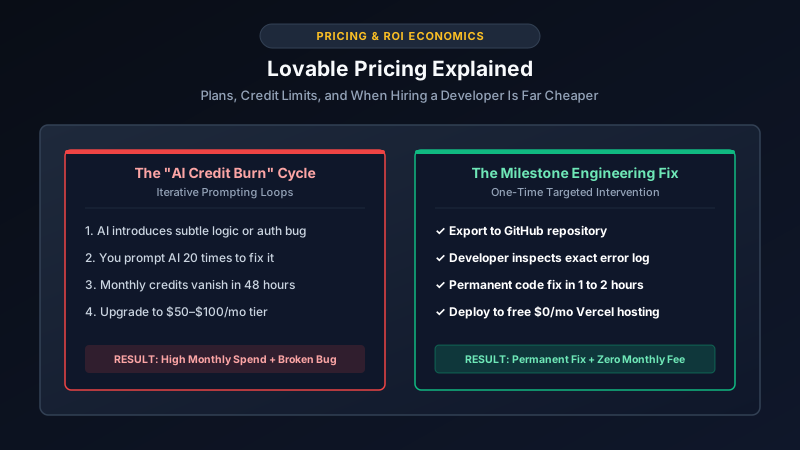
When a web application encounters a stubborn authentication glitch, database permission error, or third-party API mismatch, non-technical users enter what developers call the “prompt-and-pray loop.” Submitting 30 successive prompts to fix one bug burns through monthly quotas in hours, prompting expensive tier upgrades. Here is how Lovable’s pricing structure works and how to make the economically optimal choice. Reviewed September 2026. Figures reflect standard tier pricing and real-world development time estimates.
Overview of Lovable Pricing Plans
Lovable operates on a hybrid credit and tier subscription model designed around monthly message and generation allowances:
| Subscription Tier | Typical Price | Included Capacity | Best Use Case |
|---|---|---|---|
| Free / Starter Tier | $0 / month | Limited daily credits, public projects | Testing the interface builder and experimenting with prompt ideas. |
| Pro Tier | $20 – $25 / month | Standard monthly message quota, private projects, GitHub sync | Building and refining an initial MVP prototype for customer demos. |
| Scale / Business Tier | $50 – $100+ / month | Expanded credit allowance, priority generation, higher concurrency | Teams running active product design sprints with multiple daily contributors. |
| Enterprise Custom | Contact Sales | Custom security, dedicated LLM limits, team workspace governance | Established corporate organizations with strict data compliance mandates. |
Note: Subscription prices and credit amounts change frequently. Always verify the current tier specifications directly on the official Lovable website before budgeting.
The “Credit Burn” Trap: Why Prompting Bugs Gets Expensive
AI models excel at greenfield generation (building a new dashboard from a blank canvas). However, when debugging an existing 20-file React codebase, LLMs must process massive context windows. Every prompt consumes valuable tokens.
Consider a classic scenario: a user clicks “Sign In,” but Supabase throws a 403 Forbidden error due to a missing Row Level Security policy. A non-technical founder types:
- “Fix the login error.” ➔ AI modifies the button styling (bug remains).
- “Login is still broken, make it work.” ➔ AI alters the React state (now the signup form is also broken).
- “Undo that and fix the database connection.” ➔ AI regenerates the client config.
After 15 prompts and 45 minutes, half of the monthly Pro credit quota is gone, the application remains non-functional, and the founder feels compelled to upgrade to the $50 or $100 plan.
The Economic Alternative: One-Time Milestone Fix
Compare the total cost of ownership (TCO) between staying trapped inside monthly credit upgrades versus hiring an independent software engineer for a targeted fix:
| Expense Category | Upgrading Lovable Plans Indefinitely | One-Time Developer Intervention |
|---|---|---|
| Initial Fix Cost | $50 – $100 / month (continuous plan upgrades) | $100 – $250 (1 to 2 hours of senior developer time) |
| Hosting Cost After Export | $25 – $100 / month (must maintain paid Lovable plan) | $0 / month (hosted on Vercel/Cloudflare free tiers) |
| Root Cause Resolution | Often patch fixes that break later features | Permanent architectural fix with proper database security |
| 6-Month Total Cost | $300 – $600+ | $150 – $250 (one-time) |
By connecting your project to GitHub (see our guide on exporting Lovable code to GitHub) and having an engineer resolve the underlying database or state issue, you fix the bug permanently and unlock $0/month production hosting.
When Should You Pay for Lovable vs. Hire a Developer?
- Keep Paying Lovable if: You are actively brainstorming, changing visual layouts daily, tweaking landing page copy, and testing new user interface concepts. AI is unmatched for rapid visual experimentation.
- Engage an Independent Developer if:
- You have reached a stable visual design and need real payments (Stripe/Shopify) integrated safely.
- You have repeated database or authentication errors that AI prompts cannot solve. Learn how developers structure this in our Lovable Supabase backend guide.
- You are ready to launch publicly and want to eliminate ongoing platform subscription overhead.
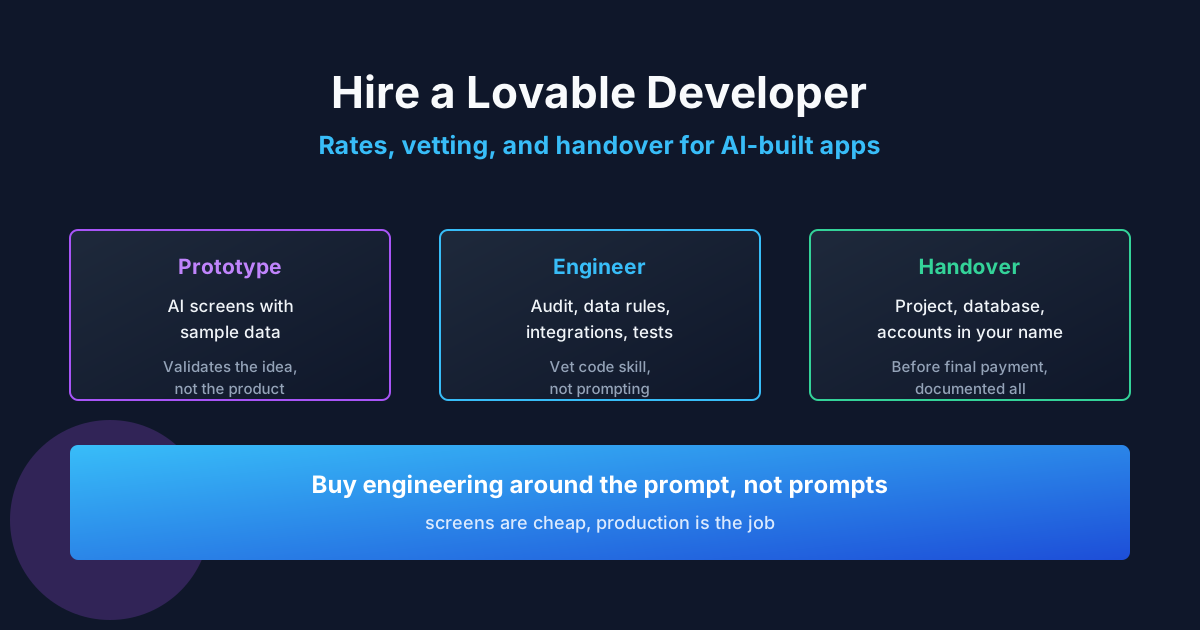
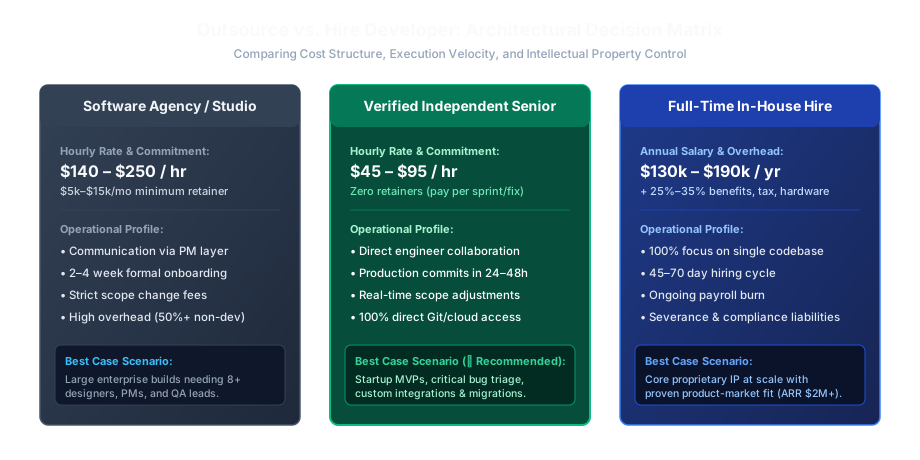
For a detailed breakdown of developer hourly rates and vetting checklists, review our comprehensive guide on hiring a Lovable developer or explore what a dedicated Lovable app creator handles from prototype to production.
If you are currently stuck in an AI credit loop or need an independent engineer to take over an exported codebase, connect with ProofDevs verified developers for rapid, cost-effective project delivery.
Written by Michael Melnyk
Senior IT Technical Writer & Technology Analyst
Senior Technical Writer and IT Industry Analyst with over 7 years of experience analyzing software engineering ecosystems, tech leadership models, and developer procurement frameworks.