Hire a Lovable Developer: Rates, Vetting, and Red Flags
A Lovable developer should turn your AI prototype into software your business can operate: reviewed code, real data, working integrations, and a handover you control. This guide covers rates, vetting, and the Lovable-specific ownership details.

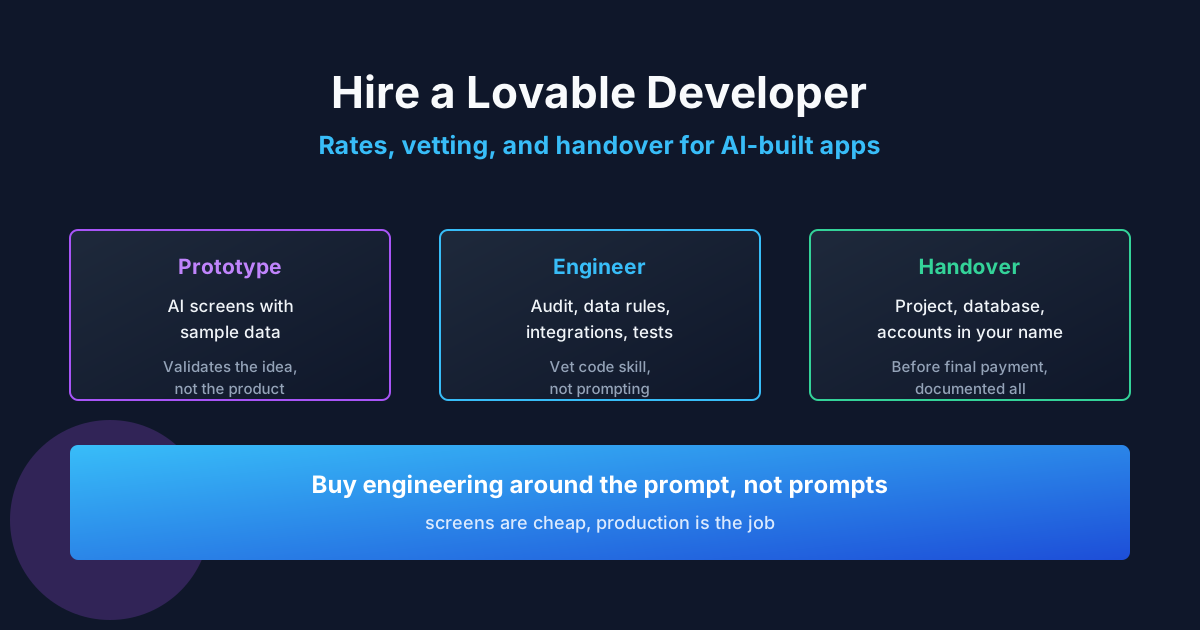
Hire a Lovable developer when your AI prototype needs to become operable software: reviewed code, real data connections, working payments or bookings, and a handover that leaves you in control of the project, the database, and the accounts. The skill you are buying is not prompting — it is everything around the prompt that Lovable cannot do for you. Reviewed September 2026. Budget figures below are illustrative planning examples, not market averages or ProofDevs quotes.
Searches like “hire lovable ai developers,” “lovable developer hire,” and “fiverr lovable developer” come from owners holding a convincing demo that is not a product yet. For what happens between prototype and production in depth, see our Lovable production guide; this article is about finding, vetting, and contracting the person who does that work. For the general freelancer playbook, see how to hire a freelance web developer.
What does a Lovable developer actually do?
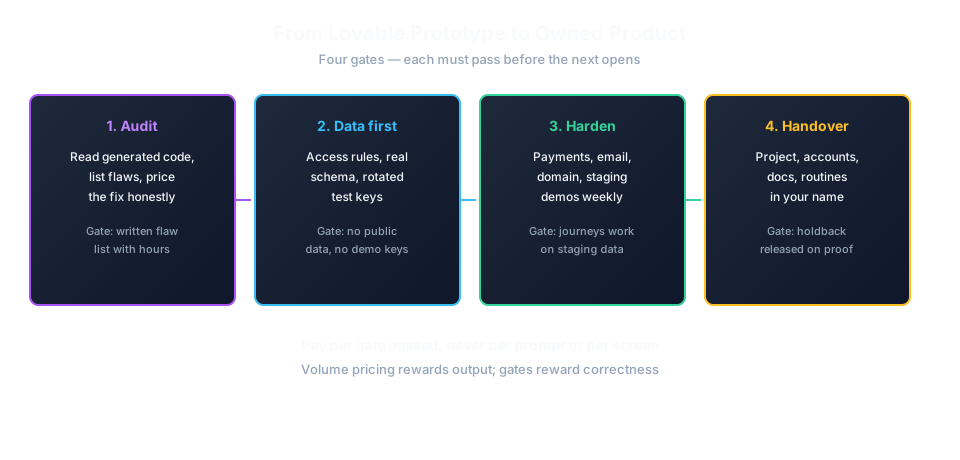
A Lovable developer takes an AI-generated project and makes it production-grade: auditing generated code for security and logic flaws, restructuring data in Supabase with proper access rules, connecting real payments, email, and third-party services, setting up a custom domain with SSL, configuring backups, and documenting the result so another engineer can maintain it. The deliverable is the boring operational layer the demo never shows.
Two profiles sell under this title at wildly different prices, and they are different jobs with different failure modes. A prompter generates screens fast but cannot review code, design data, or debug production. An engineer who uses Lovable treats the AI output as a starting draft and owns everything after it. Your vetting must separate the two — price differences between them explain most quote confusion.
When do you need one?
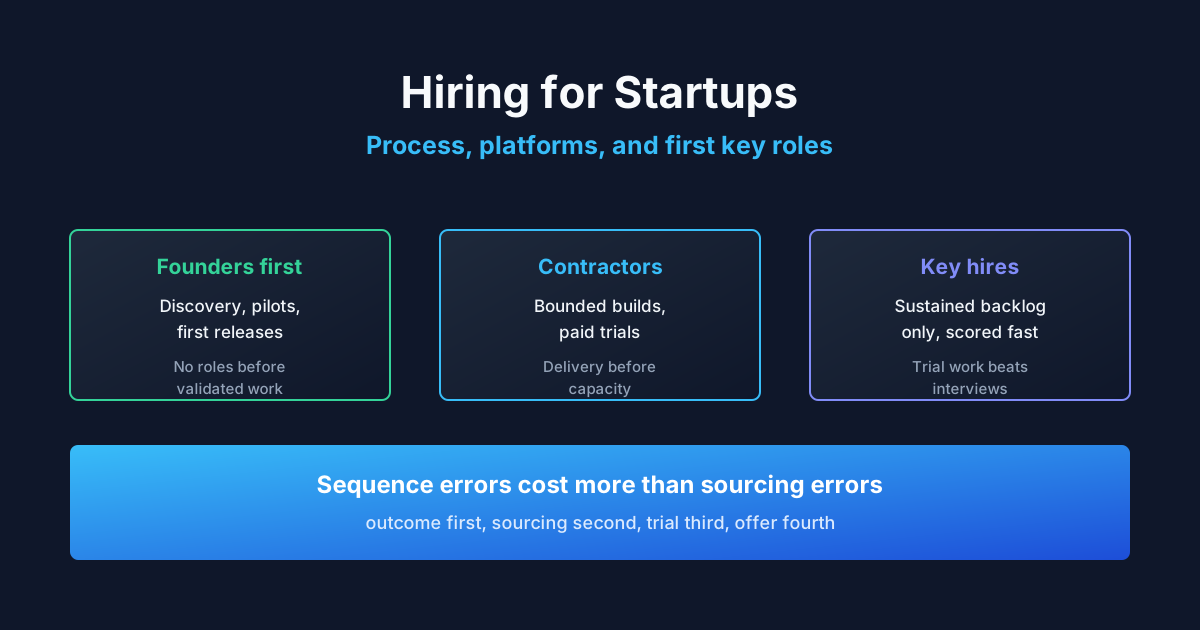
Hire when the prototype validated the idea and the next step handles real users, real money, or real data: customer accounts, payments, personal data, third-party integrations, notification flows, or anything else where a production bug costs more than embarrassment. Do not hire when the idea is still untested — generate more variants yourself first. If the product assumption is still open, a landing page or concierge test beats any build; our guide to hiring for small businesses and startups helps scope that smallest test.
Where to find Lovable developers
Search results for “lovable developer upwork,” “fiverr lovable developer,” and “lovable web design agency” look abundant until you filter for production responsibility. Most listings sell prompt output: landing screens, template tweaks, and demo apps with sample data. The smaller subset that mentions audits, Supabase policies, staging environments, and handover documentation is where actual engineers advertise — read gig descriptions for those words before shortlisting anyone. Absence of post-launch vocabulary is itself the signal.
| Channel | Good fit | Watch for |
|---|---|---|
| Fiverr / Upwork gigs | Small prompt-to-screen tasks with visible results | Prompters selling screenshots; no production responsibility |
| Freelance full-stack developers | Prototype-to-production jobs with weekly demos | Verify they read generated code, not just generate it |
| Agencies with AI practices | Design plus hardening plus support under one contract | Confirm who does the work and what “AI-powered” excludes |
| Specialist matching (ProofDevs) | Vetted engineers with shipped Lovable-to-production cases | Still run your own paid pilot before committing |
For the wider tradeoff between these channels, see our outsource-versus-hire comparison and the guide to hiring a web development company.
What do Lovable developers charge?
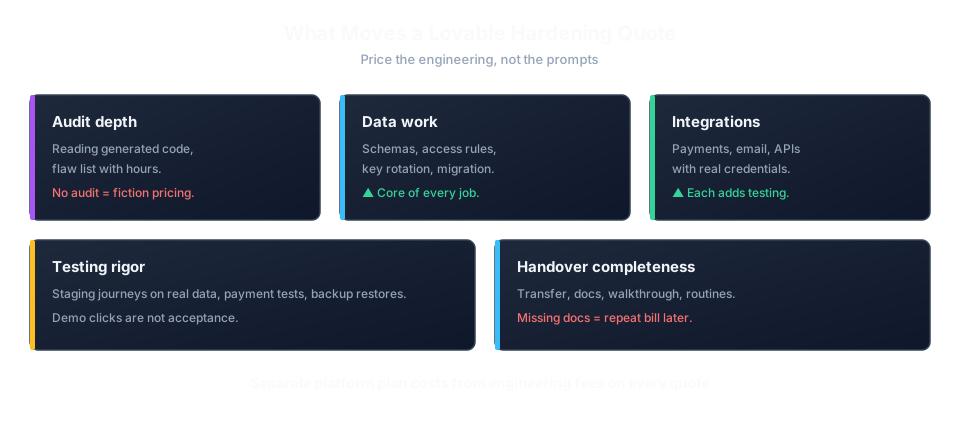
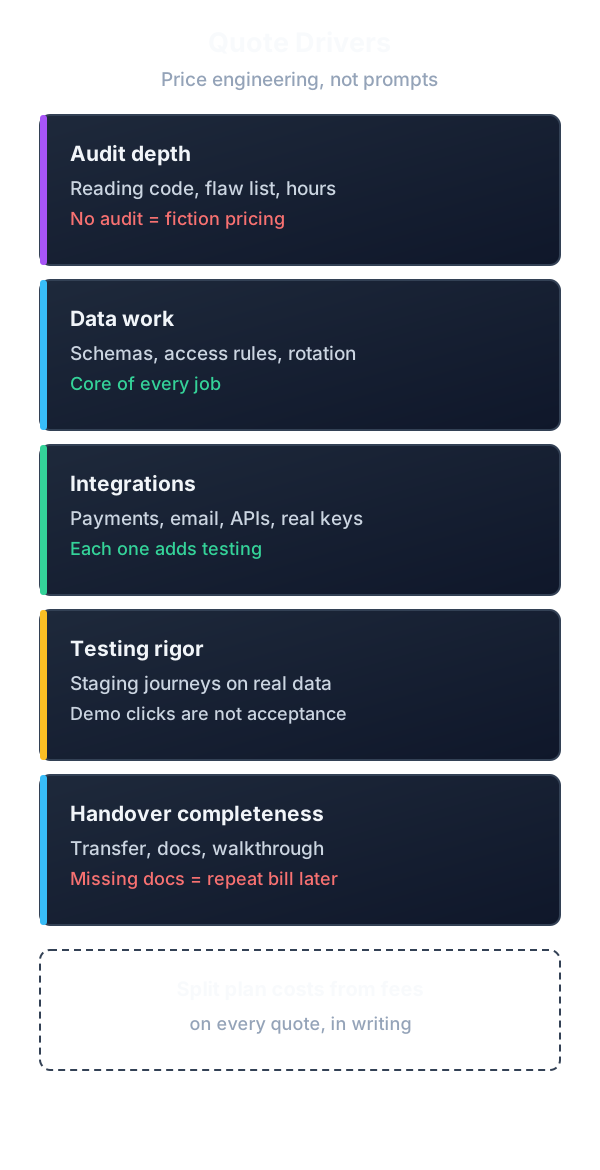
Pricing follows the engineer/prompter split, not the tool. Prompt-only gigs price like micro-tasks; production hardening prices like software engineering — audit hours, data work, integration configuration, testing, and handover documentation. Illustrative planning example: a 20-hour hardening pass at $70 per hour ($1,400) covering code audit, Supabase access rules, payment connection, custom domain, and documented handover, plus Lovable plan costs and third-party subscriptions separately. Add integration complexity and the number grows with scope, not with prompts used.
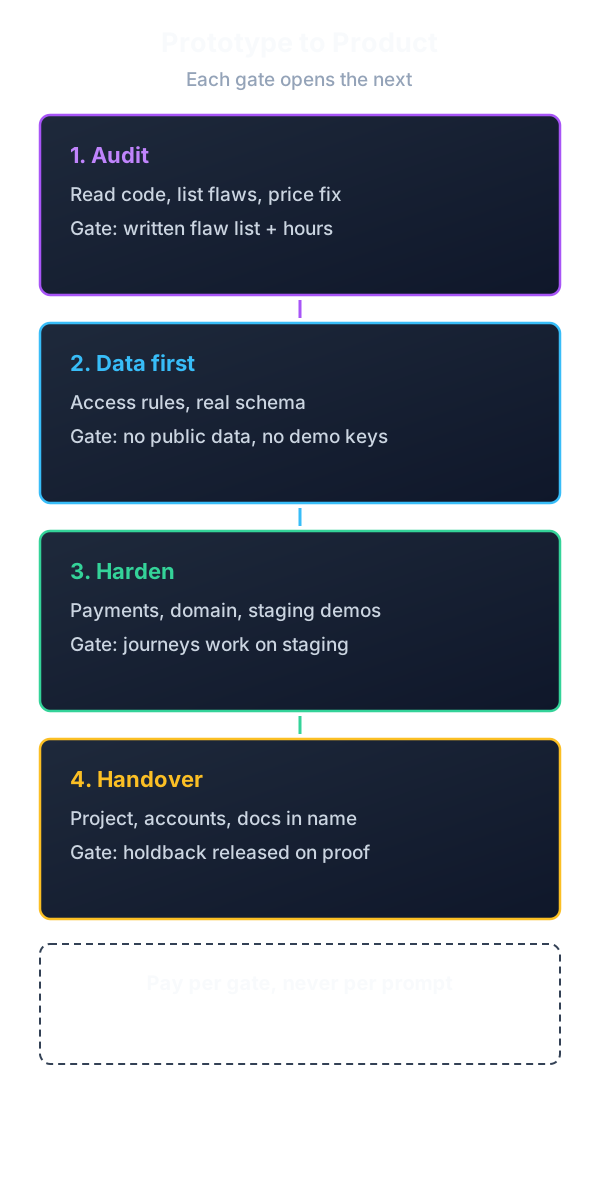
Ask for milestone pricing tied to observable states — audited codebase, working staging with real data, passing payment tests, transferred project — never per-prompt or per-screen rates that reward output volume over correctness.
How to vet: prompter vs engineer
The single best filter is a live review of a past Lovable project: ask the candidate to open the generated code and walk through what they changed and why. An engineer points at access rules, restructured queries, removed dead code, added tests, and rotated secrets. A prompter describes screens. Five more checks:
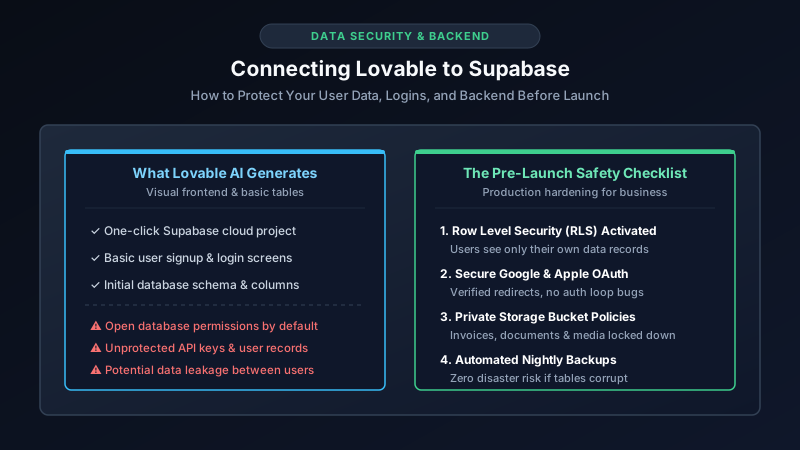
- Supabase literacy: row-level security explained in plain words, with an example from past work. No RLS discussion means your data will be public.
- Integration evidence: named payment, email, or API integrations shipped to real users — not demo keys.
- Staging discipline: changes land on a staging project first; production is never the test bench.
- Security basics: secret handling, auth flows, and what happens to data on export or deletion.
- Maintenance story: who updates the project after launch, and what the monthly routine includes.
Lovable pricing vs developer pricing
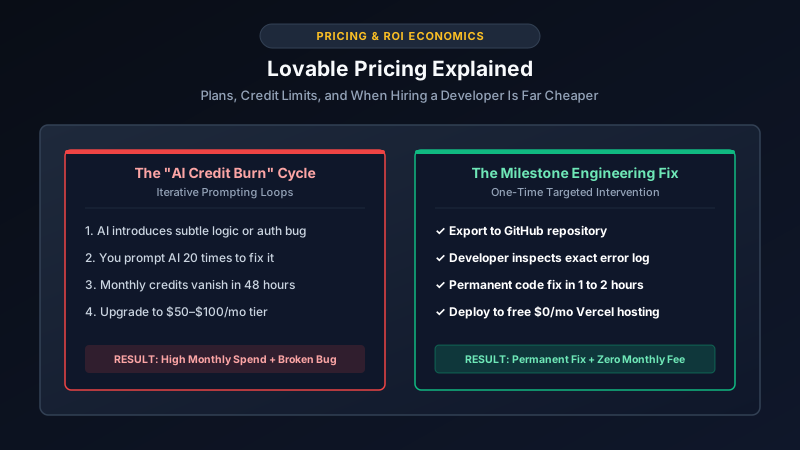
Separate two budgets people constantly merge: the Lovable plan (platform subscription with message and project limits) and the developer fee (human engineering hours). “Lovable dev pricing” searches mix both, which lets weak quotes hide engineering costs inside platform fees or vice versa. Ask every candidate to quote them on separate lines, and confirm who pays for plan upgrades when message limits hit mid-project. A fixed bid that silently assumes your paid plan covers unlimited regeneration is a change order waiting to happen.
Lovable-specific handover checklist
Generic handover terms miss platform specifics. Your Lovable handover must include: project ownership transferred to your Lovable account, Supabase project access with documented schemas and access policies, environment variables and secrets inventory, custom domain with DNS documented, third-party service accounts (payments, email, analytics) in your name, a code walkthrough recording, and written update and backup routines. Require all of it before final payment — a Lovable project you cannot access, export, or understand is a subscription, not an asset, and subscriptions can be held hostage. If a previous contractor already left you locked out, our Lovable rescue checklist covers the first recovery steps.
Red flags
Lovable projects fail in predictable ways, so the warning signs are specific — generic hiring advice misses them. Treat any three of the following as disqualifying, not as negotiation points; each maps directly to a rescue case where the business paid twice.
- Portfolio of screenshots only. No live projects, no staging demos, no code discussion.
- Per-prompt pricing. Rewards volume; hides the engineering the job actually needs.
- “No review needed, AI code is clean.” Generated code always needs audit — anyone denying it never did one.
- No mention of Supabase access rules. The most common Lovable security hole, invisible in demos.
- Accounts in their name. Lovable project, database, and domain must transfer to you.
- No staging project. Testing on production with real user data.
- Fixed price for “finish my app” with no audit first. Nobody can price unknown generated code sight unseen.
- 100% upfront. Tie payments to audited milestones with a handover holdback.
Realistic hiring scenarios
Booking MVP hardening
Situation: a clinic validates demand with a Lovable booking demo. Blocker: demo data, no access rules, test payment keys. Fix: engineer audits code, structures Supabase with RLS, connects real payments, transfers project ownership. Result: live in three weeks; staff manages bookings; audit documented for the next developer.
Marketplace gig rescue
Situation: a founder buys a cheap “complete Lovable app” gig; delivery is screens with sample data. Blocker: seller vanished, no handover, database in seller's account. Fix: independent engineer freezes the project, recovers what is salvageable, rebuilds the data layer with proper access rules, rotates every exposed test key, and documents everything. Result: working product in a month; the founder now demands staging demos, milestone payments, and account ownership from every supplier before work starts.
Agency AI practice engagement
Situation: a retailer needs a customer portal with loyalty logic. Blocker: internal team has no capacity. Fix: agency runs paid audit first, then fixed-milestone hardening with weekly demos. Result: portal live with support tier; named engineers, not a black box.
Typical mistakes
- Hiring prompts instead of engineering. Screens are cheap; production is the job.
- Skipping the audit. Pricing a hardening job without reading generated code is fiction.
- Ignoring data access rules. Public-by-default data is the standard Lovable incident.
- Accounts outside your control. Project, database, domain — all yours from day one.
- No staging discipline. Production is not a test environment.
- Paying per screen. Milestones tied to working states, not output volume.
- Assuming AI output is secure. Schedule the security review explicitly.
- No maintenance owner. AI projects decay like any software without updates.
- Confusing demo with product. Sample data hides every hard problem.
- 100% upfront. Holdback until handover is delivered and verified.
Expert advice
Before discussing price, ask for a fifteen-minute screen share: the candidate opens a past Lovable project and explains three things they changed after generation and why. Engineers answer instantly with specifics; prompters describe layouts. That quarter hour predicts the entire engagement better than any portfolio page, testimonial, or hourly rate.
Second, never let the same person who built the demo grade their own production readiness without oversight. Even a strong engineer benefits from a second pair of eyes on access rules and data flows — a two-hour independent review before launch costs little and catches the exact flaws (public data, test keys, missing backups) that turn demos into incidents. Independence here is cheap insurance, not distrust.
FAQ: hiring a Lovable developer
How much does it cost to hire a Lovable developer?
Prompt-only gigs price like micro-tasks; production hardening prices like engineering — audit, data, integrations, testing, handover. Get milestone quotes tied to observable states, never per-prompt rates, and keep platform plan costs on a separate budget line.
Where can I find Lovable developers?
Marketplaces for tiny tasks, freelance full-stack developers for prototype-to-production jobs, agencies for bundled delivery, specialist matching for vetted cases. Verify with staging demos whatever the channel — and read gig descriptions for audit, access-rule, and handover vocabulary before shortlisting anyone.
Can I hire a Lovable developer on Fiverr?
For small prompt-to-screen tasks, yes. For production hardening with real data and payments, cap exposure: fixed scope, milestone payments, and proof of engineering skill first.
How do I vet a Lovable developer?
Live code review of a past project, Supabase access-rule literacy, shipped integrations, staging discipline, and a maintenance story. Screenshots alone prove nothing.
What should a Lovable handover include?
Project ownership in your account, Supabase access with documented policies, secrets inventory, custom domain with DNS docs, third-party accounts in your name, a walkthrough, and update routines — before final payment.
Do I own the code Lovable generates?
Confirm platform terms and, more importantly, practical control: project transfer, repository or export access, and documentation. Ownership you cannot exercise is theoretical.
Can a Lovable developer build mobile apps?
Lovable targets web applications; native mobile needs different tooling. Clarify the delivery target before hiring — a web app wrapped for stores is not native development.
How long does Lovable hardening take?
A focused audit-to-launch pass takes weeks for typical MVPs, longer with payments, complex data, or integrations. Anyone promising days without reading the code is selling the demo twice.
What are red flags in Lovable proposals?
Screenshots without live projects, per-prompt pricing, denied need for review, no access-rule discussion, accounts in their name, no staging, fixed “finish my app” bids without audit, 100% upfront.
Should I hire an agency or freelancer for Lovable?
Freelancer for bounded hardening with weekly decisions on your side; agency when design, QA, and support must come bundled. Confirm the actual people and the handover either way.
What if my Lovable developer disappears?
Milestone payments, transferred project access, and documented credentials limit damage. If locked out already, commission a recovery assessment before funding new features.
Is Lovable enough without a developer?
Enough to validate ideas and ship simple internal tools. Not enough where real users, money, or personal data are involved — that is exactly the hardening job described here.
Holding a Lovable prototype that needs to become a product? Send the brief to ProofDevs for a vetted engineer with shipped Lovable-to-production cases.
Written by Michael Melnyk
Senior IT Technical Writer & Technology Analyst
Senior Technical Writer and IT Industry Analyst with over 7 years of experience analyzing software engineering ecosystems, tech leadership models, and developer procurement frameworks.