Outstaffing vs. Outsourcing in Ukraine: Differences, Costs, and Which Is Better
Outsourcing buys a finished deliverable from a managed agency; outstaffing buys dedicated developer capacity you direct yourself. Here is how both models compare for software outsourcing to Ukraine on cost, control, and delivery risk.

When international companies, venture-backed startups, and growing technology businesses look to build software with Ukrainian engineering talent, they invariably encounter two dominant engagement models: outstaffing and outsourcing. While the terms are frequently conflated by sales representatives or grouped together as generic offshore development, they represent diametrically opposed operational philosophies. Selecting the wrong model does not merely affect your monthly invoice; it alters who controls your code architecture, who is legally liable when delivery stalls, and how quickly your product can adapt to market feedback.
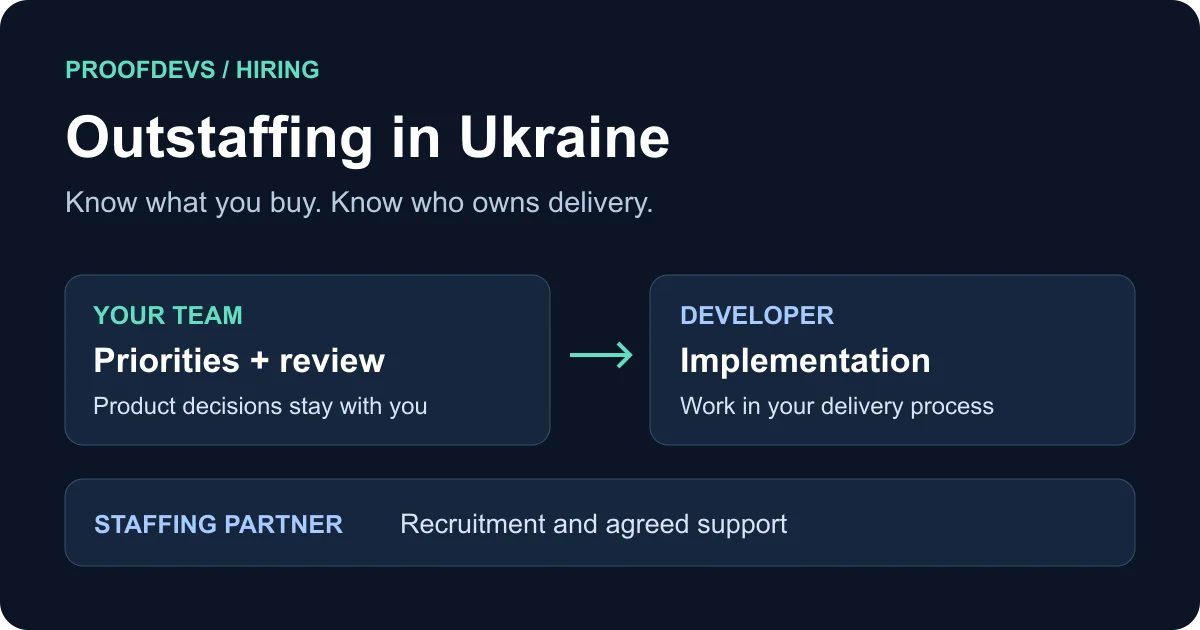
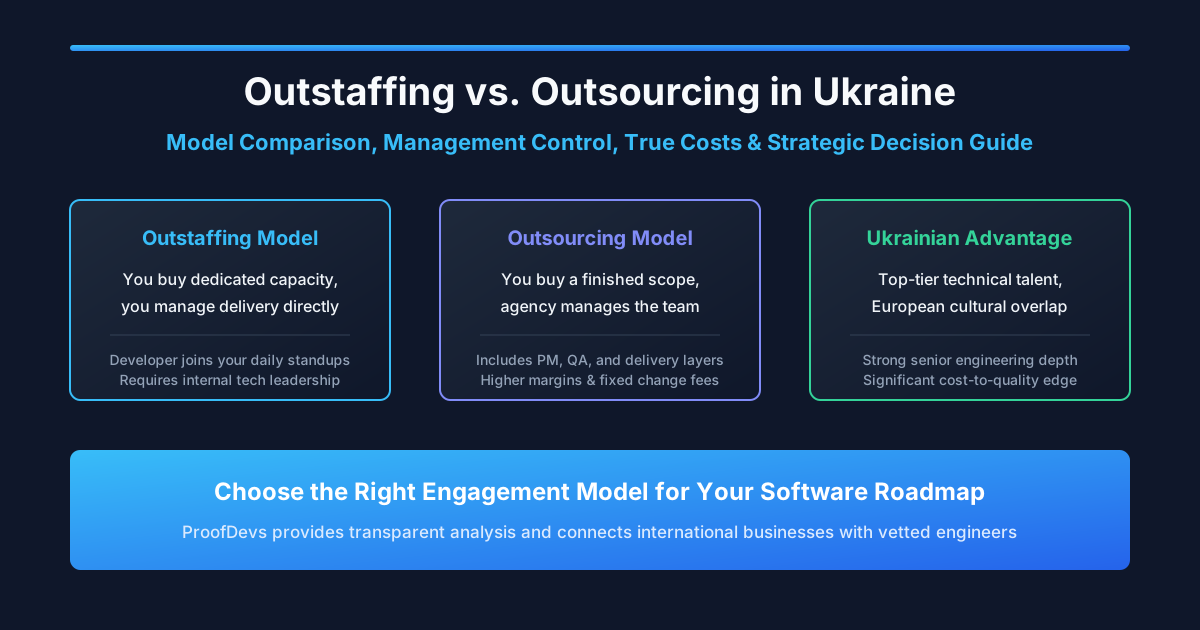
The distinction between the two models centers on a single operational question: Are you purchasing a managed deliverable, or are you purchasing direct developer capacity? In an outsourcing arrangement, an external software agency assumes responsibility for executing an agreed specification and delivers a turnkey system through their own project managers. In an outstaffing arrangement, a vendor provides dedicated engineers who integrate directly into your internal team, while you retain complete authority over technical direction, architecture, and day-to-day sprint management. Examining how both models function in Ukraine reveals which approach protects your capital and technical velocity.
Quick Answer: Outsourcing vs. Outstaffing in Ukraine
Software outsourcing to Ukraine is a turnkey delivery model where an external agency manages project execution, delivery schedules, and squad staffing against an agreed specification ($50–$95+/hr). Software outstaffing in Ukraine provides dedicated senior Ukrainian engineers who integrate directly into your internal team and take sprint assignments from your in-house technical leadership ($30–$55/hr).
Table of Contents
- The Core Distinction: Deliverables vs. Capacity
- The Landscape of Software & IT Outsourcing in Ukraine
- How Dedicated Outstaffing Operates in Ukraine
- How Software Outsourcing Operates in Ukraine
- Ukraine Outsourcing Rates vs. Outstaffing Costs: Detailed Breakdown
- Control, Communication, and Code Quality Realities
- Intellectual Property and Legal Frameworks in Ukraine
- Outstaffing vs. Outsourcing: Comprehensive Decision Matrix
- The Third Alternative: Direct Vetted Independent Senior Engineers
- Frequently Asked Questions
The Core Distinction: Deliverables vs. Capacity
To evaluate which model suits your commercial goals, founders must look past marketing terminology and examine the operational relationship between client, vendor, and engineer:
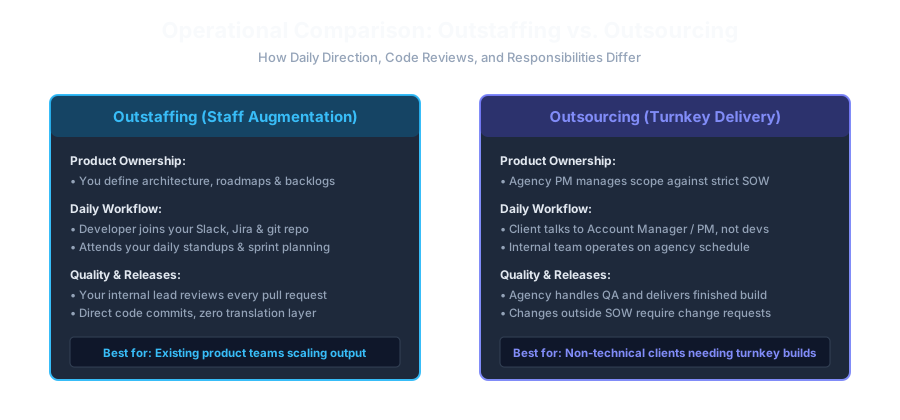
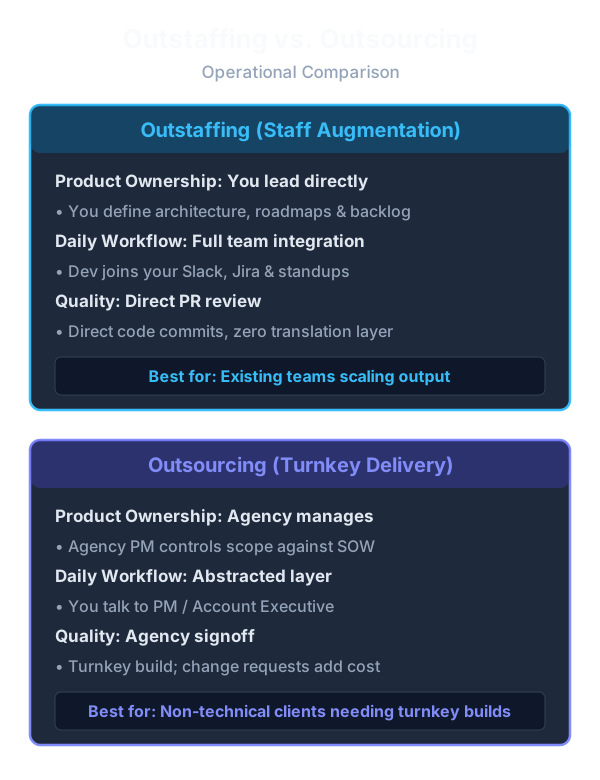
- Software Outsourcing (Project-Based Delivery): You hire an agency to build a defined application or feature set based on an agreed Statement of Work (SOW). The agency provides the complete squad: project manager (PM), business analyst, software engineers, UI/UX designers, and QA testers. The client interacts primarily with the project manager. The agency is responsible for delivery outcomes, while the internal technical decisions and resource allocation remain inside the agency's domain.
- Software Outstaffing (Dedicated Staff Augmentation): You hire dedicated engineers through an outstaffing provider to extend your existing engineering team. The developer works exclusively on your codebase, attends your daily standups, pushes commits to your GitHub repository, and takes direct task instructions from your in-house technical lead or CTO. The outstaffing firm acts strictly as an administrative and legal employer of record (handling payroll, local taxes, workspace, and hardware), but exercises zero control over the software being written.
For a detailed breakdown of local legal structures and monthly cost components, read our foundational guide on outstaffing in Ukraine.
The Landscape of Software & IT Outsourcing in Ukraine
For more than two decades, software outsourcing to Ukraine has served as a cornerstone of engineering velocity for global tech enterprises, scaleups, and early-stage ventures. Despite macroeconomic challenges, the Ukrainian IT industry remains one of Europe's largest exporters of technical services, sustained by several distinct structural strengths:
- Deep Technical Talent Pool: Ukraine is home to over 300,000 professional software engineers. Major technology hubs including Kyiv, Lviv, Dnipro, Odesa, and Kharkiv produce thousands of computer science graduates annually, fostering world-class expertise in complex web platforms, cloud architecture, and AI/ML data systems.
- Infrastructure Continuity and Resilience: Ukrainian IT outsourcing companies and dedicated outstaffing teams operate on enterprise-grade business continuity protocols. Developers work with redundant power generation (commercial generators, battery backup banks) and multi-channel satellite internet (Starlink), maintaining uninterrupted sprint cadences and 99.9% uptime regardless of municipal grid conditions.
- Cultural Alignment and English Fluency: More than 85% of Ukrainian intermediate and senior engineers possess upper-intermediate to fluent English proficiency. Operating within the Eastern European Time zone (UTC+2 / UTC+3), teams provide complete business day overlap with the UK and continental Europe, along with 3 to 5 overlapping working hours with US East Coast engineering hubs.
- Modern Legal Framework (Diia City): Ukraine provides a specialized legal and tax ecosystem designed specifically for global tech cooperation, incorporating English-law concepts for enforceable intellectual property assignment, non-disclosure agreements, and transparent commercial contracts.
When evaluating outsourcing in Ukraine, international founders quickly discover that the country does not represent low-tier commodity coding. Instead, Ukraine functions as a high-tier value center: an engineering ecosystem where technical teams build mission-critical architectures at rates substantially lower than North American or Western European domestic payroll. For concrete hourly benchmarks across experience levels and agency markups, consult our breakdown of Ukraine outsourcing rates.
How Dedicated Outstaffing Operates in Ukraine
Ukraine has evolved into one of Europe's premier hubs for dedicated engineering outstaffing, driven by a deep pool of senior software engineers, rigorous technical universities, and strong cultural alignment with North American and Western European business standards.
The Client's Operational Responsibilities
Outstaffing is effective only when the hiring company possesses technical management capacity. Because the outstaffing vendor does not manage delivery, the client must supply:
- Technical Leadership: An in-house CTO, VP of Engineering, or lead architect who defines the technical roadmap, selects the tech stack (e.g., full-stack Next.js and TypeScript or Python backend services), and conducts code reviews.
- Backlog & Sprint Management: Well-scoped user stories, clear acceptance criteria, and active backlog grooming in Jira, Linear, or GitHub Issues.
- Quality Assurance Standards: Defined testing suites, automated continuous integration pipelines, and staging deployment verification.
The Provider's Administrative Responsibilities
In exchange for a monthly management markup, the Ukrainian outstaffing vendor handles the local administrative burden:
- Sourcing and screening candidate resumes based on your exact skill requirements.
- Administering employment contracts compliant with Ukrainian commercial law and the specialized Diia City legal and tax regime.
- Providing office infrastructure, high-speed fiber internet, backup power generation (generators and Starlink systems), and professional development hardware.
- Managing local accounting, corporate tax compliance, sick leave, and paid vacation tracking.
In this arrangement, the developer is culturally and operationally an extension of your team. If the developer writes clean code and ships features quickly, your company captures 100% of that efficiency. Conversely, if your product roadmap is chaotic or ambiguous, you pay for the developer's monthly capacity regardless of whether your team utilizes it effectively.
How Software Outsourcing Operates in Ukraine
Software outsourcing in Ukraine is traditionally favored by non-technical founders, established non-tech enterprises, or organizations seeking to build a self-contained product without recruiting an in-house engineering department.
The Fixed-Price vs. Time & Materials Dynamic
Outsourcing engagements generally follow one of two contractual frameworks:
- Fixed-Price Turnkey Contracts: The client and agency spend two to four weeks defining an extensive specification, wireframes, and acceptance criteria. The agency provides a single fixed price and guaranteed delivery date. While this offers theoretical budgetary certainty, it introduces significant friction: any modification to requirements during development triggers formal "Change Requests" accompanied by additional invoices and schedule extensions.
- Time and Materials (T&M) Dedicated Teams: The agency assigns a managed cross-functional unit to the project, billing bi-weekly or monthly based on hours logged. The agency's PM directs the sprint cadence and presents progress demos to the client at regular intervals.
The Agency Management Layer
In an outsourcing model, you do not manage developers directly. You communicate requirements to a project manager, who translates those requests into technical tickets for developers. This abstraction protects non-technical founders from architectural minutiae, but introduces communication latency. Subtle domain nuances often get lost in translation between the client's business vision, the PM's specification, and the engineer's implementation.
Ukraine Outsourcing Rates vs. Outstaffing Costs: Detailed Breakdown
Understanding where your capital goes is essential when evaluating proposals from Ukrainian tech vendors. When international businesses examine Ukraine outsourcing rates, comparing them directly against dedicated outstaffing reveals how agency overhead shapes the final invoice.
The table below outlines current realistic market rates for software engineering in Ukraine across seniorities and engagement models:
| Seniority / Role Level | Dedicated Outstaffing (Hourly) | Turnkey IT Outsourcing Agency (Hourly) | US / Western European In-House Equivalent |
|---|---|---|---|
| Junior Developer (1–2 yrs) | $20 – $30 / hr | $35 – $48 / hr | $60 – $85 / hr |
| Mid-Level Developer (3–5 yrs) | $30 – $45 / hr | $50 – $65 / hr | $90 – $130 / hr |
| Senior Engineer (6–9 yrs) | $45 – $65 / hr | $65 – $85+ / hr | $130 – $180 / hr |
| Lead Architect / Tech Lead | $65 – $95 / hr | $95 – $140+ / hr | $180 – $250+ / hr |
| Managed Squad (PM + 3 Devs + QA) | $16,000 – $24,000 / month | $28,000 – $45,000+ / month | $60,000 – $90,000+ / month |
For more detailed data on rate drivers, agency margins, and small-business savings, explore our dedicated analysis on Ukraine outsourcing rates and agency vs freelancer costs.
Cost Structure and Margin Profile Comparison
| Cost Component | Outstaffing Model (Dedicated Capacity) | Outsourcing Model (Turnkey Agency) |
|---|---|---|
| Typical Hourly Rate | $30 – $55 / hour | $50 – $95+ / hour |
| Typical Monthly Cost | $4,500 – $7,500 / senior developer | $15,000 – $40,000+ / managed project squad |
| Billing Structure | Transparent: developer salary + fixed vendor fee | Blended hourly rate or milestone-based fixed fee |
| Vendor Profit Margin | 15% – 25% administrative markup | 40% – 65% gross agency margin |
| Included Overhead | Recruitment, office, payroll, HR, hardware | Project management, QA, account execs, agency bench |
| Cost of Scope Changes | Zero fee (reallocate developer sprint tasks freely) | High (requires formal contract Change Requests) |
Margin Transparency in Ukrainian Outstaffing
In professional outstaffing arrangements, vendors often operate on an "open-book" policy: they disclose the developer's actual net compensation alongside their operational management fee (typically $800 to $1,500 per month). You know precisely what the engineer takes home, which ensures that compensation aligns with seniority and market value. In contrast, outsourcing agencies bill a blended rate that incorporates sales commissions, executive overhead, and idle bench time, obscuring whether your $75/hour fee is paying for a seasoned lead or an unsupervised junior developer.
To compare these figures with broader global hiring alternatives, examine our comprehensive guide on outsourcing vs hiring in-house developers.
Control, Communication, and Code Quality Realities
Beyond hourly pricing, the fundamental trade-off between outstaffing and outsourcing centers on operational control and long-term code quality.
Code Ownership and Repository Access
In outstaffing, your team owns the git repository from day one. Code is committed daily to your private GitHub or GitLab account, running through your automated CI/CD pipelines. If you choose to terminate the vendor relationship with 30 days' notice, you retain all source code, commit history, deployment scripts, and architectural documentation. There is no hostage negotiation over final deliverables.
In traditional outsourcing, agencies frequently maintain the codebase inside their own private repositories, granting access only upon milestone sign-off or final invoice settlement. If disputes arise regarding quality or missed deadlines, recovering source code can become legally complex and commercially damaging.
Product Knowledge Retention
Software development is an iterative learning process. As developers build features, they develop deep institutional knowledge regarding edge cases, database constraints, and user behaviors. With outstaffing, that domain expertise remains embedded within dedicated engineers who stay with your product for years. With outsourcing, once the contract finishes, the agency team is immediately reassigned to another client. Six months later, when you need to introduce new integrations or scale database capacity, the original developers are unavailable, forcing new engineers to re-learn the architecture at your expense.
Intellectual Property and Legal Frameworks in Ukraine
A frequent concern for international founders is whether contracts executed with Ukrainian entities provide enforceable intellectual property (IP) assignment and data protection.
The Diia City Legal Framework
Ukraine operates Diia City, a specialized legal and tax framework designed specifically for the IT industry. Enacted to align Ukrainian tech legislation with British common law and US commercial standards, Diia City provides robust legal mechanisms:
- Gig Contracts: Standardized commercial agreements that combine the flexibility of independent freelancing with formal statutory IP assignment clauses. Under Diia City regulations, all intellectual property created by an engineer transfers automatically and exclusively to the client upon creation.
- Non-Disclosure & Non-Compete Agreements (NDAs & NCAs): Legally binding non-disclosure and non-solicitation covenants recognized by Ukrainian courts and international arbitration bodies.
- Direct Western Contracting: Most reputable Ukrainian outstaffing and outsourcing firms maintain corporate entities in the United States, United Kingdom, Poland, or Cyprus. International clients execute contracts with these Western jurisdictions, providing familiar legal recourse under Delaware, English, or EU commercial law.
Outstaffing vs. Outsourcing: Comprehensive Decision Matrix
Selecting between these two models should be an objective decision based on three organizational variables: technical leadership, scope certainty, and the duration of your development roadmap.
| Project Characteristic | Outstaffing is Better | Outsourcing is Better |
|---|---|---|
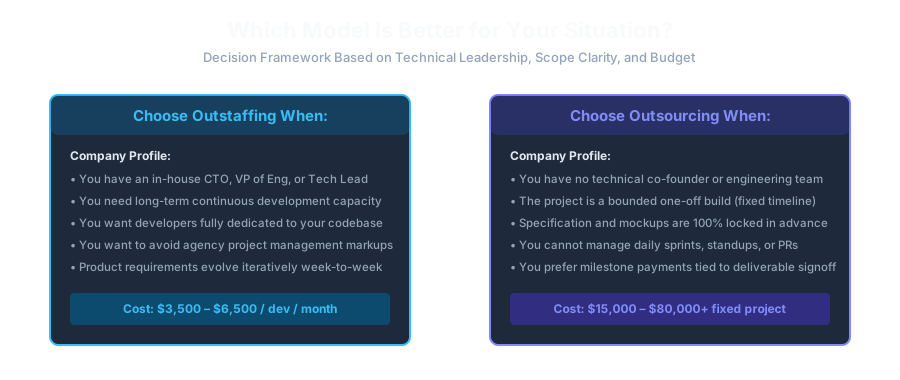
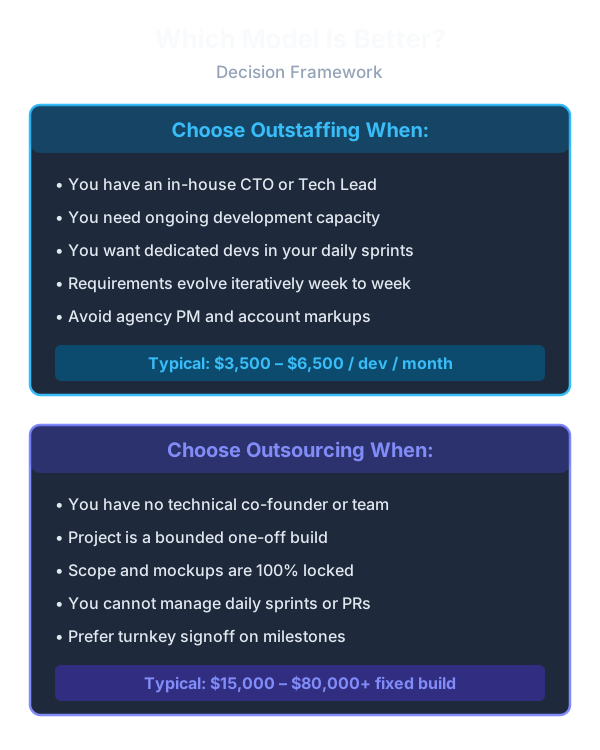
| Internal Technical Leadership | You have a CTO, VP of Eng, or Tech Lead | No technical personnel on staff |
| Scope Definition | Iterative, evolving, discovery-driven | 100% locked, complete wireframes & specs |
| Development Horizon | Long-term product (6+ months continuous) | One-off bounded deliverable (2–4 months) |
| Communication Preference | Direct daily Slack/video collaboration | Weekly status reports through a PM |
| Budget Sensitivity | Maximum efficiency; direct developer pay | Willing to pay agency markups for hands-off delivery |
| Speed to Market | Fast integration into existing sprints | Requires multi-week discovery & estimation phase |
The Third Alternative: Direct Vetted Independent Senior Engineers
While outstaffing and outsourcing represent traditional agency structures, many modern startups and technology companies bypass agency middlemen entirely. Traditional outstaffing agencies still charge substantial recruitment fees and ongoing administrative markups, while locking clients into rigid full-time, 40-hour weekly contracts with 30-to-60-day notice periods.
Platforms like ProofDevs provide an agile alternative: direct access to independent, vetted senior Ukrainian software engineers on flexible hourly or part-time terms. By connecting directly with verified specialists:
Companies that can manage an engineer directly can compare individual profiles on the hire developers in Ukraine landing page before deciding whether an agency layer is necessary.
- You eliminate agency overhead and management markups, capturing senior engineering expertise at transparent direct rates.
- You can engage specialists for targeted part-time scopes (10 to 20 hours per week), ideal for early-stage startups building an MVP or companies needing specialized architecture oversight.
- You maintain complete flexibility: scale engineering hours up or down based on actual sprint velocity without lengthy contract lock-ins.
If your project requires high-level technical strategy before hiring developers, consider pairing independent engineers with an experienced fractional CTO to oversee architecture and code standards. If you are debating broader resourcing strategies, read our comparison on building vs hiring vs outsourcing software development.
Frequently Asked Questions
What is the main difference between outstaffing and outsourcing?
The main difference is management responsibility. In outstaffing, you hire dedicated developers who join your team and take direct daily instructions from you. In outsourcing, you hire an agency to manage the team and deliver a completed software project based on an agreed specification.
Which model is cheaper in Ukraine: outstaffing or outsourcing?
Outstaffing is significantly more cost-effective for ongoing development because you pay direct developer salaries plus a modest administrative fee, avoiding agency profit margins (which range from 40% to 65%). Outsourcing is only cheaper for small, one-off projects where hiring and managing developers in-house is impractical.
Can I switch from outsourcing to outstaffing later?
Yes, but transitioning an existing codebase from an outsourcing agency requires securing full repository access, database credentials, and deployment documentation. Many businesses start with outsourcing to build an initial prototype and transition to outstaffing or direct senior contractors once they hire an in-house technical lead.
How does intellectual property protection work when hiring in Ukraine?
Ukrainian IT legislation under the Diia City framework enforces strict, immediate intellectual property assignment. Standard commercial contracts mandate that all copyright, patents, and source code transfer automatically to the client upon creation, supported by Western-jurisdiction contracts (Delaware, UK, or EU law).
Do Ukrainian developers speak fluent English?
Yes. The Ukrainian technology sector operates predominantly for North American and European clients. Over 85% of intermediate and senior software engineers possess Upper-Intermediate or Fluent professional English proficiency, enabling effortless daily collaboration via Slack, Zoom, and written documentation.
What happens if an outstaffed developer becomes sick or unavailable?
Professional outstaffing vendors provide replacement guarantees and maintain local support infrastructure (including backup power generators and Starlink connectivity). In direct contracting arrangements, clean repository documentation and automated testing ensure another engineer can step in without operational disruption.
Is outstaffing suitable for non-technical founders?
Generally, no. Outstaffing requires internal technical leadership to set architecture, assign tasks, and review code. Non-technical founders should either choose turnkey outsourcing, recruit a technical co-founder, or engage a fractional technical advisor to manage outstaffed talent.
How quickly can I onboard an outstaffed Ukrainian developer?
Standard outstaffing agencies require two to four weeks to source, interview, and onboard developers. Through specialized developer marketplaces like ProofDevs, verified independent engineers can integrate into your repository and start committing code within 24 to 48 hours.
What timezone overlap exists between Ukraine and Western clients?
Ukraine is in the Eastern European Time zone (UTC+2 / UTC+3 summer). This provides complete business day overlap with the United Kingdom and Europe, and three to five hours of synchronized working overlap with US East Coast companies.
Which technologies are most prevalent among Ukrainian software engineers?
Ukrainian developers maintain deep senior expertise across full-stack JavaScript (React, Next.js, Node.js, TypeScript), Python (FastAPI, Django, AI/ML pipelines), PHP (Laravel, Symfony), Java, C# (.NET), cloud architecture (AWS, Azure, GCP), and modern database systems (PostgreSQL, Supabase).
Build Your Software with Verified Ukrainian Engineering Talent
Choosing between outstaffing and outsourcing comes down to your internal capabilities. If you have an established technical leader and need dedicated, cost-effective engineering capacity that integrates into your daily sprints, outstaffing delivers superior control and ROI. If you lack technical leadership and need a self-contained product delivered against a fixed scope, outsourcing provides the necessary management buffer.
If you want the dedicated velocity of outstaffing without agency markups or rigid multi-month commitments, describe your project requirements on ProofDevs. We connect international businesses directly with vetted senior Ukrainian developers ready to contribute to your codebase.
Written by Michael Melnyk
Senior IT Technical Writer & Technology Analyst
Senior Technical Writer and IT Industry Analyst with over 7 years of experience analyzing software engineering ecosystems, tech leadership models, and developer procurement frameworks.