Website Management Services: Monthly Costs, Scope, and Hiring Options
Website management ranges from $100/month basic hygiene to $3,500+ custom web app operations. Here is what website management includes, realistic retainer costs, and how to hire the right specialist.

Launching a website is treated as a finish line, but commercially, it is day zero. A modern commercial website is not a static brochure printed on digital paper; it is an active software assembly connecting content management systems, third-party API webhooks, database clusters, SSL certificates, payment processors, and browser rendering engines. The moment a site goes live, its software dependencies begin to age, security vulnerabilities surface in outdated plugins, database tables fragment, and DNS records require ongoing surveillance. Without active website management, even the cleanest web application decays within months.
For founders, operations directors, and small business owners, the central challenge is understanding what website management actually entails and what it should cost. Agency quotes for ongoing web management swing wildly from $99 monthly automated scan packages to $4,000 enterprise retainers. Non-technical buyers frequently find themselves paying premium senior developer rates for simple text updates, or conversely, paying a bargain retainer that fails to catch a silent checkout outage until thousands in revenue have vanished. Navigating this market requires separating technical maintenance from day-to-day content publishing and establishing clear Service Level Agreements (SLAs).
What Does Website Management Actually Include?
When software agencies and independent contractors sell "website management services," they often bundle very different operational tasks into a single invoice. In professional engineering practice, comprehensive website management spans four distinct operational pillars:
1. Technical Infrastructure & Security Maintenance
This is the foundational engineering hygiene that prevents downtime and exploits. A dedicated website maintenance and support developer handles:
- Core CMS and Extension Updates: Staging, testing, and applying updates for WordPress core, Shopify apps, Drupal modules, or Node.js runtime packages. Crucially, updates must be tested on an isolated staging clone before deploying to production to avoid breaking layouts or database schemas.
- Automated Off-Site Backups: Establishing independent, scheduled database and file system snapshots stored outside the primary hosting server (such as AWS S3 or Cloudflare R2). A backup strategy is only as good as its restore drill: a monthly recovery test confirms the archive can reconstruct a functional site within two hours.
- SSL & Domain Expiration Guards: Monitoring TLS certificate renewals and domain registrar payment methods. Expired SSL certificates trigger immediate browser security warnings that destroy visitor trust and traffic.
- Continuous Uptime & Port Monitoring: Automated ping monitors that poll critical URLs every 60 seconds from multiple geographic nodes, alerting on-call engineers via SMS or Slack the moment a 500 server error or gateway timeout occurs.
2. Performance & Core Web Vitals Optimization
Search engines actively penalize slow, unstable websites. Ongoing website management includes monitoring Core Web Vitals metrics:
- Largest Contentful Paint (LCP): Optimizing hero images, caching server response headers (TTFB), and cleaning up render-blocking JavaScript bundles.
- Interaction to Next Paint (INP): Profiling dynamic scripts, third-party analytics tags, and tracking pixels to ensure snappy UI interaction.
- Database Indexing & Query Optimization: Cleaning up transient cache tables, post revisions, and optimizing SQL queries in MySQL or PostgreSQL databases to prevent server CPU spikes.
3. Functional Integrity & Conversion Flow Audits
The most dangerous bugs are silent failures: the homepage loads cleanly, but customer lead forms fail to send notification emails, or payment gateway webhooks fail to provision user accounts. Regular management includes automated or manual monthly end-to-end testing of customer inquiries, cart checkouts, and CRM integrations.
4. Editorial Content & Asset Updates
Publishing new blog articles, refreshing staff biographies, uploading product catalog photos, adjusting promotional pricing, and updating holiday opening hours. While essential, content management requires a different skill set and hourly rate than infrastructure engineering.
Technical Maintenance vs. Content Operations: Why Roles Matter
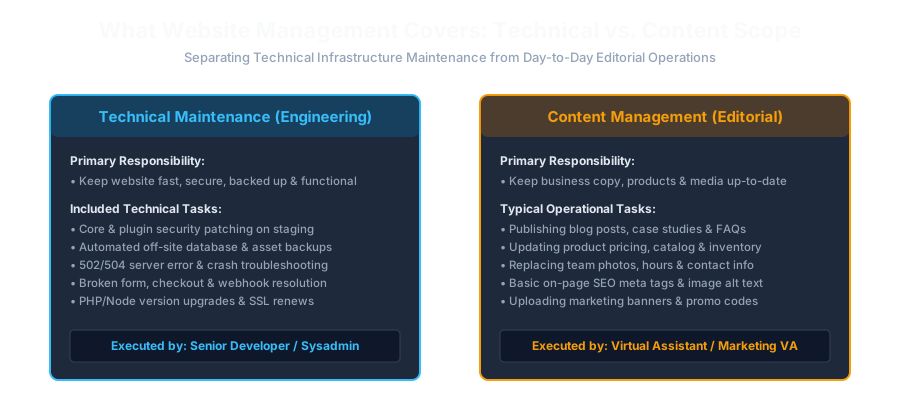
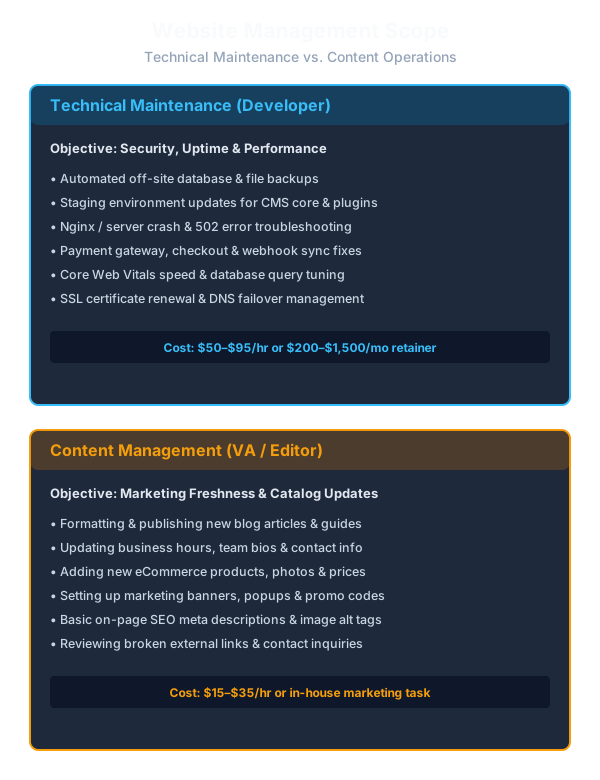
One of the most frequent budgeting mistakes small businesses make is hiring a senior software developer to perform routine text and image updates. Conversely, businesses often task a marketing coordinator or virtual assistant (VA) with managing server upgrades, leading to corrupted databases or irreversible white-screen crashes.
| Dimension | Technical Web Maintenance | Content & Editorial Management |
|---|---|---|
| Responsible Role | Senior Web Developer / Sysadmin | Content Specialist / Marketing VA |
| Core Focus | Security, uptime, speed, infrastructure | Messaging, product catalog, SEO copy |
| Market Hourly Rate | $50 – $100 / hour | $18 – $35 / hour |
| Typical Toolset | Git, SSH, WP-CLI, Sentry, Cloudflare, AWS | WordPress Block Editor, Webflow, Canva |
| Failure Consequence | Site crash, data breach, checkout failure | Typo, misaligned banner, outdated bio |
When negotiating a service agreement, ensure your retainer clearly distinguishes between these two workflows. Pay developer rates for code commits, security patches, and emergency triage; route text changes and image formatting through internal marketing personnel or affordable editorial contractors.
How Much Does Website Management Cost per Month? (2026 Pricing Benchmarks)
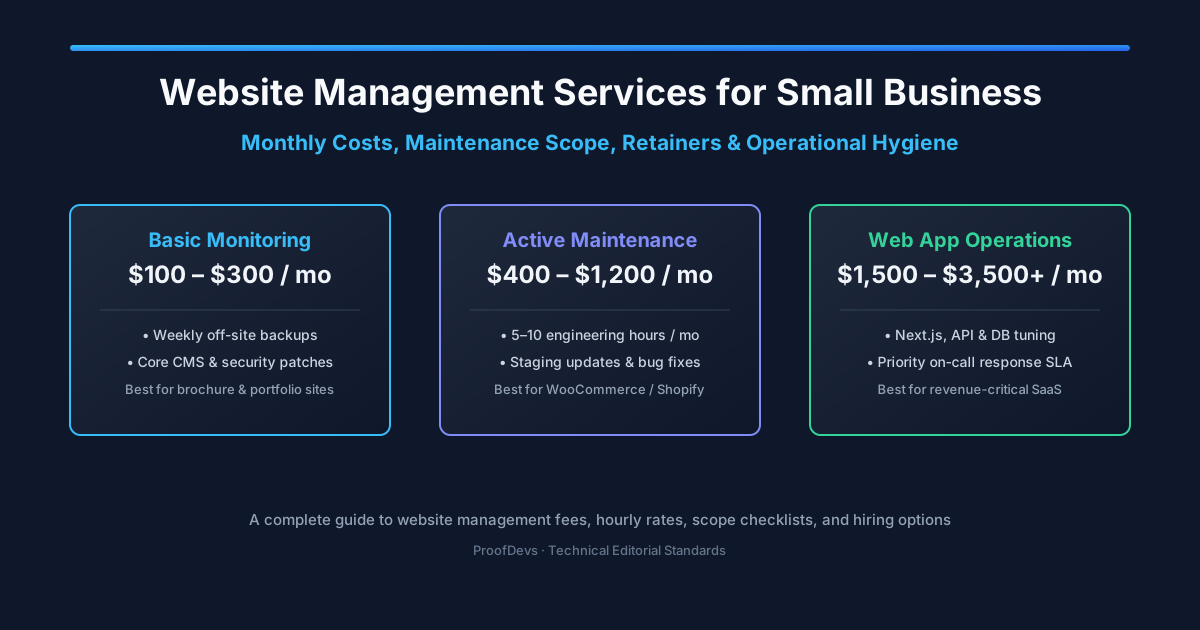
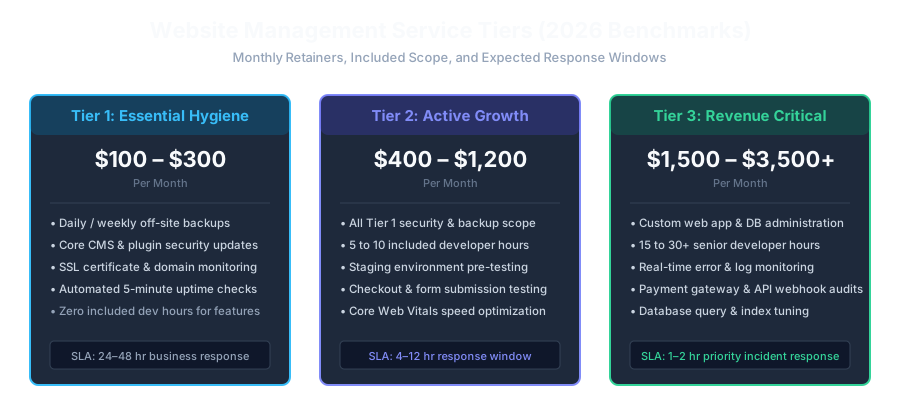
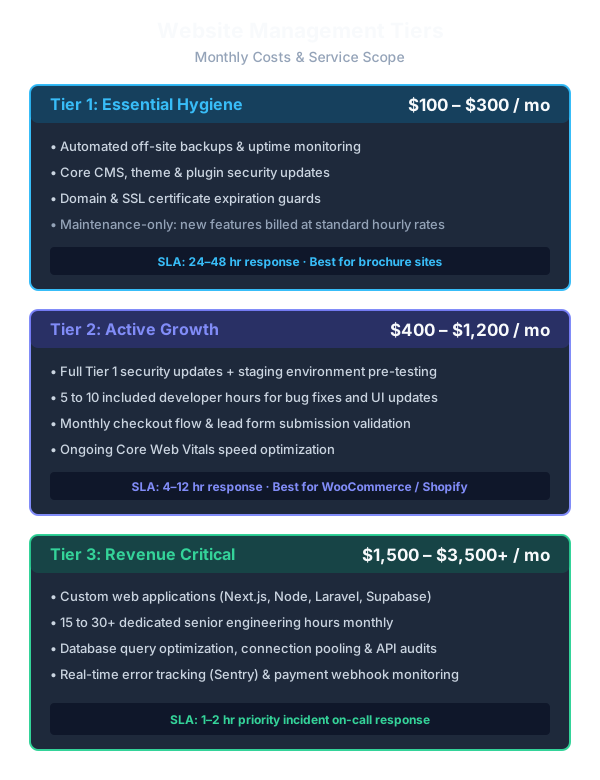
Website management fees correlate directly with the complexity of your software stack, your monthly visitor volume, and the guaranteed response time in your Service Level Agreement (SLA). Across the United States, United Kingdom, and European markets, monthly website management retainers fall into three structured tiers:
Tier 1: Essential Hygiene Retainer ($100 – $300 / month)
Designed for small business brochure websites, professional service consultancies, local dental or legal practices, and static marketing sites running on WordPress or Webflow.
- Included Scope: Automated off-site backups (daily database, weekly media), automated 5-minute uptime checks, monthly core CMS and plugin security patching on staging, and SSL/domain expiration surveillance.
- Response Window: 24 to 48 business hours for non-critical tickets.
- Development Hours: Zero to 1 included development hour. Additional design changes or feature requests are billed at the contractor's standard hourly rate ($65–$95/hr).
Tier 2: Active Growth & eCommerce Retainer ($400 – $1,200 / month)
Tailored for active WooCommerce stores, Shopify merchants, multi-location businesses, and content publishers generating inbound customer leads daily.
- Included Scope: Everything in Tier 1, plus 5 to 10 included engineering hours per month. Bi-weekly plugin and theme testing in a dedicated staging sandbox, monthly functional audits of checkout and lead capture flows, Core Web Vitals speed tuning, and database optimization.
- Response Window: 4 to 12 hours for urgent issues during standard business hours.
- Best Fit: Websites where an hour of downtime causes direct, measurable revenue losses or support headaches.
Tier 3: Revenue-Critical & Custom Web App Operations ($1,500 – $3,500+ / month)
Required for bespoke SaaS platforms, custom web applications built with Next.js, React, Node.js, and PostgreSQL, or high-traffic eCommerce storefronts processing thousands of daily transactions.
- Included Scope: 15 to 30+ dedicated senior engineering hours per month. Dedicated virtual private server (sysadmin) maintenance, database query and index tuning, payment webhook synchronization audits, real-time error tracking (Sentry / Datadog), and API third-party integration maintenance.
- Response Window: 1 to 2 hours, with on-call emergency escalation coverage 7 days a week.
For context on how upfront development investment compares to ongoing operations, consult our guide on how much a custom website costs.
Hourly Rates vs. Monthly Retainers: Which Model Wins?
Small business owners often debate whether to contract an ongoing monthly retainer or pay for website support strictly ad-hoc on an hourly basis. Both models have legitimate applications depending on your operational cadence:
The Case for Monthly Retainers
A monthly retainer reserves engineering capacity in advance. Independent developers and agencies prioritize retainer clients over ad-hoc inquiries. When a plugin update unexpectedly breaks your payment gateway on a Friday afternoon, a retainer agreement guarantees an engineer begins triage within your contracted SLA window. Furthermore, routine preventive maintenance—such as running weekly database snapshots and applying minor security patches—prevents catastrophic failures before they occur.
The Case for Ad-Hoc Hourly Support
For low-traffic websites running on stable static architectures (such as static HTML, Hugo, or headless Next.js on Vercel), paying $250 every month for automated script updates can be an unnecessary overhead. Engaging an independent specialist for an hourly rate ($50 to $95/hour) once per quarter to perform a deep security and dependency audit can deliver comparable hygiene at roughly one-third of the annual cost.
Warning: The "Rollover Hours" Trap. When signing a retainer, scrutinize the rollover clause. Most agencies enforce a "use it or lose it" policy on included monthly hours. If your $600/month plan includes 5 developer hours and your site requires zero repairs in July, those hours vanish on August 1st. Negotiate either a 60-day rollover window or a tier that adjusts retainers based on trailing quarterly usage.
Essential Website Management Agreement Checklist (SLA Rules)
Before signing a website management contract or hiring an independent maintenance partner, verify that your agreement explicitly codifies these six operational safeguards:
- Separation of Staging and Production: The contract must forbid pushing untested core CMS or plugin updates directly to your live production website. Updates must be verified on a staging subdomain first.
- Independent Cloud Backups: Backups must not be stored on the same virtual server partition as the live website. If the host burns down or suffers ransomware, local backups vanish with it. Insist on encrypted off-site cloud storage.
- Guaranteed Incident Response Windows: Distinguish between "response time" (an engineer acknowledges the ticket) and "triage time" (an engineer actively begins diagnosing the server logs). For revenue-critical failures, demand a triage window under two hours.
- Full Client Asset Ownership: Ensure your company retains master administrator ownership of your domain registrar, hosting dashboard, DNS provider, and code repository. A vendor should operate through a collaborator seat, never hold your digital assets hostage. Review our recommendations on custom domain and hosting setup for small business.
- Scope Exclusions: Clearly define what constitutes maintenance versus new feature development. Bug fixes resulting from updates belong under maintenance; designing a new multi-step product configurator is new development and must be scoped separately.
- Emergency Escalation Protocol: What happens when the site goes offline on Sunday at 2 AM? Agree in advance on emergency on-call contact channels and whether weekend incident rates apply. If disaster strikes, know how an emergency developer handles outage triage under pressure.
Who Should Manage Your Website: Agency, In-House, or Freelancer?
How you source website management personnel dictates your operational overhead and technical agility:
| Provider Model | Average Monthly Cost | Key Advantages | Critical Vulnerabilities |
|---|---|---|---|
| Digital Web Agency | $600 – $2,500 / mo | Multi-disciplinary team (design, copy, dev) | High overhead, slow response via account managers, rigid contracts |
| Independent Senior Engineer | $300 – $1,200 / mo (or $50–$90/hr) | Direct technical communication, transparent rates, agile fixes | Single point of failure during vacations; requires verified backup protocol |
| Full-Time In-House Webmaster | $5,000 – $8,500 / mo + benefits | 100% dedicated focus, immediate availability | Unjustified payroll burn for 95% of small and mid-sized businesses |
| DIY Business Owner | $0 direct cash (5–10 hrs founder time) | No vendor bills | Distracts from sales; accidental plugin updates trigger critical downtime |
For most businesses generating between $200k and $5M in annual revenue, partnering directly with an independent, vetted senior developer on a lean monthly retainer offers the optimal balance of senior technical oversight, direct communication, and financial discipline. If your site runs on the world's most popular CMS, review our specialized vetting criteria for a WordPress developer for small business.
Frequently Asked Questions
How much does website management cost per month for a small business?
For a standard small business brochure or service website, professional website management typically costs between $100 and $300 per month. This covers automated off-site backups, core CMS security patches, uptime monitoring, and basic technical support. eCommerce stores and websites requiring regular feature adjustments typically spend $400 to $1,200 per month for plans that include dedicated engineering hours.
What does website management include?
Comprehensive website management encompasses technical maintenance (core updates, security scans, off-site backups, SSL renewals, and 502/504 server error triage), performance optimization (Core Web Vitals, image compression, database query tuning), functional testing (checkout and contact form audits), and ongoing editorial support (publishing content, updating product catalogs, and changing business details).
What is the difference between website maintenance and website management?
Website maintenance focuses strictly on technical health, infrastructure stability, and security: patching software, monitoring uptime, verifying backups, and repairing bugs. Website management is a broader operational umbrella that includes technical maintenance plus ongoing digital marketing operations: content publishing, on-page SEO optimization, conversion rate tracking, and feature development.
Can I manage my small business website myself?
You can manage basic content updates yourself using modern CMS tools like WordPress, Webflow, or Shopify. However, managing server environments, database optimizations, staging deployments, and security hardening without technical expertise is risky. A single incompatible plugin update or broken database migration can take your site offline, turning a DIY effort into an expensive emergency recovery project.
What is a typical website management hourly rate?
Independent senior website maintenance specialists in North America and Europe typically charge between $50 and $95 per hour. Digital agencies often bill between $125 and $200 per hour for technical maintenance. Content entry and routine text edits handled by marketing assistants or virtual assistants generally range from $18 to $35 per hour.
How often should website backups be performed?
Dynamic eCommerce stores and active lead generation platforms should execute automated database backups at least once daily, with real-time transaction logging or point-in-time recovery. Static brochure websites with infrequent updates should be backed up at least weekly, as well as immediately before any core CMS, theme, or plugin update is deployed.
Do website management services include hosting fees?
Some digital agencies bundle web hosting into their monthly management retainers. However, it is standard industry best practice for your business to pay for and own its cloud hosting account directly (via AWS, DigitalOcean, Cloudways, or Vercel). This prevents vendor lock-in and guarantees that you never lose access to your site if you decide to change maintenance providers.
What happens if my website crashes while under a management contract?
A reputable website management contract includes an SLA specifying guaranteed response and triage windows. In the event of an outage, an on-call engineer investigates server logs, isolates the failing component or recent commit, and either applies an immediate hotfix or executes a clean database rollback to restore operations. Review your contract's emergency coverage to ensure weekend and holiday incidents are supported.
Why do agencies charge monthly fees if nothing on the website changes?
Even when you publish no new content, your website is constantly interacting with the broader internet. Security vulnerabilities are discovered daily in third-party libraries, search engine crawl algorithms evolve, browsers update their rendering standards, and database logs expand. Monthly fees cover proactive monitoring, defensive patching, and guaranteed on-call availability when unexpected failures strike.
How do I transition website management to a new developer?
Transitioning requires conducting an onboarding audit. Provide your new specialist with administrative access to your domain registrar, DNS manager, cloud hosting control panel, and version control repository (such as GitHub). A professional developer will review existing backups, document server configurations, test staging workflows, and establish monitoring before assuming formal operational responsibility.
Protect Your Web Platform with Verified Technical Specialists
Your website is often the first commercial touchpoint for prospective buyers and the primary engine of your customer pipeline. Treating website management as an optional afterthought invites unexpected downtime, silent conversion failures, and expensive emergency recovery invoices.
If you want senior technical reliability without agency overhead or rigid multi-month lock-ins, describe your website maintenance requirements on ProofDevs. We match business owners directly with vetted, independent engineering specialists who ensure your web application stays fast, secure, and always open for business.
Written by Michael Melnyk
Senior IT Technical Writer & Technology Analyst
Senior Technical Writer and IT Industry Analyst with over 7 years of experience analyzing software engineering ecosystems, tech leadership models, and developer procurement frameworks.