Entry Level Front End Developer Jobs: Skills, Salary, and First Hire
Entry-level front end hiring rewards finished, responsive, deployed work over tutorial counts: three portfolio project types, trial-task skills, realistic junior pay, and the freelance-vs-job fork.

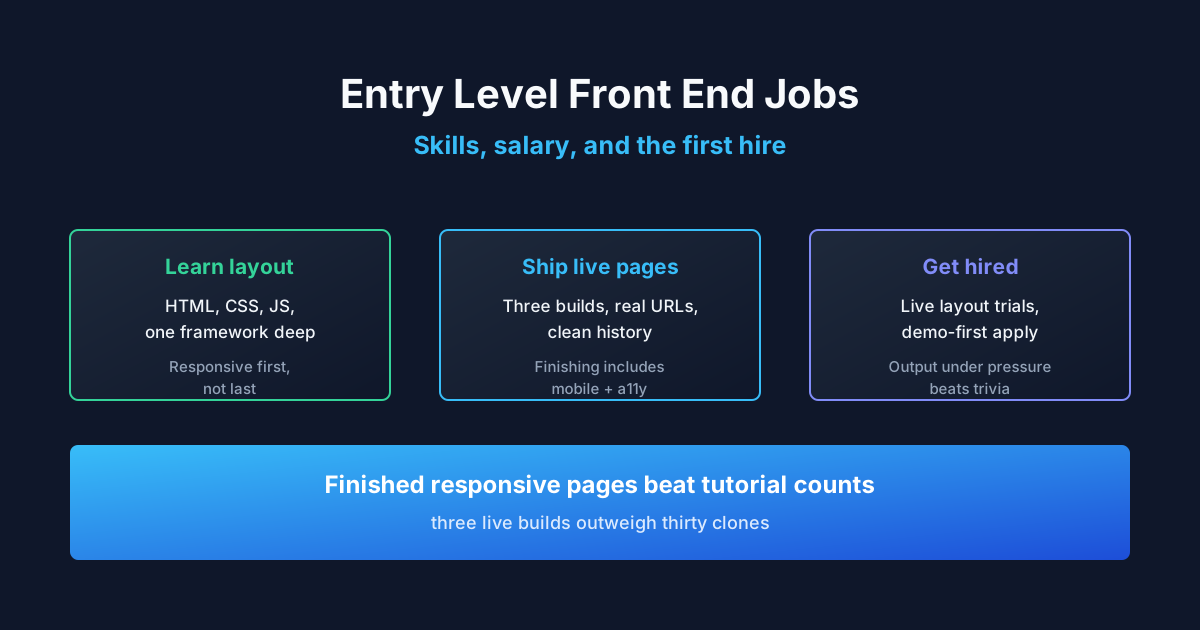
Entry level front end developer jobs go to beginners with finished, responsive, deployed work: two or three live sites, clean GitHub history, and the ability to turn a Figma frame into a working page without hand-holding. Course counts and certificate walls rank below all three in hiring processes that matter. This guide covers the skills that get interviews, the portfolio that converts, realistic junior pay, remote reality, and the freelance-versus-job fork. Reviewed September 2026. Figures below are illustrative planning bands, not market averages or ProofDevs quotes.
Searches like “entry level front end developer jobs,” “front end developer jobs for freshers,” and “entry level web developer jobs no experience” come from developers entering the market — if that is you, this article is written for your side of the table. To understand how clients judge your applications, read how clients hire freelance developers; to see where AI tooling moves junior work, see our Lovable production guide.
What entry level front end roles actually demand
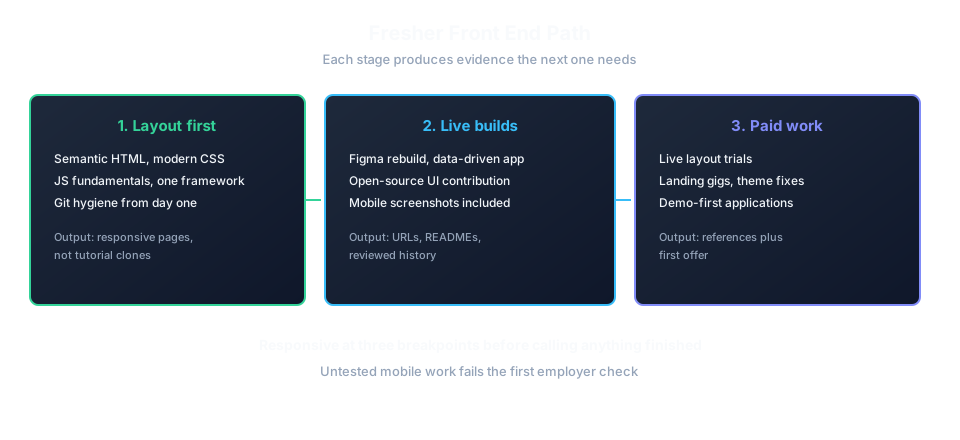
Entry postings ask for “1+ years of experience” but hire proof of ability: semantic HTML without div soup, CSS that survives real viewports, JavaScript that handles loading, error, and empty states, and git history another human can follow. “Front end developer startup jobs for freshers” add one more filter — comfort shipping imperfect work fast and fixing it in the open. Tutorials teach properties; employers buy evidence you have finished pages strangers can use.
Skills that get interviews
| Skill | Why it matters for hiring | Proof that counts |
|---|---|---|
| Semantic HTML | Accessibility and SEO start in markup, not in frameworks | Pages that validate and navigate by keyboard |
| Modern CSS | Responsive layouts are the daily work, not a bonus | One complex layout rebuilt faithfully from Figma |
| JavaScript fundamentals | Every trial task assumes them silently | State handling without a framework crutch |
| React (or one framework) | Most entry web work lives in component trees | A small app with routing, forms, and API calls |
| Git and GitHub hygiene | Collaboration starts at the first commit | Branches, meaningful messages, reviewed PRs |
| Browser debugging | Production bugs live in devtools, not in editors | A documented fix found through profiling |
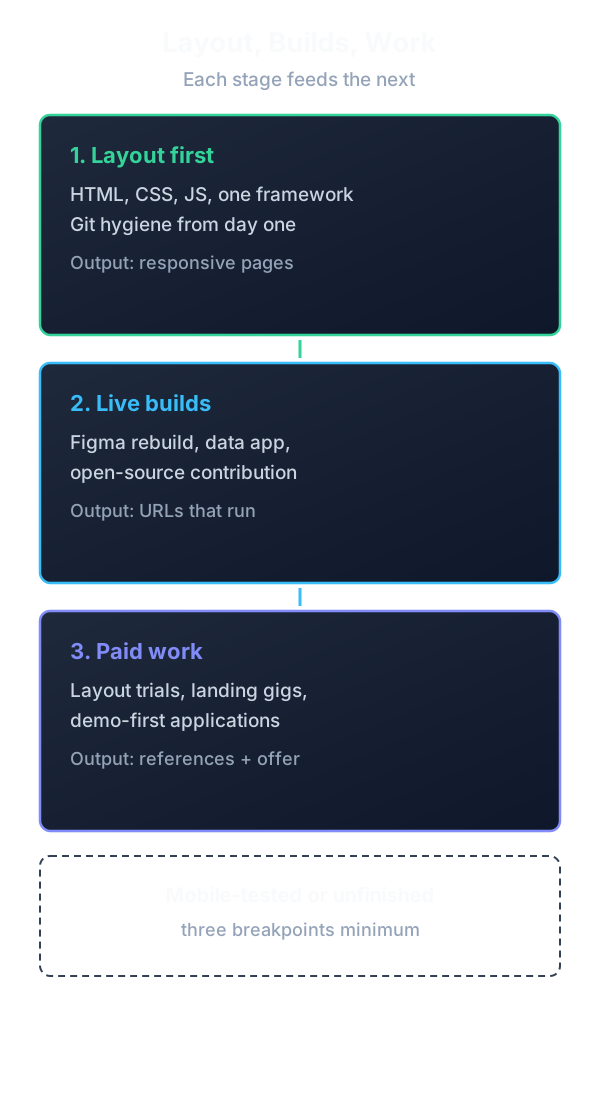
Depth in layout plus one framework beats surface across five libraries. One pixel-faithful Figma rebuild, one data-driven React app, and one performance pass you can explain outweigh a tutorial playlist. Fundamentals compound; framework tourism does not. Revisit the same three builds quarterly to refactor with new knowledge — visible improvement over time impresses reviewers more than constant novelty.
Portfolio that hires: three project types
Build one of each: a pixel-faithful marketing site from a public Figma file (proves layout discipline), a data-driven app consuming a public API with loading and error states (proves real-world JavaScript), and a contribution to an existing open-source UI project (proves you can read other people's component conventions). Each needs a live URL, a README explaining decisions, and mobile screenshots that prove responsive work. Three finished pages beat thirty half-built clones because finishing includes the responsive, accessibility, and performance details tutorials skip.
Freelance vs first job
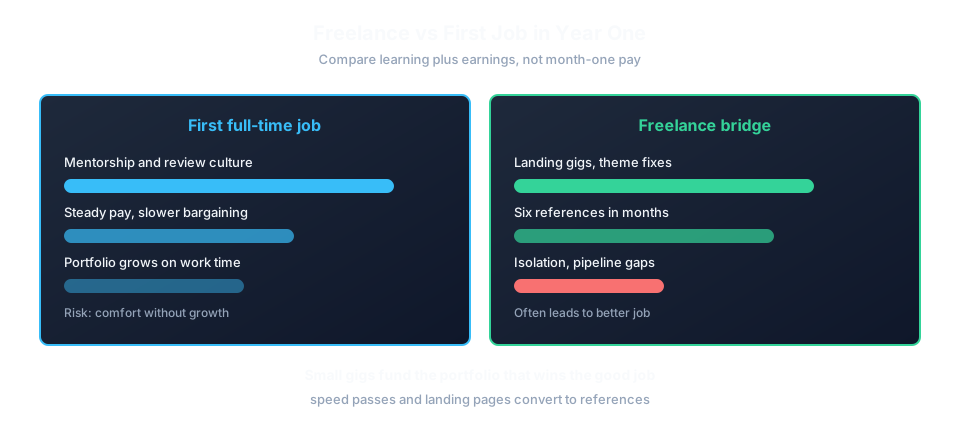
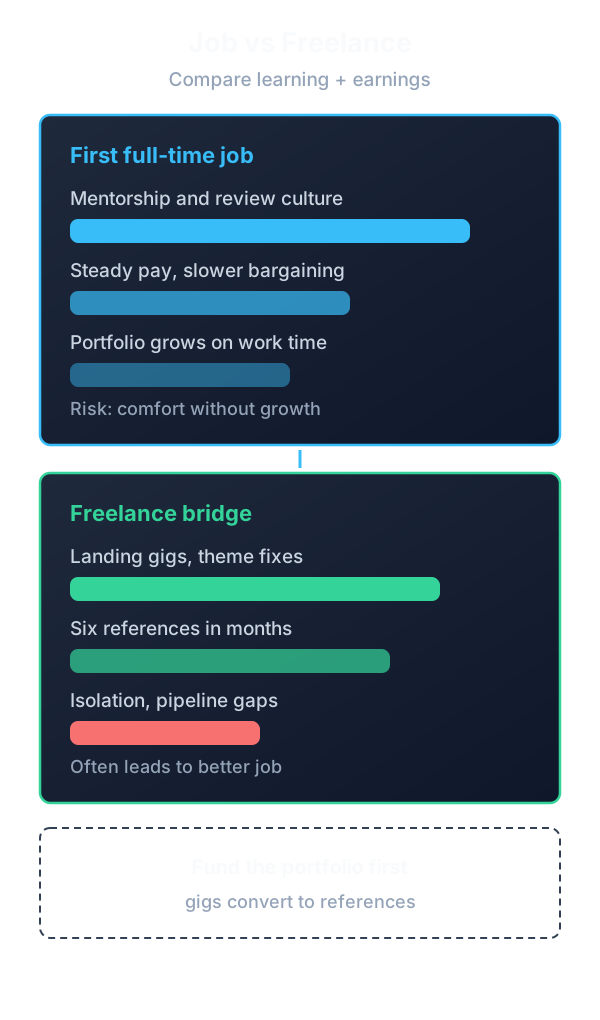
A first job buys mentorship, review culture, and steady pay at the cost of speed. Freelance buys faster earnings and client-facing proof at the cost of isolation and pipeline gaps. “Front end developer starting salary” searches usually compare month-one numbers — compare first-year learning plus earnings instead. Many strong careers start with small fixed-scope gigs (landing pages, theme fixes, speed passes) funding the portfolio that wins the good job; our flexible engagement guide shows the models from the client side so you can price yourself inside them.
Junior front end salary reality
Regional variance dominates entry bands: “frontend developer salary ukraine,” “middle frontend developer salary,” and “front end developer jobs in uae with salary” describe different markets with different floors, ceilings, and currencies. Emerging-market juniors compete on value (solid output at lower rates), hub-market juniors on proximity and timezone overlap. In both cases the first raise follows the same trigger: independent delivery of a production feature without supervision. Track that milestone explicitly with your manager or client — silent competence gets comfortable pay, demonstrated ownership gets raises.
Illustrative planning bands: fresher offers price well below middle engineers in the same market — expect the first role to fund growth, not comfort. For how employers build these numbers, see our software engineer salary guide — reading the buyer's math makes you negotiate better.
Remote entry reality
“Entry level front end developer jobs remote,” “worldwide,” and “no experience remote” concentrate global competition on every posting — worldwide remote entry roles attract thousands of applicants. Win with async strengths: written communication, documented work, visible commit history, and timezone overlap for core hours. “Entry level web developer jobs near me,” “nyc,” “london,” and local variants trade lower pay for mentorship density that compounds faster than any salary gap in year one. “No degree remote” works only with portfolio proof strong enough to replace the credential signal.
Startup front end roles for freshers
“Startup frontend developer jobs” and “frontend startup jobs” deserve special attention because startups hire juniors differently: fewer formal requirements, faster decisions, broader responsibility from week one — and higher expectations for self-direction. A startup fresher often owns whole pages within a month, while an agency junior shadows seniors for a quarter. The tradeoff is mentorship density versus growth velocity. If you learn fast from feedback and tolerate ambiguity, startups accelerate careers; if you need structured guidance, an agency or studio first year builds fundamentals more safely. Either path works — mismatch between temperament and environment is what actually derails juniors.
AI builders move the junior floor
Clients now generate landing drafts with AI builders, which removes the bottom rung — static copy-paste pages. What remains moves upmarket: responsive polish, accessibility, performance budgets, CMS integration, and hardening AI output into production. Our Lovable production guide shows exactly which skills surround AI output — learn those (responsive systems, Core Web Vitals, integration wiring, QA) and the tool shift becomes your advantage. “Frontend developer startup jobs” increasingly list AI-assisted workflows as expected tooling, not as a threat.
Interview prep that converts
Fresher front end interviews test layout under pressure: rebuild a component live, debug broken CSS, explain the box model without reciting definitions. Prepare by narrating your own builds aloud — why this grid, why that breakpoint, what failed on mobile. Practice timed layout tasks (one hour, one frame, responsive) rather than algorithm puzzles; front end hiring filters on visible output. When stuck, talk through the debugging steps — devtools narration hires better than silent correctness.
Treat take-home page builds as the real interview: hiring managers skim resumes but open every demo link. Match the design faithfully, make it responsive, note assumptions and tradeoffs briefly, and submit repository history instead of a zip. If the task exceeds half a day unpaid, negotiate scope — serious employers respect the boundary and exploitative ones reveal themselves by refusing it.
Realistic fresher scenarios
Bootcamp graduate to first job
Situation: a graduate with course projects and no live URLs applies for months. Blocker: nothing an employer can open in a browser. Fix: two months deploying three builds with READMEs plus one accessibility fix in open source. Result: interviews within weeks; offer follows a live layout trial.
Freelance bridge with landing pages
Situation: a fresher needs income while the portfolio grows. Blocker: no reviews, no network. Fix: small fixed-scope landing gigs with milestone discipline and speed reports. Result: earnings plus six shipped references that convert into a full-time offer.
WordPress-adjacent entry
Situation: a beginner in a crowded market cannot win React roles yet. Blocker: identical resumes everywhere. Fix: “entry level wordpress developer” gigs — theme customization and speed fixes — while building React depth. Result: paid client work funds the portfolio that wins the React job a year later.
Typical mistakes
- Clone tutorials without deploying. Localhost demos prove nothing; live URLs prove finishing.
- Desktop-only builds. Most traffic is mobile; untested responsive work fails the first check.
- Framework hopping. One framework deep beats three hello-worlds.
- Ignoring accessibility basics. Keyboard navigation and contrast separate professionals from hobbyists.
- No git history. A single “final” commit signals collaboration cost.
- Memorizing trivia over building. “Walk me through your layout decisions” decides offers.
- Applying identically everywhere. Relevant demo links convert multiples better than mass blasts.
- Chasing salary headlines first. First-year learning compounds more than first-month pay.
- Ignoring AI tooling. Clients generate drafts; learn the polish and hardening around them.
- Skipping performance basics. Image sizing and font loading are visible junior differentiators.
Expert advice
Before your next hundred applications, take your strongest build and make it undeniable: responsive at three breakpoints, keyboard-navigable, under two seconds on mobile data, with a README a founder understands. Link it first in every application instead of a skills list. Hiring managers open demos and skim resumes — give them the demo first and the resume becomes a formality. Then link the same build second in freelance proposals; one asset serves both channels.
FAQ: entry level front end developer jobs
How do I get a front end job with no experience?
Ship proof: two or three live responsive builds, readable git history, and one open-source UI contribution. Apply with demo links first and complete trial layout tasks gladly.
What skills do entry level front end jobs require?
Semantic HTML, modern responsive CSS, JavaScript fundamentals, one framework in depth, git hygiene, and browser debugging. Layout discipline plus one framework beats framework tourism.
What is the junior front end developer salary?
Entry bands cover learning plus living costs, well below middle engineers. The jump follows shipped production work, not certificates or course counts.
Can beginners get remote front end jobs?
Yes, but worldwide postings draw thousands — win with async strengths, visible history, and timezone overlap. Local roles trade pay for mentorship that compounds faster.
Do I need a degree for front end jobs?
No, with portfolio proof strong enough to replace the credential: live builds, clean history, and trial performance. “No degree remote” filters on evidence, not diplomas.
React, Vue, or Angular for a first job?
Whichever local demand favors — depth in one beats surface in three. One data-driven app with routing and API calls proves more than three tutorial clones.
How do I prepare for front end interviews?
Timed layout rebuilds, live CSS debugging narration, and project walkthroughs explaining decisions. Output under pressure outweighs trivia recall.
Freelance or full-time job as a beginner?
Full-time buys mentorship and stability; freelance buys speed and client-facing proof. A freelance bridge often funds the portfolio that wins the better job.
Will AI replace junior front end developers?
It removes static copy-paste work and raises the value of responsive polish, accessibility, performance, and integration skills. Learn around AI output, not against it.
How important is responsive design for juniors?
Decisive: most traffic is mobile, and untested responsive work fails the first employer check. Test three breakpoints before calling anything finished.
Should I learn WordPress as a front end fresher?
As a paid bridge, yes: theme customization and speed gigs fund learning while React depth grows. As a destination, only if CMS work genuinely interests you.
How long until a fresher becomes hireable?
Months of focused building, not years of courses: fundamentals, then three live builds, then applications with demos. Shipped proof is the bottleneck, not knowledge.
Built the portfolio and ready for paid work instead of tutorials? Create a developer account on ProofDevs to get matched with clients who hire on shipped evidence, not certificates.
Written by Michael Melnyk
Senior IT Technical Writer & Technology Analyst
Senior Technical Writer and IT Industry Analyst with over 7 years of experience analyzing software engineering ecosystems, tech leadership models, and developer procurement frameworks.