How Much Does a Software Engineer Make a Year?
Software engineer pay spans from offshore monthly bands to six-figure US packages. This guide breaks down yearly salaries by region and level, the engineer-vs-developer gap, and what those numbers mean for your hiring budget.

How much a software engineer makes a year depends on country, seniority, and company type: US packages reach multiples of offshore salaries for the same nominal role, and big-tech totals with stock exceed startup cash pay. The number that matters to you depends on which side of the table you sit — job seekers compare offers, employers convert salaries into hiring budgets. This guide covers both. Figures below are illustrative planning bands, not market averages or ProofDevs quotes.
Searches like “how much does a software engineer make a year,” “software engineer salary in usa,” and “software engineer salary per month” come from both audiences at once. If you are hiring rather than job-hunting, the salary figure is only the start — the employer cost runs 30–60% higher with taxes, benefits, equipment, and management. For the freelance and contract alternative, see how to hire a freelance web developer and our developer rates overview.
How much does a software engineer make a year?
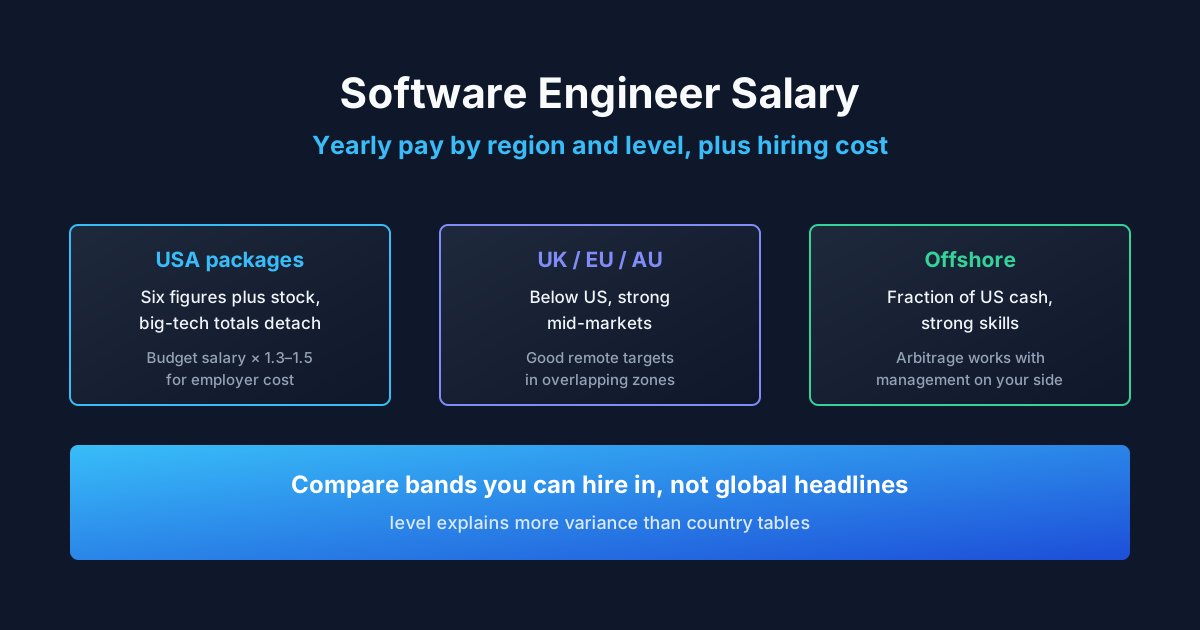
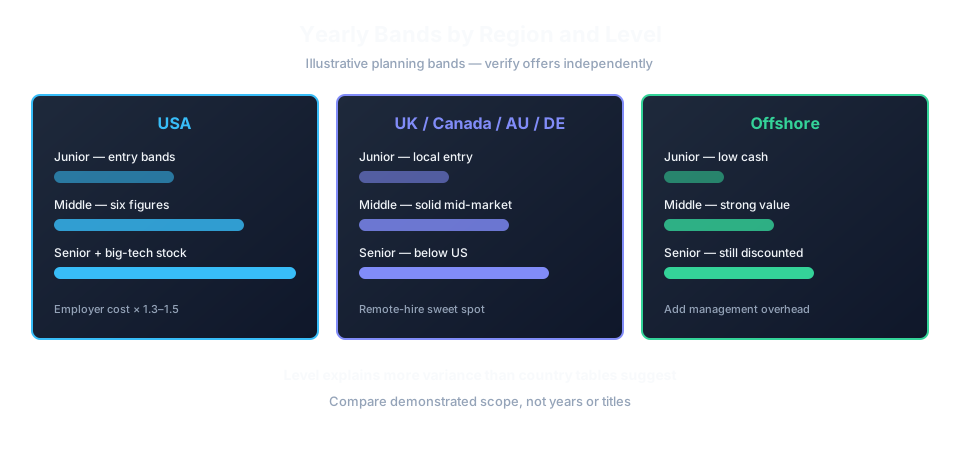
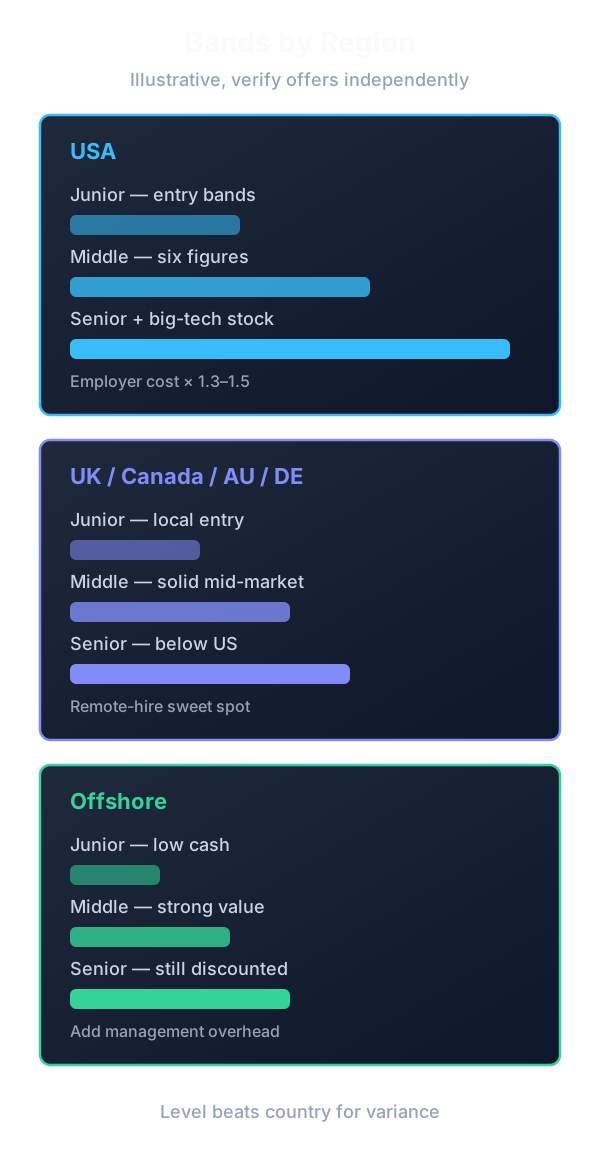
A US-based software engineer typically earns a six-figure yearly package, with big-tech totals running far higher once stock is included; UK, Canadian, Australian, German, and Singapore salaries sit below US levels but above most offshore markets; engineers in India, Eastern Europe, and Latin America earn a fraction of US cash pay at far lower local costs. Illustrative planning bands (annual cash): think roughly $120k–$200k+ for US mid-to-senior roles, $60k–$110k for UK/Canada/Australia/Germany equivalents, and $15k–$60k for strong offshore engineers — wide ranges that move with company, city, and specialty. Treat public aggregates like Levels.fyi as directional evidence, never as an offer benchmark.
Salary by region: US, UK, Canada, Australia, Germany, Singapore, Dubai
| Region | What moves the number | Hiring implication |
|---|---|---|
| USA | Highest cash plus stock; FAANG totals detach from medians | Budget salary × 1.3–1.5 for employer cost |
| UK / Canada / Australia | Lower ceilings than the US, strong mid-market demand | Good remote-hire targets in overlapping timezones |
| Germany / Singapore | Regulated markets with benefits priced into packages | Compare total packages, not headline salary |
| Dubai / UAE | Tax-free headline pay offset by relocation and housing costs | Attractive for senior relocators, not for cost arbitrage |
| India / Eastern Europe / LatAm | Far lower cash at strong skill levels | Arbitrage works only with management and QA on your side |
“Software engineer salary in indian rupees” conversions of US figures mislead twice: purchasing power differs, and the hires available at each band differ more. Compare engineers you can actually hire at each number, not abstract numbers in a vacuum. Our guides on outstaffing in Ukraine and outstaffing vs outsourcing in Ukraine show how this Eastern European engineering market prices capacity and delivers software in practice.
Salary by level: junior, middle, senior
Level explains more variance than country tables suggest. Juniors earn roughly half of seniors in the same market; the gap buys independent delivery, architecture judgment, and the ability to review others. “Per month” searches (“software engineer salary per month”) usually come from monthly-payroll markets — convert carefully, since thirteen salaries, bonuses, and equity vesting distort naive ×12 math. Never hire a junior expecting senior output at a discount; the salary gap is information, not inefficiency.
Promotion velocity matters as much as entry bands: engineers who ship ownership-worthy work typically cross from junior to middle within two years, while tenure without scope growth stalls pay regardless of market heat. When benchmarking offers, compare engineers at the same demonstrated scope — systems owned, incidents survived, juniors mentored — because two “seniors” with different scope histories can sit an entire band apart. Salary surveys that ignore scope produce the comforting fiction that years of experience equal capability.
Software engineer vs software developer: pay and meaning
Titles vary by company more than by skill: “software engineer vs software developer” salary gaps mostly reflect industry (finance and big tech pay premiums regardless of title) and seniority, not a universal engineer premium. Related comparisons — programmer, full-stack developer, web developer, architect, data or cloud engineer — follow the same rule: specialty scarcity and revenue proximity set pay, not the noun in the job title. Hire around demonstrated scope (systems owned, incidents survived, users served), not around title inflation.
Remote salary reality
Remote postings compress geography but rarely equalize it: most companies pay by employee location bands, contractor location, or a single global rate that undercuts San Francisco while beating local medians. “Remote software engineer jobs salary” figures therefore describe three different markets at once, and entry-level remote roles cluster at the bottom of every band because supply dwarfs demand there — while senior remote specialists with production ownership command premiums rivaling on-site offers. If you hire remotely, state the band policy upfront — location-based, role-based, or global — because candidates now compare notes across borders, and ambiguity kills offers late in the process.
What a salary costs the employer
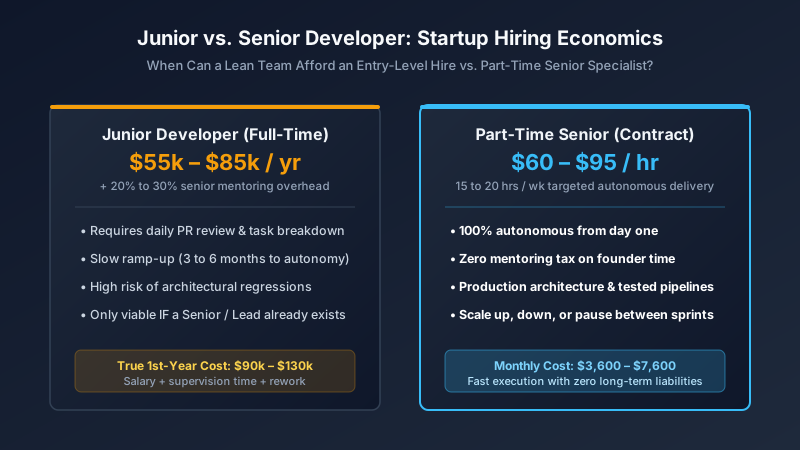
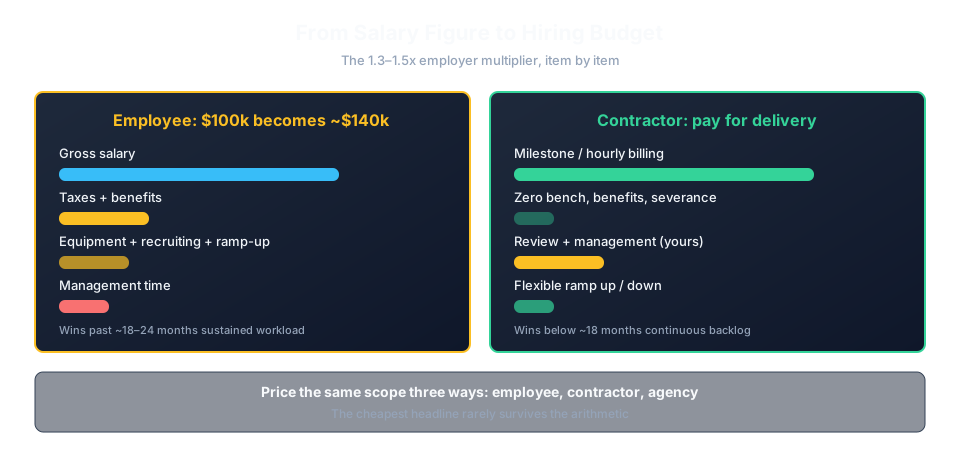
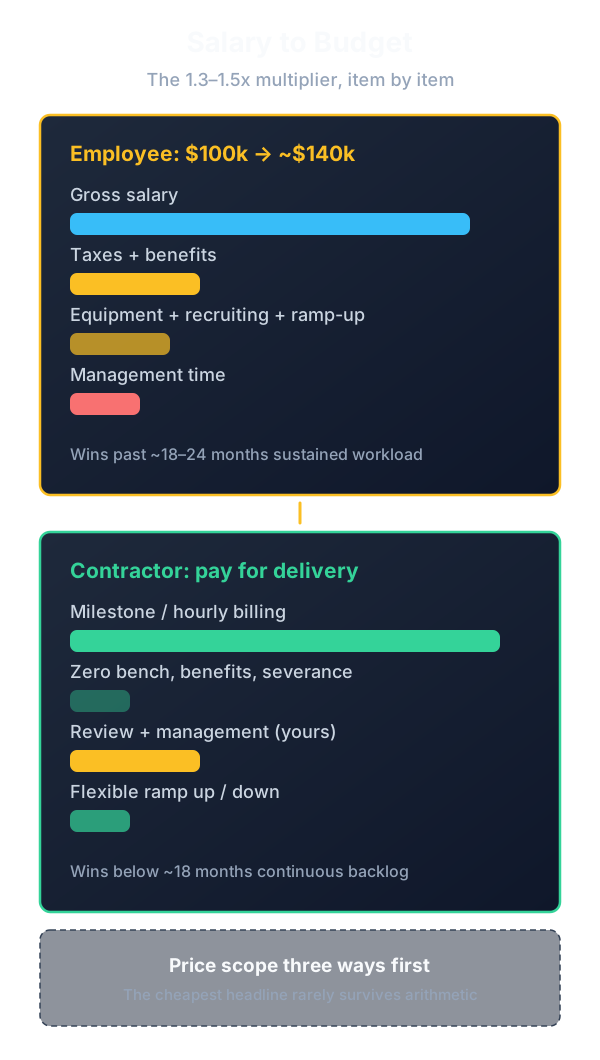
Multiply gross salary by roughly 1.3–1.5 for the true annual cost: payroll taxes, benefits, equipment, office or remote stipends, recruiting fees amortized over tenure, and management time. Illustrative planning example: a $100,000 salary prices at about $130,000–$150,000 per year before the hire produces anything — which is why a $90-per-hour contractor can be cheaper than an employee for anything under a year of full utilization. For the full model comparison, see our outsource-versus-hire analysis and build-versus-hire decision guide.
Salary vs freelance and contract cost
Freelancers quote higher hourly numbers than salary ÷ 2,000 hours implies — and usually still cost less per delivered outcome for bounded work, since you skip recruiting, bench time, benefits, and severance. The crossover sits around sustained full utilization: past 18–24 months of continuous backlog, employment wins. Below that, contractors and flexible engagements win; our guide to hiring flexible developers maps part-time, contract, and on-demand models to workload shapes.
What this means for small-business hiring
Small businesses rarely compete for FAANG-tier engineers — and should not try. A WordPress developer, a freelance web developer, or a vetted contractor delivers business outcomes at a fraction of big-tech packages. Our WordPress developer hiring guide and the small-business developer guide show how to scope one workflow and hire around it instead of bidding for generic “engineers.” Salary headlines describe someone else's labor market; your hiring budget describes yours.
Startups: salary, equity, and the first technical hire
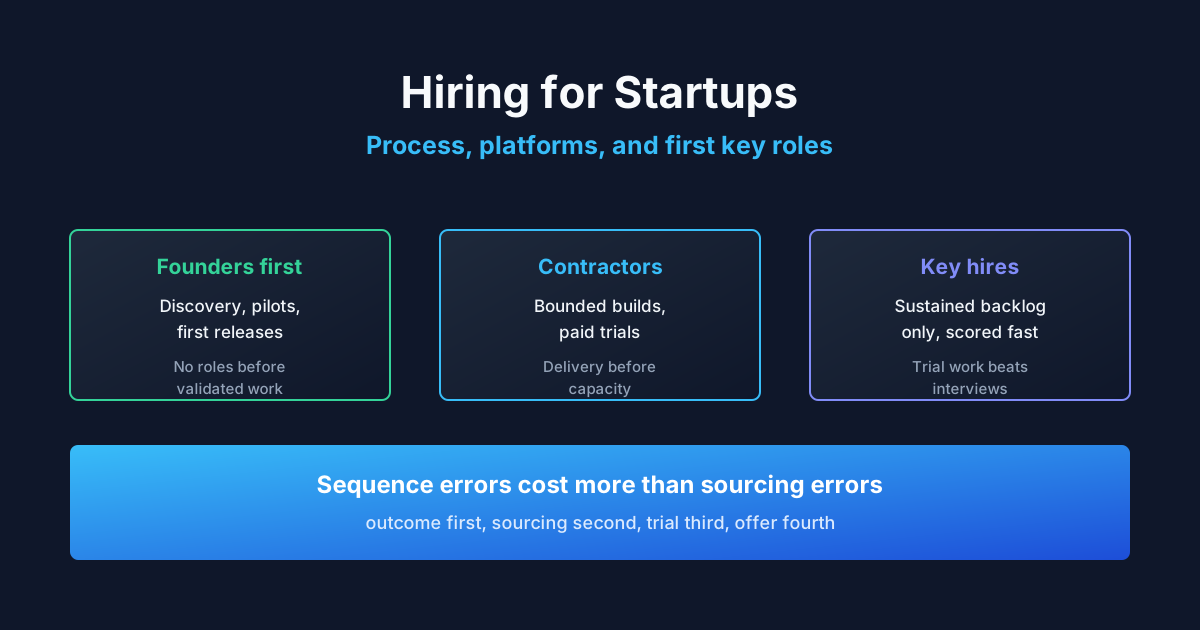
Early startups cannot win salary auctions, so they pay in a mix: below-market cash, meaningful equity, and senior scope from day one. That mix only works with honest math about runway and vesting — and with a first technical hire who can own product decisions, not just tickets. Whether that person is a technical co-founder, a founding engineer, or a fractional CTO plus contractors is the central decision; our technical co-founder guide and the non-technical founder hiring playbook walk through each path with paid-pilot mechanics.
AI tools and engineering pay
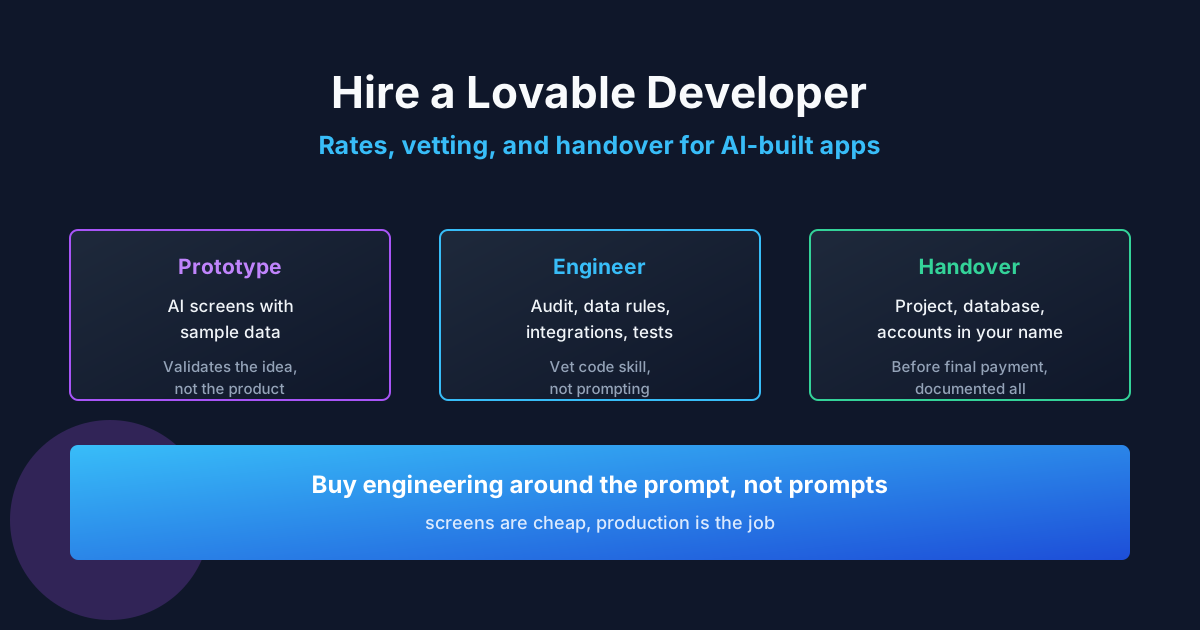
AI coding assistants and builders like Lovable raise individual output substantially but have not collapsed salary bands — they shifted which skills command premiums toward review, architecture, and production ownership. Teams that treat AI output as shippable without engineers pay the difference in incidents; teams pairing engineers with AI tooling get the productivity without the risk. Our Lovable production guide details what stands between an AI prototype and operable software.
Realistic pay scenarios
Startup first backend hire
Situation: a funded startup needs an engineer to own the API and data layer. Blocker: FAANG packages exceed runway. Fix: below-market cash plus equity plus remote flexibility, with a paid trial project. Result: senior hire at sustainable burn; vesting aligns incentives for the hard middle stretch.
SMB hires WordPress capacity, not an engineer
Situation: a services business considers a full-time “engineer” for its site and content. Blocker: salary math fails against actual workload. Fix: part-time WordPress developer on retainer plus quarterly discovery. Result: outcomes delivered at a third of employee cost; no bench time.
Agency quote versus in-house annual cost
Situation: a retailer compares a $60,000 agency build with hiring. Blocker: sticker shock both ways. Fix: total-cost comparison: agency fixed price plus care plan versus $110,000+ yearly employee cost with ramp-up risk. Result: agency wins for the bounded build; hiring waits for sustained backlog.
Typical mistakes
- Comparing headlines across markets. US totals, UK salaries, and offshore monthly bands are different games.
- Forgetting the 1.3–1.5x employer multiplier. Salary is two-thirds of the hiring decision at most.
- Naive ×12 monthly math. Bonuses, thirteen salaries, and vesting break simple conversions.
- Title worship. “Engineer” versus “developer” predicts little; demonstrated scope predicts much.
- Bidding FAANG wars as an SMB. Hire around one workflow, not around prestige titles.
- Ignoring equity mechanics. Startup equity without vesting clarity and runway honesty is lottery paper.
- Contractor allergy. Bounded work via contractors beats employees below ~18 months of backlog.
- Location-band silence. Remote candidates compare notes; undisclosed bands kill late-stage offers.
- Salary as the only lever. Scope, flexibility, and technical leadership close candidates cash cannot.
- Treating AI as salary replacement. Output volume is not production ownership; budget review.
Expert advice
Before finalizing any engineering offer or budget, price the same scope three ways: employee annual cost with the multiplier, contractor delivery cost, and agency fixed bid — all against identical milestones. The cheapest headline almost never survives contact with management hours, ramp-up risk, and bench time. The comparison takes an afternoon and prevents the most expensive hiring error of all: buying long-term capacity when you needed bounded delivery, or vice versa.
FAQ: software engineer salary
How much does a software engineer make a year?
It depends on country, seniority, and company: US packages run into six figures with stock on top, while offshore cash bands sit far lower. Compare bands for engineers you can actually hire, not global headlines.
How much does a software engineer make per month?
Divide annual packages carefully — thirteen salaries, bonuses, and vesting distort naive monthly math. Monthly-payroll markets usually quote gross before the extras that make up total compensation.
What is the average software engineer salary in the USA?
US medians sit well above other markets, with big-tech totals detached further via stock grants that vest over four years. Treat aggregates as directional; offers move with city, specialty, level, and competing bids.
How much do software engineers make in the UK / Canada / Australia?
Below US levels but with strong mid-markets and, in some cases, better balance of pay to living costs. Good remote-hire targets where timezones overlap yours.
Software engineer vs software developer salary — who earns more?
Neither universally: industry, seniority, and specialty dominate. Finance and big tech pay premiums under either title; demonstrated scope beats title in every negotiation that matters.
Do remote software engineers earn less?
Often, via location bands — though global-rate companies pay identically worldwide. Ask for the band policy explicitly; ambiguity here kills offers late.
How much does it cost employers beyond salary?
Roughly 30–60% on top: taxes, benefits, equipment, recruiting amortization, and management. A $100k salary prices near $130k–$150k yearly before output.
Is freelancing cheaper than hiring an engineer?
For bounded work under ~18 months of backlog, usually yes despite higher hourly numbers — no recruiting, bench, or severance. Past sustained full utilization, employment wins.
What should a startup pay its first engineer?
Below-market cash plus meaningful equity plus senior scope, with honest runway math and vesting. If that package cannot attract ownership-minded builders, the scope — not the market — usually needs work.
Will AI tools lower engineering salaries over time?
Not observably: they raise output per engineer and shift premiums toward review and architecture skills. Teams skipping human review pay in incidents instead.
WordPress developer vs software engineer pay?
Different markets: CMS and freelance web work price far below big-tech engineering. SMBs should hire the cheaper tier deliberately rather than lose auctions they never needed to enter.
How do I convert US salaries to offshore budgets?
Do not convert — compare delivered-outcome cost per market including your management, review, and rework hours. Currency math without management math is how offshore “savings” evaporate.
Deciding between an employee, a contractor, or an agency for your next build? Send the brief to ProofDevs for a total-cost comparison against identical milestones.
Written by Michael Melnyk
Senior IT Technical Writer & Technology Analyst
Senior Technical Writer and IT Industry Analyst with over 7 years of experience analyzing software engineering ecosystems, tech leadership models, and developer procurement frameworks.