Technical Co-Founder for a Startup: Role, Equity & Hiring Options
A practical guide to deciding whether your startup needs a technical co-founder, a founding engineer, a fractional CTO, or a paid development partner.


If you are looking for a technical co-founder, the first decision is not where to post the opportunity. It is whether your startup needs a long-term founder-level partner or technical capacity for a defined product milestone. A technical co-founder usually owns more than code: they help shape the product, make architecture decisions, build the first technical team, and share the uncertainty of the company.
That makes the role fundamentally different from hiring a startup developer for an MVP. A developer can be the right choice when the product direction is clear and you need a reliable person to build it. A co-founder is the right conversation when technology is central to the business and you need an equal or near-equal partner for years of product and company decisions.

What is a technical co-founder?
A technical co-founder is a founding-team member who takes responsibility for the startup's technical direction and contributes to building the product. The work can include validating an idea, choosing a practical stack, designing the first architecture, writing or reviewing code, protecting data, recruiting engineers, and explaining technical trade-offs to the rest of the company.
The title does not automatically mean “the person who writes every line of code.” In an early startup, the technical co-founder may be the first builder, but the lasting responsibility is ownership: deciding what should be built, understanding the risks, and creating a technical foundation that the company can maintain as it grows.
What does a technical co-founder do?
- Turn the product idea into a technical plan. They identify the smallest useful release, the risky assumptions, the required integrations, and the parts that should remain manual at first.
- Build or supervise the first product. Depending on the team, they may write the MVP, pair with developers, review pull requests, or coordinate a specialist for a difficult part of the system.
- Own technical decisions. They make trade-offs around architecture, security, performance, third-party services, data models, and future hiring.
- Help form the engineering function. Later, they may hire developers, establish delivery habits, document systems, and decide when a full-time CTO or engineering lead is needed.
- Share founder-level accountability. They participate in product, customer, fundraising, hiring, and company decisions rather than treating the work as an isolated project.
Do you need a technical co-founder or a developer?
A non-technical founder does not have to give away a founder position simply because the startup needs software. Start with the business constraint. If the next step is a clearly scoped website, web application, integration, or prototype, a paid developer or development team may be the more honest and reversible choice. If you need someone to define the product with you, make technical decisions without supervision, and stay accountable through several stages of the company, a technical co-founder may be the better fit.
Our guide to finding a developer for a small business or startup covers the paid-build path in more detail. The distinction matters because “we need a technical co-founder” sometimes means “we have not yet written a clear brief or found a way to fund the first experiment.” Those are solvable problems, but they are not the same as a founder search.
| Option | Primary responsibility | Best when | Typical relationship |
|---|---|---|---|
| Technical co-founder | Product technology and long-term technical ownership | Technology is core to the business and the founders need a durable partner | Founder agreement, shared decisions, and long-term commitment |
| Startup developer | Implementing a defined product scope | The product direction and acceptance criteria can be made clear | Paid contract or employment with milestones and handover |
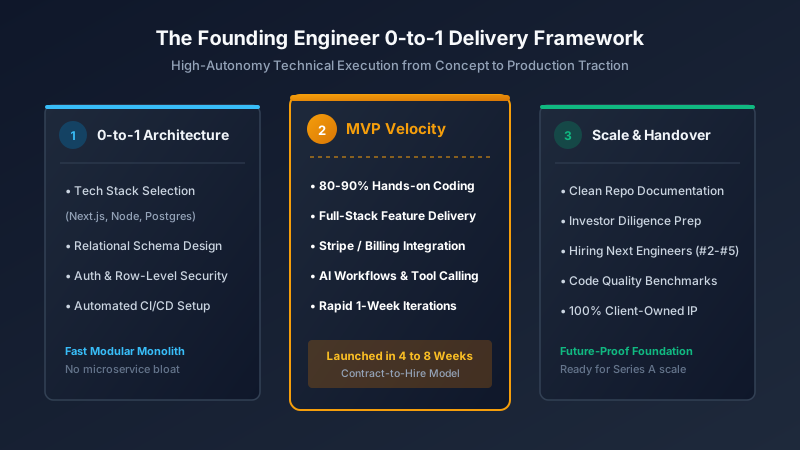
| Founding engineer | Early product delivery with strong technical influence | The company already has a technical founder or technical leader | Employee or contractor with meaningful early ownership of systems |
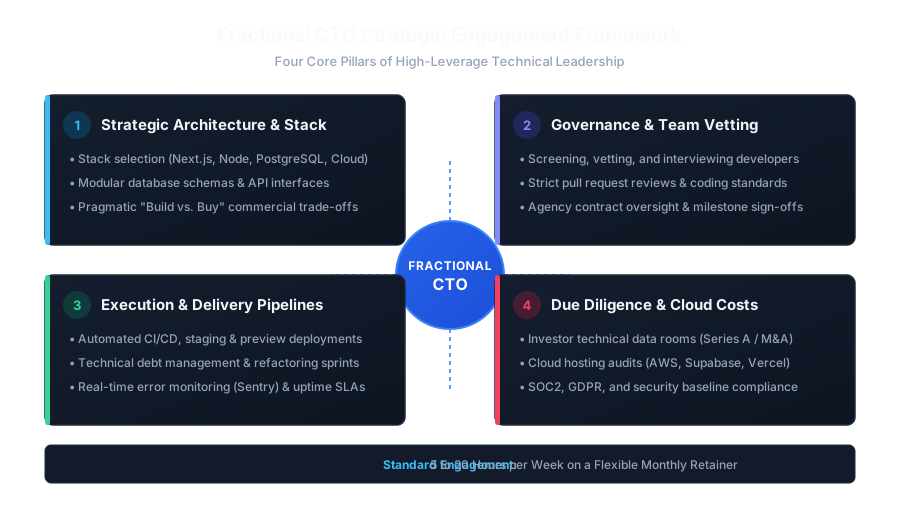
| Fractional CTO | Architecture, technical leadership, and hiring oversight | You need senior judgment but not a full-time co-founder or executive | Part-time advisory or operating engagement |
Technical co-founder vs. founding engineer
A founding engineer is usually an early employee or contractor. They can have major influence over the first architecture and product, but they are not automatically a founder. A technical co-founder typically shares company risk and participates in decisions outside the engineering backlog.
The difference is not seniority alone. Ask who is expected to make the final call on technical direction, who is responsible for hiring later engineers, who participates in customer and fundraising conversations, and who has the authority to change the product. If the answer is “an employee under an existing founder,” the role may be a founding engineer even if the job description uses co-founder language.
Technical co-founder vs. CTO
A technical co-founder may become the startup's first CTO, but the two labels describe different things. “Co-founder” describes a person's relationship to the company and its origin. “CTO” describes an executive role that may be filled by a founder, an early employee, or an external hire later.
Early founders often combine product, engineering, recruiting, and customer work. As the company grows, the technical co-founder may continue as CTO, move into a product or executive role, or hire a CTO to lead a larger engineering organization. Do not promise a title without discussing the responsibilities that must change as the company changes.
If you need technical strategy, architecture review, or help vetting developers but are not ready for a founder-level relationship, read what a fractional CTO does before combining several different roles in one search.
How to find a technical co-founder
A productive technical co-founder search is closer to a partnership search than a normal hiring funnel. You are testing whether two people can make difficult decisions together, not just whether one person can pass a coding interview.
- Write the founder brief. Explain the customer, the painful workflow, the evidence you already have, the next product experiment, your availability, and the decisions you expect to share.
- Describe the technical problem honestly. Say whether the first version is a landing page, marketplace, SaaS product, mobile app, AI workflow, or integration-heavy system. Include the constraints that could change the architecture.
- Search where builders already collaborate. Use trusted referrals, founder communities, technical meetups, accelerator networks, and structured technical co-founder matching. A broad “looking for a technical co-founder” post without context attracts many mismatched conversations.
- Have several working conversations. Discuss customer discovery, the smallest test, what not to build, how you handle disagreement, and what each person can contribute during the next six months.
- Run a small paid or shared experiment. Before making a permanent commitment, work together on a narrow product or discovery task. The point is to observe communication and judgment, not to obtain unpaid production work.
- Write down the agreement. Clarify roles, decision rights, time commitment, intellectual property, confidentiality, vesting, what happens if someone leaves, and how future fundraising or hiring decisions will work. Use qualified legal advice for the final documents.

How to evaluate the best technical co-founder for a startup
The best technical co-founder is not necessarily the person with the longest list of frameworks. Look for evidence that the person can connect technology to customer value, reduce unnecessary scope, and make responsible decisions when information is incomplete.
Product judgment
Ask the candidate to challenge the first version of the idea. Can they identify the riskiest assumption and suggest a smaller way to test it? A person who immediately proposes a large architecture may be technically capable but poorly matched to an early-stage product.
Technical depth and pragmatism
Review comparable work and ask what the candidate personally owned. Discuss data access, authentication, failure modes, observability, deployment, and maintenance. You do not need a perfect architecture on day one, but you do need someone who knows which shortcuts are safe and which ones create hidden risk.
Communication and disagreement
Founder relationships contain disagreements about roadmap, quality, speed, spending, and hiring. Notice whether the person explains trade-offs in plain language, asks questions, changes their mind when evidence changes, and can disagree without making the relationship unsafe.
Founder-level commitment
Clarify time availability, financial runway, current employment, location and schedule constraints, and what each person is prepared to do before the company has revenue. “Interested in the idea” is not the same as a shared commitment to build the company.
References and shipped work
Ask for references from people who worked with the candidate under pressure. For portfolio projects, ask what they built, what broke, how it was operated after launch, and what they would change. A polished screenshot is weaker evidence than a precise account of decisions and consequences.
Technical co-founder equity and salary
There is no universal technical co-founder equity split. The right arrangement depends on the stage of the company, prior validation, existing capital, the value of the product or distribution already built, each person's time and risk, and the responsibilities that will continue after incorporation.
Do not use a generic percentage from a blog post as a substitute for a founder conversation. Discuss the expected contribution over time, whether cash compensation is possible, how vesting and a cliff protect both people, what happens if one founder leaves, and how future financing affects ownership. Record the agreement with qualified legal and tax advice in the relevant jurisdiction.
Salary and equity also solve different problems. Salary pays for ongoing work and living costs; equity compensates for risk and long-term participation. A technical co-founder may receive both, one, or neither at different stages, but the trade-off should be explicit rather than implied.
When hiring a startup developer is the better choice
Choose a paid startup developer when you can describe the next release without needing the developer to become a company founder. This is often appropriate when:
- customer interviews have narrowed the first workflow;
- you can fund a discovery sprint or MVP;
- the product can be tested with a limited scope and clear acceptance criteria;
- you want to keep ownership and decision-making inside the founding team;
- you need implementation capacity rather than a new executive partner.
Use milestones, demonstrations, repository access, written acceptance criteria, and a handover plan. Keep the domain, hosting, source repository, analytics, and third-party accounts under company control. If the project includes a customer-facing site, our guide to custom website development can help separate a marketing website from a product that needs application architecture.
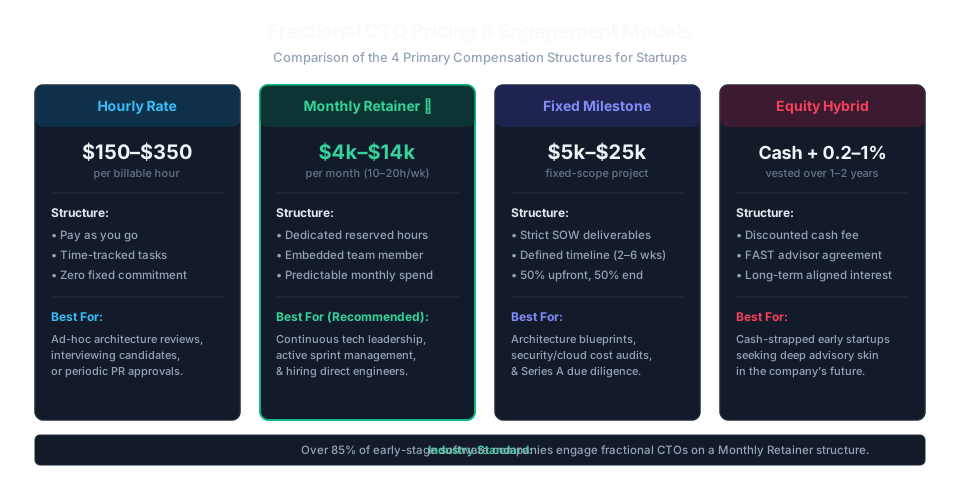
If you are comparing paid technical leadership options, also review fractional CTO rates and engagement models. A fractional CTO can help define architecture and vet the build while a developer delivers the agreed scope; that is a different arrangement from giving someone a founder role.
Questions to ask before agreeing to a co-founder relationship
- What customer problem are we solving, and what evidence do we have?
- What is the smallest product or experiment we can complete together?
- Which decisions must both founders approve?
- What will each founder do during the next three, six, and twelve months?
- What happens if one person can no longer work full-time?
- Who owns code, domains, data, accounts, and work created before the company?
- How will we decide when to hire engineers or bring in a technical adviser?
- How will vesting, departure, fundraising, and conflict resolution work?
Technical co-founder FAQ
What does a technical co-founder do in an early startup?
They connect the product idea to a workable technical plan, build or supervise the first product, own architecture and security decisions, and help the company form its engineering function. They also participate in company decisions outside the codebase.
How do I find a technical co-founder?
Start with a clear founder brief and use trusted referrals, founder communities, technical networks, accelerator programs, and structured matching. Then test the relationship through repeated conversations and a small shared experiment before signing a long-term agreement.
Should a non-technical founder give equity to a developer?
Not automatically. Equity reflects a negotiated ownership relationship and long-term risk, while development work can be purchased through a contract or employment. Decide whether you need a co-founder after considering the product uncertainty, expected commitment, and responsibility each person will carry.
Can a technical co-founder also be the CTO?
Yes. A technical co-founder is often the first CTO, but the roles are not identical. Co-founder describes the person's relationship to the company; CTO describes a leadership position that can evolve or be filled by someone else later.
What if I need technical decisions but cannot find a co-founder?
Use a paid discovery sprint, founding engineer, fractional CTO, or specialist developer while continuing to validate the business. A reversible technical engagement can create evidence and progress without forcing a founder relationship before the partnership is ready.
If you have a product idea and need help deciding between a technical co-founder, startup developer, founding engineer, or fractional CTO, send ProofDevs a short brief. A focused conversation can identify the smallest safe next step before you commit to a long-term arrangement.
Written by Michael Melnyk
Senior IT Technical Writer & Technology Analyst
Senior Technical Writer and IT Industry Analyst with over 7 years of experience analyzing software engineering ecosystems, tech leadership models, and developer procurement frameworks.