Hiring for Startups: Process, Platforms, and First Key Roles
Startup hiring fails on sequence, not sourcing: founders hire too much, too early, or through the wrong channel. This guide covers the hiring process, platforms, first key roles, and when contractors beat employees.

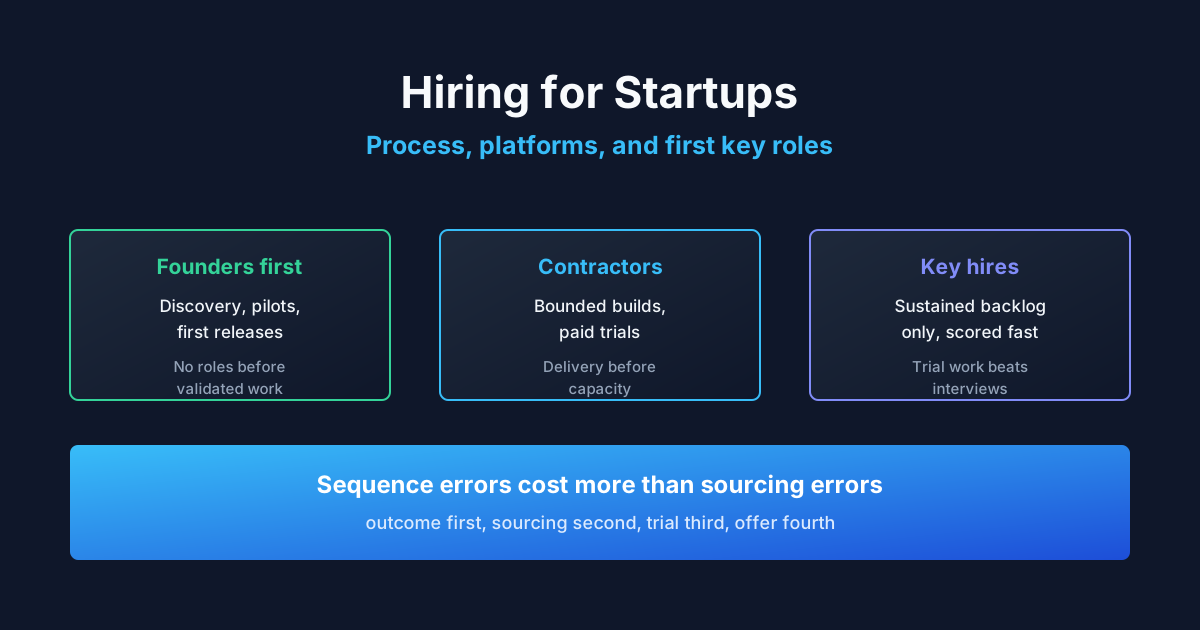
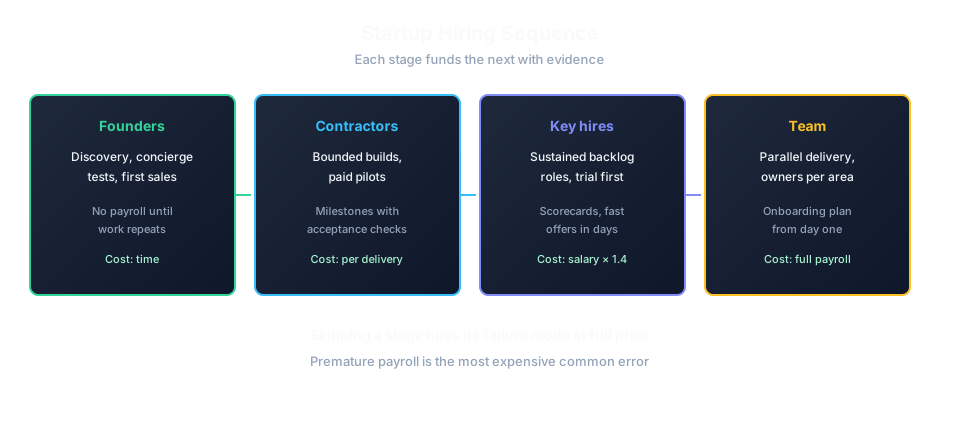
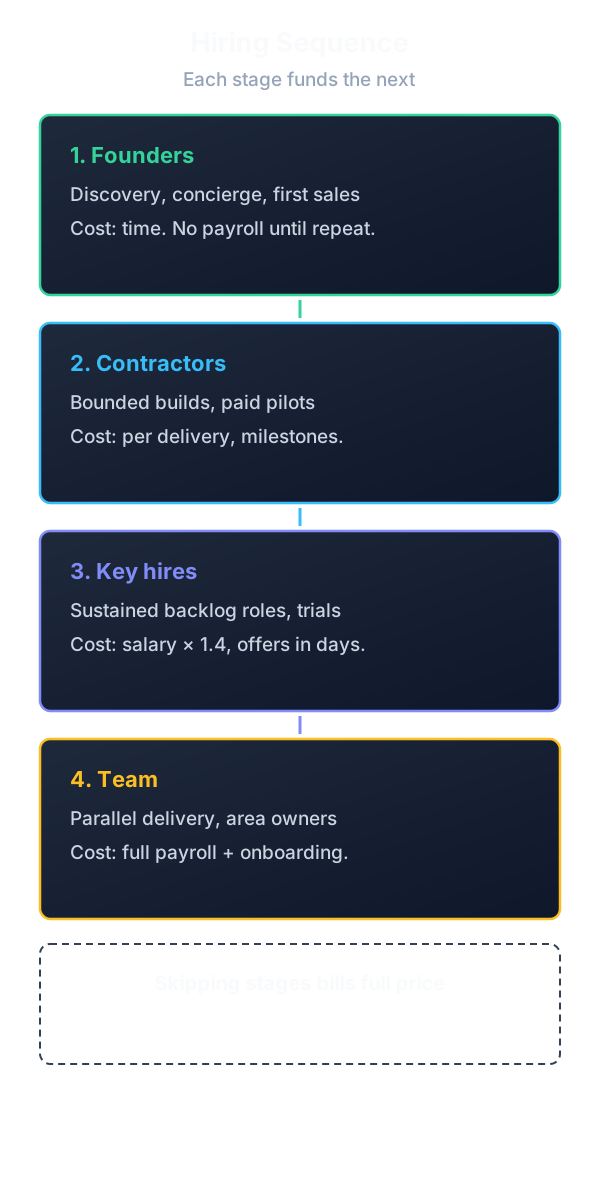
Hiring for startups works when every hire maps to a validated next step: founders first, contractors for bounded delivery, key employees only for sustained backlog — in that order. Most startup hiring failures are sequence errors: full-time roles bought before the work exists, or critical roles postponed until delivery stalls. This guide covers the employer-side process: sequence, platforms, first roles, and the contractor math. Reviewed September 2026. Budget figures below are illustrative planning examples, not market averages or ProofDevs quotes.
Searches like “hiring process for startups,” “best hiring platform for startups,” and “hiring software developers for startup” come from founders who already decided to hire and now need the how. If you are still deciding what kind of technical help fits, start with our guide to hiring a developer for a small business or startup; if the open question is a co-founder versus an employee, see our technical co-founder decision guide.
Hiring process for startups that actually works
A startup hiring process has four stages and one rule: never open a role before naming the validated work it serves. Define the outcome and acceptance, source through the right channel for the role type, run a paid work trial instead of whiteboard interviews, and decide fast with written scorecards. “Best hiring process for startup” is not a template — it is discipline about sequence: outcome first, sourcing second, trial third, offer fourth. Anything else hires resumes instead of results.
| Stage | What happens | Startup shortcut |
|---|---|---|
| 1. Outcome definition | Named deliverable, acceptance criteria, budget ceiling | One paragraph; if it takes longer, the work is not defined |
| 2. Sourcing | Channel matched to role type and urgency | Referrals plus one platform, not ten job boards |
| 3. Paid trial | Real bounded task with real review | One to two weeks beats five interview rounds |
| 4. Decision | Written scorecard, fast offer, clear start | Decide in days; slow hiring loses the candidates worth hiring |
Best hiring platforms for startups
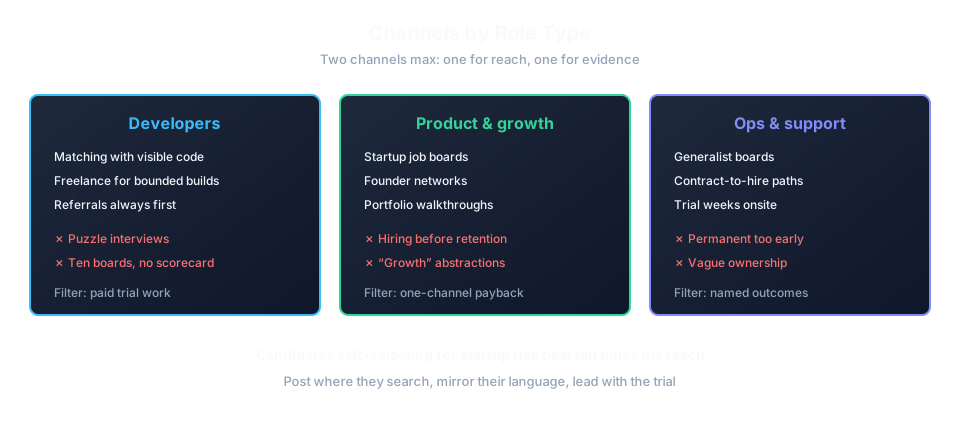
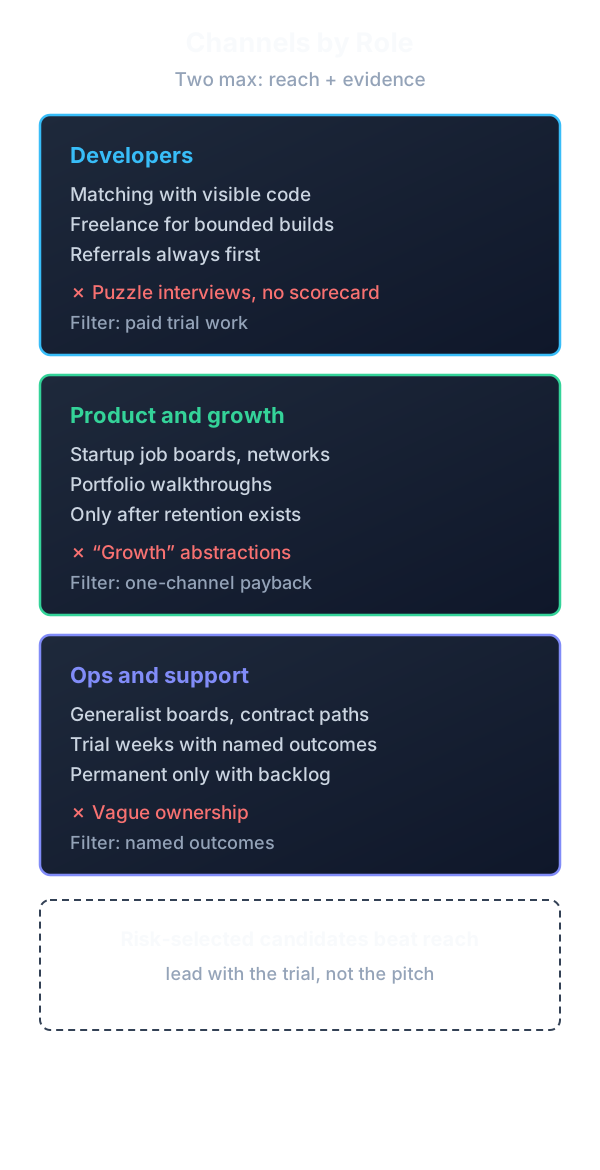
“Best hiring platform for startups” has no universal winner — platforms split by role type. Developer hiring runs through specialized matching and freelance platforms where code evidence is visible; generalist roles run through startup-focused job boards like Y Combinator Jobs where candidates self-select for startup risk. “Hiring websites for startups” and “hiring website for startups” queries reflect founders shopping for a single front door — there is none, so pick two channels maximum: one for reach, one for evidence. More channels add noise faster than candidates.
Evaluate platforms on four criteria before committing budget. First, candidate intent: do applicants arrive pre-filtered for startup risk, or will you screen out hundreds seeking corporate stability. Second, evidence quality: visible work history, code, or portfolios beat self-reported skills every time. Third, time-to-decision: platforms with built-in trial or contract mechanics compress weeks of process into days. Fourth, total cost including your screening hours — a “free” job board that eats forty founder hours is the most expensive channel on the list. “Best hiring platforms for small business” and “best hiring platforms for employees” differ on exactly these axes, so borrow employer reviews but verify against your role types.
Hiring software developers for your startup
Developer hiring is where startups burn the most money per mistake. “Hiring software developers for startup,” “startups hiring for python developer,” and “startups hiring for devops” all describe the same trap: hiring permanent engineers for work that is still undefined. Buy a paid discovery or a bounded build first; convert to employment only when the backlog sustains 18+ months of full utilization. For the model math, see our outsource-versus-hire comparison: contractor delivery wins below sustained backlog, employment wins above it.
Hiring AI engineers and product roles
“Startups hiring for ai engineer” and “startups hiring for product managers” reflect the two premium hires of the current cycle. AI engineers command top bands because production AI judgment is scarce — verify shipped systems with real users, not demo notebooks. Product managers earn their keep only after founder-led discovery overflows; hiring one to “figure out the product” outsources the founder's job. Sequence both after a validated technical core exists, not before.
Hiring marketers and growth roles
“Startups hiring for marketing” fails most often on timing: marketing hires before retention exists optimize acquisition of users who churn. Hire growth only when a cohort retains without paid push — before that, founder-led sales and content teach faster. When the time comes, hire around one channel with measurable payback, not around “growth” as an abstraction.
Startup hiring goes remote
“Hiring startups remote” and distributed teams are the default for early startups priced out of hub salaries. Remote works for defined scopes with async discipline — written decisions, recorded demos, overlapping hours for planning. It fails for undefined discovery work where ambiguity needs hallway resolution. State compensation bands explicitly (location-based, role-based, or global) because remote candidates compare offers across borders and silence reads as lowballing.
Hiring tech startups and being hired by one
“Hiring tech startups,” “hiring tech companies,” and “hiring startups in india” read like employer queries but split both ways in practice — founders source talent while candidates hunt startup jobs on the same phrases. If you are the employer, this overlap is an advantage: candidates arriving through these searches already self-selected for startup risk, so your process can skip culture-selling and focus on trial work. Post where they search, mirror their language in the listing, and lead with the trial — startup-minded candidates prefer a paid task over five interviews. If you are the candidate reading this instead, reverse every section: defined scope, fast decisions, and milestone thinking identify the startups worth joining.
Employees vs contractors: the startup math
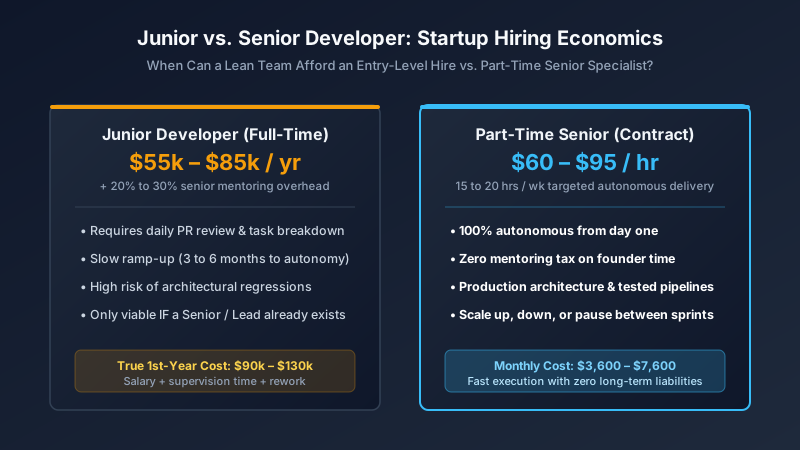
Illustrative planning example: a $120,000 engineer costs roughly $160,000 yearly loaded, plus three months of ramp-up before full output. The same budget buys about 1,000 contractor hours at $120 — enough for a full MVP build with review. Below sustained backlog, contractors win; above it, employees compound context. Most pre-product startups need delivery, not capacity — which is why premature full-time hiring is the most expensive common mistake. Our flexible developer models guide maps part-time, contract, and on-demand shapes to workload.
Co-founder vs first employee
If the missing capability is product judgment plus years of commitment, that is a co-founder conversation with equity mechanics — not a job posting. If it is execution capacity against defined work, that is an employee or contractor. Mixing the two (employee pay with co-founder expectations, or vice versa) destroys both relationships. Our technical co-founder guide covers equity, vesting, and the founder-versus-hire fork in full.
The timing test is simple: if the work can be specified, priced, and accepted in milestones, hire or contract it. If the work is discovering what to build through months of customer contact and technical dead ends, that is founder work — either done by a founder or assigned to a co-founder with matching upside. Startups most often fail this test by hiring employees to “figure out” the product, then discovering that salaried exploration without founder urgency produces motion without decisions. When in doubt, keep the role contracted and the discovery founder-led until the pattern repeats enough to specify.
Realistic startup hiring scenarios
Marketplace MVP via contractors
Situation: two founders need a working marketplace to test supply and demand. Blocker: no technical founder, nine months of runway. Fix: fixed-milestone contractor build with weekly staging demos and an independent review before launch. Result: live in ten weeks; hiring waits for retention evidence.
AI startup's first engineer
Situation: a funded AI startup needs production engineering behind demo notebooks. Blocker: research profiles without shipping experience. Fix: paid trial project on real inference pipeline with latency and cost targets. Result: senior hire with production judgment; demo scientists stay in research.
SMB hires marketer too early
Situation: a services startup hires growth before retention exists. Blocker: acquired users churn in week one. Fix: pause marketing role, founder-led sales plus contractor-built onboarding fixes. Result: retention stabilizes; growth hire re-opened one quarter later with a working funnel.
Typical mistakes
- Hiring before the work exists. Roles without validated backlog become expensive exploration.
- Permanent hires for bounded builds. MVP work suits contractors; employment suits sustained backlog.
- Whiteboard interviews over paid trials. Real bounded tasks predict performance; puzzles do not.
- Ten channels, no scorecard. Sourcing breadth without decision discipline is noise.
- Growth before retention. Marketing hires cannot fix a leaking product.
- Co-founder expectations on employee pay. Or the reverse — both poison the relationship.
- Silent compensation bands. Remote candidates walk when numbers hide until round five.
- Skipping reference reality checks. Back-channel evidence beats curated referees.
- Hiring “AI engineers” for demo skills. Verify shipped systems with real users, not notebooks.
- No onboarding plan. Week-one ambiguity wastes the most expensive hire months.
Expert advice
For every role, write the paid trial before posting the job: one to two weeks of real work with observable acceptance and a fixed fee. If you cannot define a trial, the role is not defined enough to hire — do the work yourself or contract a discovery first. Teams that hire through trials rarely mis-hire; teams that hire through interviews frequently do. The trial is the process.
FAQ: hiring for startups
What is the best hiring process for a startup?
Outcome definition, matched sourcing, paid trial, fast scored decision. Four stages, no whiteboard rounds, offers in days — slow hiring loses exactly the candidates worth hiring.
What are the best hiring platforms for startups?
Two maximum: one for reach (startup job boards), one for evidence (matching or freelance platforms with visible work). More channels add noise faster than candidates.
How do startups hire software developers?
Paid discovery or bounded build first, employment only past sustained backlog. Verify with staging demos and code review, not with puzzle interviews.
Should a startup hire employees or contractors?
Contractors below ~18 months of sustained backlog; employees above it. Pre-product startups almost always need delivery first — premature employment is the costliest common error.
When should a startup make its first hire?
When validated work exceeds founder capacity for months ahead. Before that, founders plus contractors cover discovery, pilots, and first releases.
How do startups hire AI engineers?
Around shipped production systems with real users — latency, cost, and reliability targets in a paid trial. Demo notebooks prove prompting, not engineering.
Do startups need product managers early?
Only after founder-led discovery overflows. Hiring product thinking before the founder understands customers outsources the founder's core job.
How do remote startups hire well?
Defined scopes, async discipline, written decisions, overlapping planning hours, and explicit compensation bands. Remote fails on ambiguous discovery work, not on distance.
Co-founder or first employee for technical work?
Co-founder for years of product judgment with equity; employee or contractor for execution against defined work. Never mix the two contracts.
How much does a startup hire cost?
Employees price at 1.3–1.5x salary loaded with ramp-up risk; contractors price per delivered milestone. Compare all three models — employee, contractor, agency — against identical scope.
Where do startups find developers?
Referrals, specialized matching with visible code evidence, and freelance platforms for bounded work. Generalist job boards work for non-technical roles; technical vetting needs work trials.
What kills startup hires most often?
Undefined work, absent onboarding, and mismatched contracts — employee pay with co-founder expectations or vice versa. All three are process failures, not talent shortages.
Hiring your next key role and want the process set up before you post? Send the brief to ProofDevs for a hiring sequence matched to your runway and backlog.
Written by Michael Melnyk
Senior IT Technical Writer & Technology Analyst
Senior Technical Writer and IT Industry Analyst with over 7 years of experience analyzing software engineering ecosystems, tech leadership models, and developer procurement frameworks.